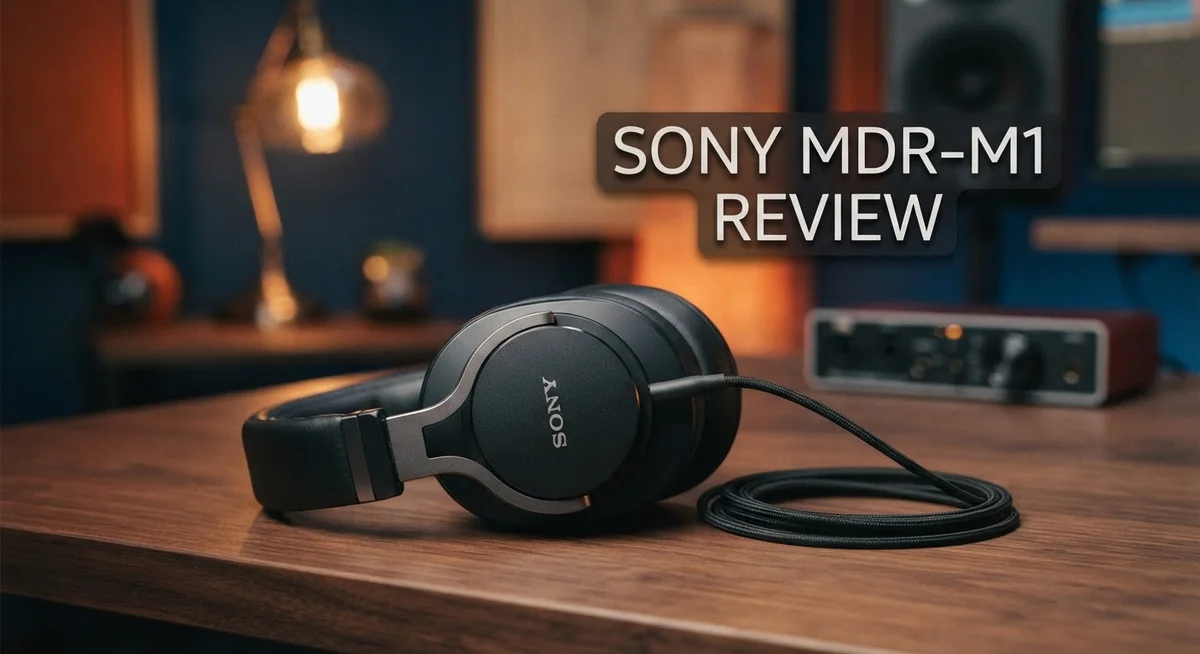
Sony MDR-M1 Review: Professional Studio Headphones for Audio Engineers
Are you searching for a new studio headphone? The Sony MDR-M1 might be your answer.
This headphone comes as the successor to the famous MDR-7506. It carries a 40mm neodymium driver inside a closed back design.
Sony built these headphones for professionals. Sound engineers use them for tracking and vocal recording every day.
But do they perform well for everyday listening too? Many audiophiles now choose this headphone for casual use.
The MDR-M1 offers a warm sound signature. You get smooth highs and impressive bass in one package.
We tested comfort, resolution, and build quality closely. This review shares everything you need to know before you decide.
Let’s find out if the MDR-M1 deserves a spot on your desk. Read on to see how it compares to other studio monitors.
In a Nutshell
Here’s what you need to know about the Sony MDR-M1 at a glance:
-
Driver Technology: The MDR-M1 packs a 40mm neodymium dynamic driver. This delivers clear sound across all frequencies.
-
Flexible Connectivity: You get two cord options. Choose between a 3.94 ft cord for close work or an 8.2 ft cord for more movement.
-
Universal Compatibility: The headphones include stereo standard and mini plug inputs. This means they work with most audio equipment right away.
-
Impressive Audio Separation: These headphones offer excellent resolution. Instruments and vocals stay distinct even in busy mixes.
-
Built to Last: The construction feels sturdy and reliable. It handles daily studio tracking and vocal recording sessions well.
-
Strong Competition: The MDR-M1 competes with the AKG K271 and Beyerdynamic DT 770 Pro. Each offers a different sound approach for various needs.
This headphone suits both studio professionals and casual listeners. Comfort meets performance in this well rounded package.
Sound Quality and Frequency Response
The MDR-M1 delivers a warm, inviting sound profile that works well in professional studios and casual listening environments. Sony engineered this headphone to produce a smooth high-end response. You’ll notice the treble frequencies stay pleasant without becoming harsh or fatiguing during long sessions.
The 40mm neodymium dynamic driver handles the entire frequency spectrum with impressive clarity. Bass notes come through with real punch and presence. The low-end response feels controlled yet powerful. You won’t experience muddy or boomy bass that clouds other frequencies.
Resolution stands out as a major strength. These headphones separate individual instruments and vocals with excellent precision. Each layer of a mix becomes easy to hear. Whether you’re tracking drums, recording vocals, or mixing a full arrangement, the MDR-M1 lets you catch details you might miss on other headphones.
The midrange sits in a sweet spot. Vocals sound natural and present without sounding forced or artificial. Instruments like guitars, pianos, and strings maintain their character. This balance makes the MDR-M1 equally useful for critical listening and everyday music enjoyment.
Frequency response stays consistent across the listening area. You don’t experience dramatic shifts when you move the headphones slightly. This matters for studio work where precision matters. The soundstage feels intimate yet spacious enough to understand spatial relationships in a mix.
The warm signature means these headphones won’t reveal every flaw in poorly recorded material. Some engineers see this as a pro. Others prefer more neutral monitors. For most people, this approach sounds musical and engaging rather than clinical.
The closed back design contributes to the solid bass response. Sound doesn’t leak into the room, making the MDR-M1 practical for shared studio spaces. Isolation goes both ways. You stay focused on your work while preventing sound from bothering others nearby.
Overall, the sound quality justifies the MDR-M1’s reputation among professionals and serious listeners. The frequency response balances accuracy with musicality. You get a headphone that works for critical tasks and casual enjoyment.

- STUDIO SOUND, UNLEASHED: Ultra-wideband playback and a closed acoustic structure with high sound...
- ULTRA-WIDE PLAYBACK: The uniquely designed driver unit balances low distortion with reproduction of...
- HIGH-FIDELITY, FAITHFUL SOUND REPRODUCTION: A closed acoustic structure with effective sound...

Last update on 2026-11-09 / Affiliate links / Images from Amazon Product Advertising API
Design, Build Quality, and Durability
The Sony MDR-M1 feels solid in your hands from day one. The closed back design creates a compact form factor that sits comfortably on most head sizes. The headband uses flexible materials that adapt to different head shapes without feeling tight or restrictive.
The build quality stands out as a major strength. Sony used durable plastics and metal reinforcements in key areas where stress occurs. The headband pivot points feel sturdy and won’t snap easily with regular handling. The ear cup attachment points show no wobbling or loose components, which speaks to careful engineering.
Weight matters for extended studio sessions. The MDR-M1 tips the scales at a light weight that won’t cause fatigue during eight hour mixing sessions. You can wear these headphones for tracking vocals or monitoring drums without neck strain. The padding on the ear cups stays soft and doesn’t harden quickly like cheaper alternatives.
The cable system adds practical durability. You get two detachable cords of different lengths, so you can choose what works best for your setup. The connectors feel secure and lock in place reliably. The cables themselves resist tangling and show good flexibility without cracking at the joints.
The closed back design protects internal components from dust and accidental spills common in busy studios. The sealed construction means fewer moving parts can fail compared to open back designs. This design choice supports longevity in professional environments where equipment gets heavy use.
Comfort during long sessions remains excellent. The ear cups angle slightly to match natural ear positioning. The headband distributes weight evenly across your head rather than concentrating pressure at one point. After hours of continuous wear, most users report minimal discomfort.
The overall durability suggests these headphones will serve you well for years. Professional studios continue using MDR-7506 models from decades ago, and the MDR-M1 builds on that proven foundation. The construction quality rivals or exceeds most competitors in this category. Whether you monitor vocals in a recording studio or listen at home, the build will withstand regular use without degradation.
Comfort and Wearability for Extended Sessions
The MDR-M1 shines when you need headphones for marathon studio sessions. These headphones weigh very little, so your ears and head stay comfortable even after hours of work. You won’t feel fatigued from wearing them all day long.
The ear cups fit snugly without squeezing too hard. They create a seal that isolates sound without causing pain or pressure points. This balance matters when you’re tracking vocals or mixing for extended periods. Your focus stays on the audio, not on discomfort.
The headband distributes weight evenly across the top of your head. You get stability without the clamping sensation that many studio monitors create. The padding feels soft and doesn’t flatten out quickly like cheaper alternatives. This means consistent comfort from your first session to your hundredth.
The cable options give you flexibility for different studio setups. You can use the shorter 3.94 ft cord for close work at your mixing console. Switch to the longer 8.2 ft cable when you need to move around the recording space. Both cables stay durable through repeated coiling and uncoiling. They won’t break or fray easily, which keeps your headphones functional for years.
The closed back design actually helps with comfort during long sessions. It reduces external noise, so you don’t need to crank volume levels high. Lower volumes mean less ear fatigue over time. You stay alert and make better mixing decisions because your ears aren’t tired.
The ear cup material resists sweat and moisture buildup. This matters if you work in warm studios or during physically active recording sessions. The cushions maintain their shape and comfort level session after session.
Professional engineers often praise the MDR-M1 for its wearability during full day recording sessions. The combination of light weight, balanced pressure distribution, and quality padding makes these headphones feel almost invisible on your head. You can focus entirely on capturing great performances or crafting perfect mixes without distraction from your gear.
Top 3 Alternatives
Audio-Technica ATH-M50x

- Critically acclaimed sonic performance praised by top audio engineers and pro audio reviewers
- Proprietary 45 millimeter large aperture drivers with rare earth magnets and copper clad aluminum...
- Exceptional clarity throughout an extended frequency range, with deep, accurate bass response
Last update on 2026-11-09 / Affiliate links / Images from Amazon Product Advertising API
The ATH-M50x offers professional studio sound with a closed-back design. These headphones deliver strong bass response and clear midrange frequencies. The ear cups rotate flat, making them easy to carry in a bag.
Sound isolation performs well for recording sessions. The detachable cables give you flexibility in how you use them. Many audio engineers prefer these for mixing music tracks.
Beyerdynamic DT 770 Pro

- 80-ohm all-rounder: sounds best from an audio interface or headphone amp; loud enough from most...
- The tracking standard: closed-back isolation keeps the click and mix out of your mic while you...
- Closed-back isolation: passive shielding for vocal booths, podcast desks, and loud rooms.
Last update on 2026-11-09 / Affiliate links / Images from Amazon Product Advertising API
The DT 770 Pro stands out for its punchy bass and bright treble. This closed-back model provides excellent sound isolation in noisy environments. The padded headband sits comfortably during long listening sessions.
These headphones work great for DJs and music producers. The coiled cable keeps your workspace organized. Sound clarity remains consistent across different frequency ranges, making them reliable for critical listening work.
Sennheiser HD 280 Pro

- Dynamic, closed-ear headphones.Weight w/o cable: 285 g. Ear coupling is circumaural
- Lightweight and comfortable, ergonomic design, Cord Length - 3.3 - 9.8 feet Coiled
- Extended frequency response and warm, natural sound reproduction. Nominal impedance - 64 Ω.Sound...
Last update on 2026-11-09 / Affiliate links / Images from Amazon Product Advertising API
The HD 280 Pro features a compact design that travels well. This model produces balanced audio across the frequency spectrum. The closed-back construction blocks outside noise effectively.
The headphones include multiple cable options for different setups. Comfort comes from the adjustable headband and soft ear pads. Many professionals choose these for podcast recording and audio editing because they offer accurate sound reproduction without coloration.
All three models work well for studio environments. Each one handles different audio tasks with confidence. Your choice depends on whether you prefer bass-heavy sound, bright treble, or neutral balance.
Driver Technology and Audio Resolution
The 40mm neodymium dynamic driver sits at the core of what makes the MDR-M1 stand out. This driver pushes sound through the entire frequency range with remarkable precision. You get clarity without harshness, which matters when you spend hours in the studio.
Resolution deserves special attention here. The MDR-M1 separates instruments and vocals with impressive accuracy. You can hear individual elements within a dense mix. This separation helps you catch problems early in the recording process. Engineers rely on this level of detail when tracking vocals or instruments.
The driver handles bass with authority. Low frequencies come through full and present without overwhelming the mix. Kick drums punch through clearly. Bass lines sit exactly where they should in your stereo image. The closed back design reinforces this bass response naturally.
High frequency response stays smooth and pleasing. You won’t hear harsh sibilance or fatiguing peaks. Cymbals shimmer without becoming irritating during long sessions. This smooth top end prevents ear fatigue, which makes sense for professional work where you need fresh ears for critical decisions.
The midrange sits in a sweet spot that works for multiple tasks. Vocals sound natural and centered. Acoustic guitars retain their warmth. This balance means the MDR-M1 handles everything from classical recordings to modern pop productions.
The driver’s efficiency means you get solid output without pushing your audio interface too hard. You control volume easily across different sources. Whether you use the 3.94 foot cable for close work or the 8.2 foot cable for more distance, the driver maintains consistent performance.
What makes this driver special isn’t just one feature. The combination of clean resolution, controlled bass, smooth highs, and balanced midrange creates a cohesive listening experience. You trust what you hear through these headphones. That trust matters when you’re making critical mixing decisions or evaluating recordings.
This driver technology explains why studios still reach for the MDR-M1 years after release. It does its job without drawing attention to itself.
Studio Use Cases and Professional Applications
The Sony MDR-M1 excels in professional studio environments where accuracy and reliability matter most. Engineers trust these headphones for critical listening tasks that demand precision. The closed design isolates your monitoring from room noise, letting you catch subtle details in recordings that open back models might miss.
Tracking vocals becomes easier with the MDR-M1. The smooth high end prevents ear fatigue during multiple takes, and the midrange clarity helps you hear exactly what the vocalist is delivering. You can monitor performances for hours without your ears feeling tired or strained.
Mixing sessions benefit from the impressive bass presentation and excellent separation these headphones provide. You’ll hear kick drums, bass guitars, and low end synths with clear definition. Instruments sit in their own space within the stereo field, making it simple to spot balance issues or phase problems between tracks.
The lightweight design keeps sessions comfortable when you’re wearing them all day long. Your neck and shoulders won’t feel the burden of heavy monitoring gear. The even weight distribution across the headband means no pressure points develop during extended use.
Mastering engineers often choose the MDR-M1 for final reference checks. The durable build survives the demands of professional studios where headphones move between rooms, get packed into cases, and experience regular handling. The cable system with its two interchangeable lengths adapts to different studio setups without compromise.
The closed back design protects internal components from dust that accumulates in busy studios. This practical feature extends the lifespan of your investment and keeps performance consistent over time.
Sound quality justifies the MDR-M1’s reputation among professionals seeking reliable reference headphones. The combination of driver technology, build durability, and acoustic design makes these headphones suitable for tracking, mixing, and mastering work. Studios worldwide continue using the MDR-M1 because it delivers consistent results session after session.
Pros and Cons
Pros
- Lightweight design stays comfortable during full day studio sessions without causing fatigue
- Smooth high end response works across vocals, instruments, and mixing tasks
- Bass presentation delivers authority and impact for accurate monitoring
- Excellent resolution and separation let you hear every detail in your mix
- Durable build quality holds up in professional studio environments with daily use
Cons
- Limited cable options compared to some competitors in the professional headphone category
- Closed back design can feel warm around the ears during extended summer recording sessions
- Sound signature leans warm, which may require adjustment if you’re used to neutral reference headphones
- Replacement ear pads and parts availability varies by region
Who Should Buy It
The Sony MDR-M1 serves specific listener groups well. Professional studio engineers should consider these headphones if you spend hours mixing, mastering, or recording vocals. The lightweight design prevents ear fatigue during full day sessions. The smooth high end response works across vocals, instruments, and mixing tasks without coloring your source material.
Podcast and voice over producers benefit from the closed back design. This design isolates your recording environment from external noise. The excellent resolution lets you catch every breath, click, and subtle vocal nuance. You’ll hear problems in your recordings before they reach listeners.
Home studio owners who want professional reference monitoring will appreciate the durable build. These headphones handle daily use in non-climate controlled spaces. The warm sound signature actually helps you catch mix issues that might translate poorly to consumer speakers and earbuds.
Audiophiles seeking studio gear should explore the MDR-M1 if you enjoy accurate sound without artificial enhancement. The impressive bass presentation delivers authority without bloat. The separation between instruments remains crystal clear even in dense arrangements.
Musicians tracking their own parts gain a practical advantage. The closed back design prevents audio leakage into microphones during recording. You hear yourself clearly while maintaining tight control over your performance.
The MDR-M1 is less ideal for casual listeners who prioritize portability or wireless connectivity. These are wired headphones designed for stationary studio work. The sound signature leans warm rather than neutral, which requires adjustment if you’re accustomed to completely flat reference headphones.
You should skip the MDR-M1 if you need open back headphones for mixing in treated rooms. The closed back design creates a different acoustic environment than open designs. If you require multiple cable options or frequent headphone swaps between devices, other competitors might serve you better.
The MDR-M1 excels for anyone committed to serious audio work. Whether you’re a seasoned engineer or serious hobbyist, these headphones deliver the reliability and sound quality that professionals trust for critical listening tasks.
Final Verdict
The Sony MDR-M1 stands as a worthy successor to the legendary MDR-7506. It carries forward the same driver technology while adding its own warm character to the sound.
This headphone earns its place in any serious studio setup. The build quality reflects Sony’s commitment to professional grade equipment that lasts through years of daily use.
Comparing it to competitors like the AKG K271 and Beyerdynamic DT 770 Pro, the MDR-M1 holds its own. Each headphone brings something different to the table, but the MDR-M1 balances comfort with performance.
Studio professionals will find this headphone becomes a trusted tool. It handles various tasks without asking you to compromise on quality or comfort.
The transition from the MDR-7506 feels natural. Sony kept what worked while refining the sound signature for modern production needs.
Engineers who value consistency across sessions will appreciate how the MDR-M1 performs the same way every time. This reliability matters when you’re making critical mixing decisions.
Think about your specific workflow before deciding. The warm sound signature suits certain genres and applications better than others.
Vocal recording and tracking sessions benefit most from what this headphone offers. The closed back design and comfortable fit support long hours behind the microphone or mixing desk.
For anyone building a professional headphone collection, the MDR-M1 deserves serious consideration. It fills a specific role that many studios need filled.
The overall package feels complete for its intended purpose. Sony designed this headphone with clear goals in mind, and it meets those goals consistently.
Final thoughts: this headphone rewards users who understand what they’re getting. Professional monitoring needs meet comfortable design in a package built to last.
Choose the MDR-M1 if your work matches its strengths. The combination of durability, comfort, and sound quality makes it a solid addition to any serious audio setup.
Frequently Asked Questions
Can I use the Sony MDR-M1 for live sound monitoring?
The MDR-M1 works best in studio settings rather than live venues. These headphones are closed dynamic monitors built for tracking and mixing work. Live sound engineers typically need headphones with quick response times and wireless options. The fixed cable design limits your movement on stage. However, if you’re doing in-ear monitoring in a controlled studio environment, the MDR-M1 delivers excellent clarity for hearing your performance details.
How do the cable options work with the MDR-M1?
Sony includes two detachable cables with your purchase. You get a 3.94 foot cable for close work and an 8.2 foot cable for flexibility around your studio. Both cables use standard connectors. The shorter cable keeps things tidy during vocal recording sessions. The longer cable gives you room to move while monitoring. Some users wish Sony offered more cable variations, but these two lengths cover most studio situations.
Will the MDR-M1 work with my audio interface?
Yes, absolutely. The MDR-M1 accepts both stereo standard and mini plug inputs. Your audio interface likely has a headphone output that matches one of these connectors. Simply plug in the appropriate cable, and you’re ready to monitor. The connection is straightforward with no special adapters needed for most modern interfaces. Just confirm your interface’s output type before purchasing.
Are these headphones suitable for mastering work?
The warm sound signature means the MDR-M1 leans slightly colored rather than completely neutral. Professional mastering engineers often prefer flatter reference headphones. That said, many mix engineers use the MDR-M1 successfully for general mixing tasks. If you understand the headphone’s character and compensate for it, you can work effectively. Test them in your space first to see if the sound matches your mixing style.

DK is a tech enthusiast and product reviewer dedicated to helping readers explore the ever-evolving world of technology. With a passion for testing gadgets, apps, and appliances, DK delivers honest, in-depth reviews and practical buying guides to make your tech decisions easier.