How to Choose a Portable DAC for Your Phone?
Do you ever feel like your phone’s audio sounds flat? You crank up the volume, but the music still lacks depth. This happens because most phones have basic sound chips built in.
A portable DAC can fix this problem. DAC stands for Digital to Analog Converter. It takes the digital audio from your phone and turns it into rich analog sound.
Choosing the right one feels confusing at first. There are so many options, connections, and technical terms to understand.
This guide makes it simple. We will walk you through every step of the selection process.
You will learn how to check phone compatibility first. We will also explain why file format support matters for your music library.
Connectivity options like USB and wireless will get covered too. You need a DAC that fits your daily habits and travel style.
We will also point out common mistakes buyers make. Things like ignoring power needs or headphone impedance can ruin your experience.
By the end, you will know exactly what to look for. Let’s find the perfect sound partner for your phone.
In a Nutshell
Picking a portable DAC does not have to feel confusing. Here is a quick summary to keep in mind before you buy.
-
Check phone compatibility first. Your DAC must match your phone’s OS and connection type. USB C and Lightning phones need different adapters.
-
Match audio format support to your files. If you stream high resolution audio, your DAC needs to support those formats. This ensures you actually hear the improvement.
-
Decide between an all in one unit or a separate DAC and amp. All in one units stay compact and simple. Separate units often give more power and flexibility.
-
Look at peak loudness capability. Your DAC should handle volume levels higher than your normal listening level. This avoids distortion at higher volumes.
-
Check headphone impedance compatibility. Some headphones need more power to sound their best. A mismatch can leave your audio sounding weak.
-
Consider portability and form factor. A bulky DAC defeats the purpose of portable listening. Pick something that fits your daily routine easily.
-
Test before you commit. Real world listening tells you more than specs alone. This simple step helps avoid regret later.
What Is a Portable DAC and How Does It Work?
A portable DAC stands for Digital to Analog Converter. Your phone stores music as digital files. When you press play, your phone needs to turn those digital signals into sound waves you can hear. That conversion process happens inside a DAC.
Here’s the key difference: your phone has a built in DAC already. So why add another one? The answer is simple. Most phone DACs are basic and cheap. They prioritize small size and battery life over sound quality. A portable DAC upgrades this process.
When you connect a portable DAC to your phone, it takes over the conversion job. It uses better components and smarter processing. The result is cleaner, more detailed sound with less distortion. You hear more of what the artist intended.
A portable DAC also includes an amplifier in most cases. This amp boosts the signal strength sent to your headphones. More power means your headphones can play louder without losing clarity. It also helps drive demanding headphones that need extra power to sound their best.
Think of it this way: your phone’s DAC is like a basic kitchen knife. A portable DAC is like a professional chef’s knife. Both cut food, but one does it far better.
Two main types exist in the market today. All in one units combine the DAC and amplifier in a single device. Separate DAC and amp pairs give you more flexibility but take up more space. Your choice depends on your needs and how much gear you want to carry.
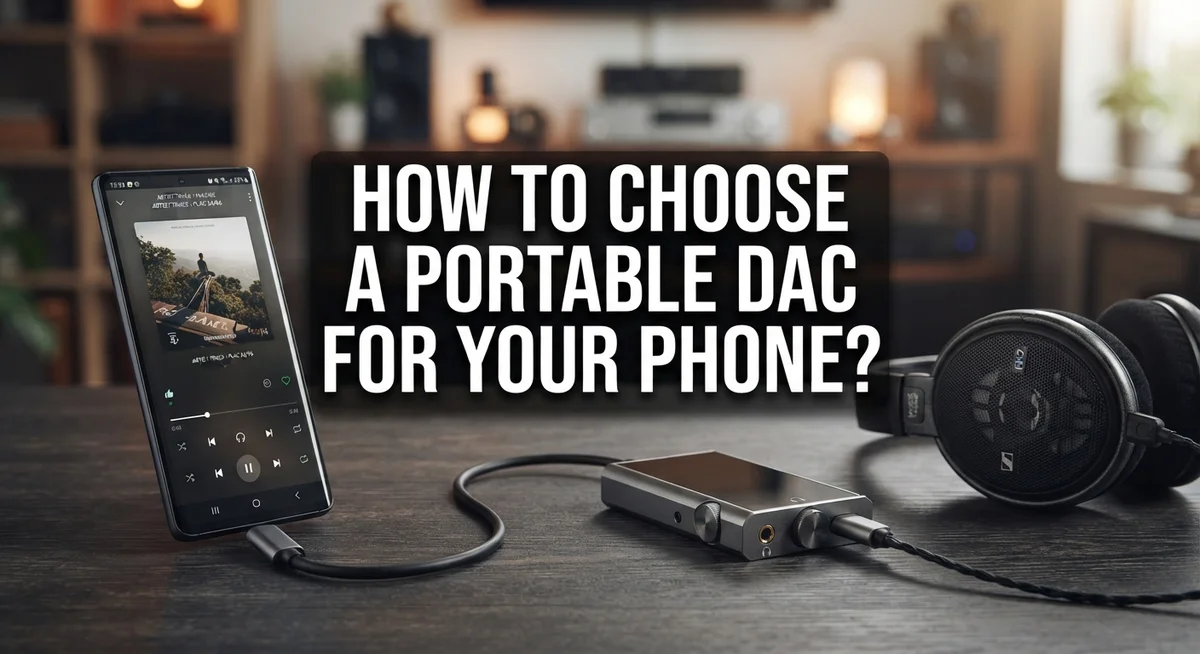
The portable DAC sits between your phone and your headphones. It receives the digital signal from your phone, converts it to analog, amplifies it, and sends it to your ears. That simple chain makes a huge difference in what you hear.
Why Your Phone Might Need a Portable DAC
Your phone’s built in audio system works fine for casual listening. However, it has real limits when you want better sound quality.
Most phones use basic DACs that prioritize small size and battery life over audio performance. These chips handle standard compressed audio well. They struggle with high resolution files and complex music details. The amplifier inside your phone also produces limited power output.
Here’s what happens: your phone converts digital music files to analog sound waves. This conversion process matters more than people realize. A low quality conversion loses audio information. You hear the result as flat, compressed sound that lacks depth.
A portable DAC improves this chain significantly. It replaces your phone’s conversion step with better hardware. Better components mean more accurate sound reproduction. You hear details that were always in your music but hidden by poor conversion.
The amplifier boost matters too. Your phone’s amp can only push so much power to your headphones. A portable DAC with integrated amplification delivers stronger, cleaner signals. This extra power makes quiet songs easier to hear. It also prevents distortion when you play loud passages.
You also get support for high resolution audio formats. Your phone might not recognize these file types at all. A portable DAC handles them without issues. The sound quality difference becomes obvious when you listen to properly encoded music.
Not every phone user needs a portable DAC. If you stream compressed music and use basic earbuds, you probably won’t notice much difference. But if you care about sound quality, use quality headphones, or listen to high resolution files, a portable DAC makes a real difference in what you hear.
Checking Phone Compatibility and Connection Types
Your phone’s operating system determines which portable DACs will work with it. iPhones use Lightning or USB C connections, while Android phones typically use USB C or micro USB ports. Check your phone’s manual or settings to confirm which connection type you have.
Connection type matters because it affects how your portable DAC communicates with your phone. USB C offers faster data transfer and better power delivery than older micro USB ports. Lightning connectors work exclusively with iPhones, so Android users cannot use Lightning DACs.
Wireless connection is another option to consider. Some portable DACs connect via Bluetooth instead of a physical cable. This removes the need for a specific port match, but wireless connections may introduce slight audio delays and require charging the DAC separately.
Test the actual connection before committing to a purchase. Visit a store or borrow a friend’s portable DAC to verify it works smoothly with your specific phone model. This step prevents buyer’s remorse and ensures the physical fit feels comfortable.
Power delivery is critical too. Your phone needs to supply enough power to the portable DAC through the connection. Some DACs draw more power than your phone can provide, which causes connection failures or automatic disconnection. Check the DAC’s power requirements against your phone’s specifications.
Compatibility extends beyond just the port type. Your phone’s operating system must support the DAC’s drivers or software requirements. Newer phones generally have better support for external audio devices, while older models may have limited compatibility.
Always verify that your phone recognizes the portable DAC when connected. A successful connection shows up in your phone’s settings or audio output menu. If your phone doesn’t detect the device, the DAC won’t work properly regardless of physical fit.
Understanding Audio Quality and File Format Support
Audio quality depends on two main factors: your DAC’s conversion ability and the file formats it supports. A portable DAC’s job is to convert digital files into analog signals that your headphones can play. Better conversion means cleaner sound with less distortion.
File format support matters because different audio files contain different amounts of information. Standard formats like MP3 and AAC use compression, which removes some audio data to save space. High resolution audio formats like FLAC, DSD, and WAV preserve more detail from the original recording.
Check what file formats your portable DAC supports before buying. If you only stream compressed music from services like Spotify or Apple Music, a basic DAC handles the job fine. However, if you download lossless or high resolution files, you need a DAC that specifically supports those formats.
The DAC’s bit depth and sample rate matter too. These numbers describe how much audio information the DAC processes. Higher numbers mean more detail, but only if your audio files actually contain that information. A 32 bit, 384 kHz DAC won’t improve compressed MP3 files.
Digital filters and audio modes affect sound quality as well. Some portable DACs let you switch between different filter types to match your listening preference. One filter might sound warmer while another sounds brighter.
Your headphone impedance also plays a role in audio quality. Impedance measures electrical resistance in your headphones. Some portable DACs work better with high impedance headphones, while others pair well with low impedance models. Match your DAC’s output specifications to your headphone’s impedance for the best sound.
Connectivity Options: Wired vs Wireless DACs
Wired and wireless portable DACs serve different needs. Understanding both options helps you pick what fits your lifestyle.
Wired DACs connect directly to your phone through USB, USB-C, or Lightning ports. This direct connection means no lag or latency issues. Your audio data travels straight from your phone to the DAC without wireless interference. Wired DACs typically offer more stable power delivery too. Your phone can charge the DAC while you listen, which matters during long listening sessions.
The main drawback? You need a cable. Your phone stays tethered to the DAC unit. This setup works great for stationary listening at home or the office.
Wireless DACs use Bluetooth to communicate with your phone. You get freedom of movement and no cables cluttering your space. Wireless DACs are ideal for travel, commuting, or active use. They feel more convenient since your phone stays in your pocket.
Wireless connections do introduce some considerations. Bluetooth can introduce minor latency, though modern codecs minimize this. Battery life matters more with wireless models since they need their own power source. Connection stability depends on your phone’s Bluetooth quality and the DAC’s receiver strength.
Your choice depends on how you listen. Choose wired if you prioritize audio performance and sit in one spot. Choose wireless if you value freedom and portability. Some people use both setups for different situations.
Test the connection type before deciding. Visit a store and try both options with your phone model. Feel how each one handles your typical listening environment. Your personal preference matters as much as the technical specs.
Evaluating Portability, Power, and Loudness Capability
A portable DAC’s physical size and weight directly affect how often you’ll actually use it. Smaller units slip into pockets or bags without adding bulk. Larger models offer more features but require dedicated space in your bag. Think about your daily routine. Do you commute with your phone? Travel frequently? Work from different locations? Your lifestyle determines whether a compact design matters.
Power output is essential for your listening experience. The DAC must deliver enough volume to drive your specific headphones or earbuds. Peak loudness capability should exceed your normal listening level by a comfortable margin. This prevents the DAC from straining when you need extra volume. Check the specifications for output power measured in milliwatts. Higher impedance headphones need more power than low impedance models.
Battery life impacts portability significantly. A portable DAC that dies after two hours defeats the purpose of mobility. Look for units that last at least 8 to 10 hours on a single charge. Some models support fast charging, which helps if you’re constantly on the move. Consider whether the DAC charges via USB or uses proprietary cables.
Weight and form factor matter more than specs alone. A feather light unit you’ll actually carry beats a powerful model that stays home. Some DACs attach directly to your phone’s charging port. Others sit separately in your pocket. Your preference shapes which design works best.
Temperature management also plays a role. Portable DACs generate heat during use. Units with poor ventilation may throttle performance or shut down. Check reviews for real world thermal performance during extended listening sessions.
Step-by-Step Guide to Selecting the Right DAC
Start by listing what you actually need from a portable DAC. Think about your daily routine. Do you listen to music at your desk? Do you travel frequently? Are you an audiophile seeking high resolution audio, or do you stream compressed formats casually?
Next, check your phone’s operating system. iOS and Android have different compatibility requirements. Some DACs work only with specific OS versions. Visit the manufacturer’s website and verify your exact phone model works with their device.
Consider the audio files you use most. If you stream from popular music services, you’re using compressed formats. These don’t benefit as much from premium DACs. However, if you download high resolution audio files, you need a DAC that supports those formats specifically.
Test the connection type that matters to you. Visit a store or borrow a friend’s DAC if possible. Wired connections offer superior audio but require cables. Wireless options give freedom but introduce latency concerns. Your listening habits determine which suits you best.
Examine the power output specifications carefully. Your DAC must drive your headphones loud enough without distortion. Check your headphone’s impedance rating, then compare it to the DAC’s power delivery at that impedance level. A mismatch here ruins your audio experience.
Finally, think about real world use. A small, lightweight unit you’ll actually carry beats a powerful model that stays home. Battery life matters too. Check how long the device runs between charges.
Take your time making this decision. A poorly chosen DAC wastes money and sits unused. The right match transforms your phone’s audio quality and enhances your listening enjoyment significantly.
Common Mistakes to Avoid When Choosing a DAC
People make several key mistakes when selecting a portable DAC. Understanding these errors helps you avoid wasting money on a unit that doesn’t fit your needs.
Ignoring power requirements is a common pitfall. Your DAC must deliver enough wattage to drive your specific headphones effectively. Check the output specifications and compare them to your headphone’s impedance rating. A mismatch means poor sound quality or insufficient volume.
Many buyers overlook compatibility testing before purchase. Your phone’s operating system matters greatly. Some DACs work seamlessly with iOS while others function better on Android. Connection type compatibility is equally important. USB-C DACs won’t work with older Lightning ports, and vice versa. Always verify these details before committing.
People often skip checking headphone impedance compatibility. Your headphones have an impedance rating measured in ohms. A DAC designed for low impedance headphones may struggle with high impedance models. This mismatch creates disappointing audio performance.
Another mistake involves neglecting digital filters and audio modes. These features significantly shape your sound signature. Different filters produce different tonal qualities. Some listeners prefer warm sound while others want neutral reproduction. Test these options if possible.
Battery life gets overlooked surprisingly often. A portable DAC that dies after two hours defeats the purpose of portability. Check the battery specifications and read real user experiences.
Not testing before buying tops the mistake list. If possible, audition the unit with your phone and headphones. This reveals compatibility issues and lets you hear the actual sound quality. What sounds great in a store might disappoint at home.
Taking time to research these areas prevents costly errors and ensures your DAC enhances your listening experience.
Final Thoughts
Choosing a portable DAC does not need to feel overwhelming. Focus on what actually matters for your listening habits.
Compatibility comes first. Check your phone’s operating system and connection type before anything else. A DAC that does not connect properly is useless.
Audio quality matters next. Think about the file formats you listen to most. High resolution audio needs a DAC that supports those specific formats.
Connectivity options shape your daily experience. Decide if you want wired reliability or wireless freedom based on how you actually use your phone.
Portability affects real world use. A bulky DAC often stays in a drawer instead of your pocket.
Power output deserves attention too. Your headphones need enough loudness capability to sound their best. Set your target higher than your usual listening level.
Brand reputation offers some reassurance. Established brands often provide better support and more reliable products.
Remember the common mistakes people make. Skipping compatibility checks and ignoring impedance ratings cause the most regret.
A DAC is not strictly required for phone audio. However, it significantly improves sound quality for anyone who cares about detail and clarity.
Take time before you decide. Rushing this choice often leads to a DAC that sits unused.
Think about your specific listening scenarios. Do you sit at a desk or move around during your day?
Your answer shapes whether you need a compact wireless unit or a wired option with stronger performance.
In the end, the best portable DAC matches your phone, your headphones, and your lifestyle. Careful consideration now saves frustration later. Choose wisely and enjoy better sound every day.
Frequently Asked Questions
Do I really need a portable DAC for my phone?
A portable DAC is not strictly required for phone audio. Most phones produce acceptable sound for casual listening. However, if you listen to high-resolution audio files or use quality headphones, a DAC makes a real difference. Audiophiles notice improved clarity and detail immediately. Your specific listening habits determine whether a DAC is worth it for you.
What connection type should I choose for my phone?
Your phone’s operating system limits your options. iOS devices typically use Lightning or USB-C connections. Android phones usually support USB-C or wireless Bluetooth connections. Check your phone’s ports before deciding. Wireless DACs offer convenience but may sacrifice some audio quality compared to wired options.
How do I know if a DAC will work with my headphones?
Match your headphone impedance to the DAC’s power output. Low-impedance headphones need less power, while high-impedance models demand more. Set the DAC’s peak loudness higher than your normal listening level for best performance. Check the DAC’s specifications against your headphone requirements before purchasing.
Should I buy a DAC and amplifier separately or together?
All-in-one units offer simplicity and save space in your bag. Separate DAC and amplifier combinations give you flexibility to upgrade each piece independently. Your budget and portability needs determine which approach works best. Both solutions can deliver excellent audio quality when chosen correctly.
What audio file formats should a DAC support?
Choose a DAC that matches the files you actually listen to. If you use standard MP3s, basic support is fine. High-resolution audio listeners need DACs supporting formats like FLAC, DSD, or MQA. Check your music library before deciding which formats matter most for your listening style.

DK is a tech enthusiast and product reviewer dedicated to helping readers explore the ever-evolving world of technology. With a passion for testing gadgets, apps, and appliances, DK delivers honest, in-depth reviews and practical buying guides to make your tech decisions easier.