Sony FX3 Review: Full-Frame Cinema Camera for Professional Filmmakers
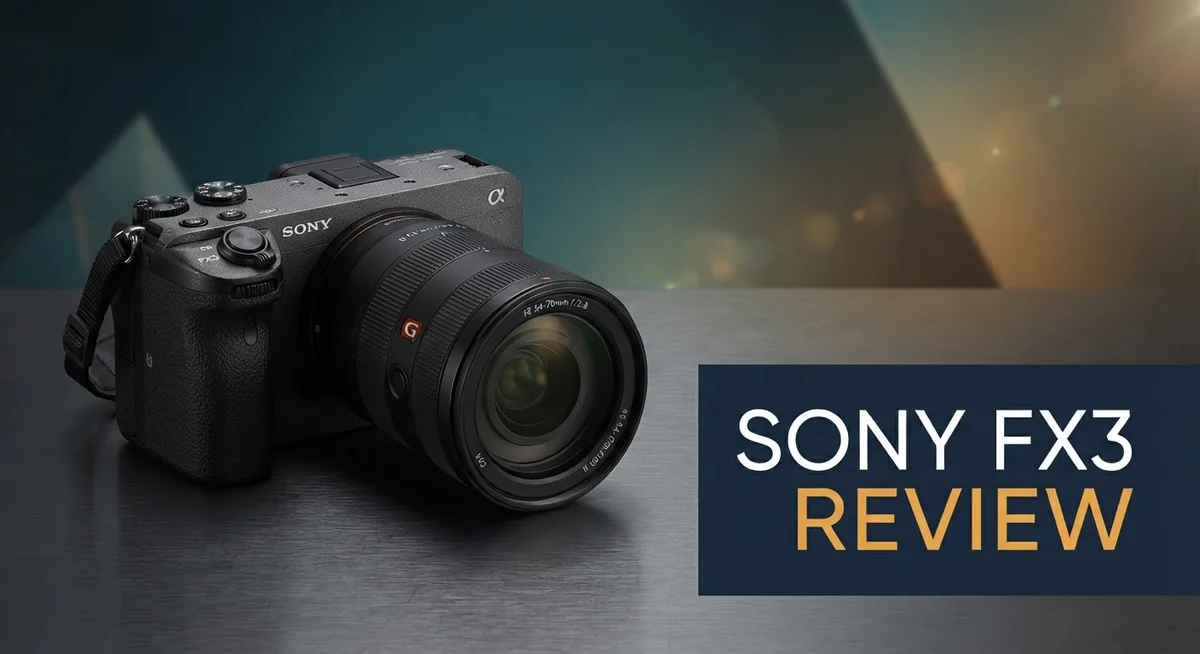
The Sony FX3 is a compact, cage free cinema camera. It packs a full frame sensor into a small body. This makes it a favorite for filmmakers and content creators.
This camera shoots stunning 4K video. Its full frame Exmor R CMOS sensor delivers excellent low light performance. You get clean footage even in dim settings.
The FX3 stands out with its wide dynamic range. It captures rich details in shadows and highlights. An active internal fan keeps the camera cool during long shoots.
You can mount it on sticks, gimbals, or shoot handheld with ease. It adapts to many filming styles.
In this review, we explore what makes the Sony FX3 a top pick. We also look at where it falls short. Let’s get into the details.
In a Nutshell
Here is a quick summary of what the Sony FX3 brings to the table.
-
Full frame sensor: It uses a 35.6 x 23.8mm Exmor R CMOS sensor. This gives you true cinematic depth in every shot.
-
Low light hero: The FX3 handles dim scenes with ease. Its sensitivity makes night shoots look clean and clear.
-
Built in cooling: An active fan keeps the camera running during long takes. You get reliable performance without overheating worries.
-
Pro audio ready: The XLR handle and stereo minijack support give you flexible sound options. This suits solo shooters and small crews alike.
-
Some trade offs exist: There is no built in viewfinder or internal ND filters. Stills resolution sits at 12MP, so this camera leans hard into video.
-
Tough competition: Models like the Sony A7S III and Canon C50 offer similar features. The FX3 still holds its own with a lighter, cage free design.
This camera fits creators who want serious video power in a small body.
Sensor and Image Quality
The Sony FX3 packs a full frame 35mm Exmor R CMOS sensor that measures 35.6 x 23.8mm. This sensor size gives you the shallow depth of field and cinematic look that many filmmakers chase.
The camera delivers 10.3MP effective resolution for video work. While this may seem low compared to stills cameras, it’s perfectly suited for cinema production. The sensor captures stunning 4K footage with excellent color depth and detail.
Low light performance stands out as a major strength. The FX3 handles dark environments remarkably well. You can shoot in dim venues, nighttime scenes, or indoor locations without excessive noise. This sensitivity makes it ideal for documentary work, events, and run and gun situations where lighting isn’t always available.
Dynamic range is genuinely impressive. The camera preserves detail in both bright highlights and dark shadows. You get smooth gradations in the midtones, which helps during color grading. This wide latitude means you have more flexibility in post production.
The shutter range runs from 30/1 second to 1/8000 second. This gives you control over motion blur and exposure in various lighting conditions. You can use slow shutters for creative effects or fast shutters for bright outdoor work.
Image stabilization and thermal management work together seamlessly. An active internal fan prevents overheating during extended recording sessions. This means you won’t hit recording limits on long takes, which is crucial for professionals.
Exposure control includes aperture priority, shutter priority, and full manual modes. You adjust settings quickly with dedicated controls on the camera body. This workflow keeps you focused on framing and capturing the moment.
The sensor’s design prioritizes video over stills. You won’t get massive still image resolution, but that’s not the FX3’s purpose. It’s built for cinema production first. The image quality you get is cinema grade, with accurate colors and minimal artifacts.
Overall, the sensor and image quality make the FX3 a serious choice for video creators. The combination of full frame size, low light prowess, and dynamic range creates a powerful foundation for professional work.

- 4K full-frame sensor w/ 15+ stop dynamic range and high sensitivity
- S-Cinetone for expressive cinematic look inspired by VENICE colorimetry
- Up to 4K 120p 10-bit 4:2:2 and full pixel readout in all recording modes

Last update on 2026-11-08 / Affiliate links / Images from Amazon Product Advertising API
Design and Build Quality
The Sony FX3 features a compact, cage-free design that makes it stand out among cinema cameras. You get a full-frame camera without the bulk of traditional cinema rigs.
The body measures just right for handheld work, gimbal mounting, and tripod shooting. The lightweight construction means you can move between different shooting styles without swapping gear. This flexibility appeals to solo creators and small crews alike.
Build quality feels solid throughout. The magnesium alloy chassis resists dents and scratches during location work. The grip sits comfortably in your hand, though some users note balance challenges when adding certain lenses or accessories.
The XLR handle integrates audio controls directly into the top of the camera. You get professional sound input without external adapters. A stereo minijack provides backup audio connectivity for flexibility.
The camera includes an active internal cooling fan that prevents overheating during extended shooting sessions. This feature matters when you’re filming long takes without stopping. The fan runs quietly and doesn’t interfere with audio recording.
Thermal management works seamlessly with the compact form factor. You can shoot 4K video continuously without worrying about temperature shutdowns. This reliability makes the FX3 trustworthy for paid work.
One notable absence is the built-in viewfinder. You’ll need an external monitor for framing and focus work. Many creators see this as a trade-off rather than a dealbreaker, since it keeps the body small and lightweight.
Internal ND filters are also missing from this design. Neutral density filters attach externally instead. This approach lets you choose filter strength based on your specific needs.
The camera weighs approximately 2.1 pounds without a lens. This light weight makes shoulder rigs and gimbal setups easier to balance. The compact profile fits inside standard camera bags without special cases.
Overall, the design philosophy prioritizes video shooting over stills capability. Every choice reflects this focus. The result is a purpose-built cinema camera that feels at home in professional production environments while remaining accessible to independent filmmakers.
Video Performance and Capabilities
The Sony FX3 delivers impressive 4K video capabilities that meet professional cinema standards. The camera records in multiple formats and frame rates, giving you flexibility for different projects. Whether you shoot documentaries, commercials, or short films, the FX3 handles 4K recording without compromise.
The shutter system spans from 30/1 second to 1/8000 second. This wide range lets you control motion blur and freeze action exactly how you want it. You can shoot slow-motion sequences or maintain cinematic motion blur in bright daylight.
Dynamic range is genuinely impressive on this camera. The full-frame sensor captures detail in both shadows and highlights. You get smooth gradations without harsh clipping, which means your footage grades beautifully in post-production. This capability sets the FX3 apart for serious colorists and editors.
The camera supports aperture priority, shutter priority, and manual exposure modes. Each mode gives you different levels of control depending on your shooting situation. Manual mode is perfect when you need absolute precision over every setting.
Audio integration matters for video work, and the FX3 excels here. The XLR handle accepts professional microphones directly. The stereo minijack provides backup audio options. You monitor levels and adjust gain on the fly without stopping your shot.
The active internal cooling fan keeps the camera running during long takes. This thermal management system prevents shutdowns, so you capture complete scenes without interruption. Extended interviews, live events, and multi-hour shoots become possible.
The compact body works beautifully with gimbals, handheld rigs, and tripods. You don’t need a heavy cage to protect the camera, which saves weight and setup time. This versatility appeals to solo operators and small crews who move between locations quickly.
The camera’s design prioritizes video over stills. The 10.3MP effective resolution for video ensures sharp, detailed footage. You won’t use the FX3 for high-resolution photography, but that’s not what this camera is built for.
Overall, the FX3 combines professional video features with practical usability. The combination of 4K recording, excellent dynamic range, pro audio connections, and thermal stability makes it a serious tool for video creators.
Top 3 Alternatives
Canon EOS R5C

- DIGIC X PROCESSOR WITH 8K VIDEO: Offers outstanding definition and realism with 16x the resolution...
- DUAL PIXEL CMOS AF WITH ITR AF X: Advanced CMOS sensor uses every pixel to detect focus and capture...
- EXPANDED PROFESSIONAL INTERFACE: Synchronize with multiple cameras and setups with timecode...
Last update on 2026-11-08 / Affiliate links / Images from Amazon Product Advertising API
The Canon EOS R5C stands out as a full-frame mirrorless camera built for professionals who need serious video performance. This camera records 8K video at 29.97fps, making it ideal for cinematic work. The autofocus system tracks subjects with impressive accuracy, and the weather-sealed body handles tough shooting conditions.
The R5C features a 45-megapixel sensor that captures stunning stills alongside video. You get dual SD UHS-II card slots for reliable backup and faster workflow. The articulating screen helps with creative angles, and the viewfinder gives you a clear preview of your shot.
Panasonic Lumix S1H

- V-log/v-gamut – features a wider 14 plus Stops of dynamic range which are compatible with the...
- Rugged Mirrorless camera design – dust/splash/freeze-resistant design withstands heavy field use...
Last update on 2026-11-08 / Affiliate links / Images from Amazon Product Advertising API
The Panasonic Lumix S1H is a dedicated hybrid camera that excels at both video and photography. It records 6K video in a compressed format, giving you flexibility in post-production. The full-frame sensor delivers excellent low-light performance, which matters when you’re shooting in challenging environments.
This camera includes built-in ND filters that save you time on set. The battery life is exceptional compared to competitors, letting you shoot longer without swaps. The ergonomic design feels natural in your hands during extended shoots.
Nikon Z9

- Bundle Includes: Nikon Z9 Mirrorless Digital Camera (Body Only) + 120GB G Series XQD Memory Card...
- Experience exceptional image quality with the Nikon Z9's 45.7MP FX-format stacked CMOS sensor paired...
- Capture decisive moments with continuous shooting speeds up to 20 fps in RAW, 30 fps in JPEG, and up...
Last update on 2026-11-08 / Affiliate links / Images from Amazon Product Advertising API
The Nikon Z9 represents flagship performance from a trusted brand. This camera captures 8K video at 60fps, pushing the limits of what mirrorless systems can do. The advanced autofocus uses AI to track eyes, animals, and vehicles with remarkable precision.
The Z9 handles fast-action content with its high-speed burst shooting and robust buffer. The build quality feels premium, and the weather-sealed construction protects your investment. Professional videographers appreciate the extensive codec options and recording flexibility this camera provides.
Audio and Connectivity Features
The Sony FX3 shines when it comes to audio and connectivity. The camera includes a professional XLR handle that mounts directly on top, giving you balanced audio inputs without extra gear. This design keeps your setup clean and compact.
You also get a stereo minijack input for flexibility. Whether you’re using wireless lavaliers, shotgun mics, or line-level sources, the FX3 adapts to your workflow. The audio controls sit right on the handle, so you can adjust levels on the fly without fumbling around the camera body.
Connectivity options make the FX3 work smoothly in modern productions. USB ports let you transfer files quickly and charge batteries during shoots. HDMI output sends your video to external monitors, which helps when you’re working handheld or on a gimbal. This matters because the camera lacks a built-in viewfinder, so external monitoring becomes your main way to frame shots.
The camera supports timecode input and output. This feature keeps multiple cameras or external recorders in sync. If you’re working on larger productions with multiple angles, timecode sync prevents headaches in post-production.
Network connectivity options exist for certain workflows. You can tether the camera to computers for remote operation or file transfer. This flexibility appeals to broadcasters and documentary crews who need fast turnaround times.
Audio quality remains a priority on the FX3. The preamps deliver clean, low-noise signals. You can monitor audio through headphones connected to the minijack output. This lets you catch audio problems before they ruin your take.
The compact body means you won’t struggle with cable management. Everything connects logically, and the XLR handle keeps audio inputs organized at the top of the camera. For creators moving between handheld, gimbal, and tripod setups, this consistency simplifies your technical setup.
Overall, the FX3 treats audio and connectivity seriously. Professional audio inputs, flexible monitoring options, and timecode support show that Sony designed this camera for real production work, not casual video making.
Low-Light Performance and Dynamic Range
The Sony FX3 excels in low-light conditions, making it ideal for documentary filmmakers and content creators who shoot in challenging environments. The full-frame 35mm Exmor R CMOS sensor delivers excellent sensitivity without excessive noise degradation. You can push the ISO higher than many competitors and still maintain usable footage.
The sensor’s high sensitivity comes from its 10.3MP effective resolution for video. This design choice prioritizes light gathering over pixel count. Real-world performance shows the camera handles dim venues, nighttime scenes, and indoor settings with confidence. The lack of noise becomes apparent when you compare it to smaller sensor cameras in similar situations.
Dynamic range on the FX3 remains genuinely impressive. The camera captures detail in both shadows and highlights simultaneously. You get smooth tonal transitions across your image, which matters for color grading later. The wide dynamic range means you recover more information from underexposed or overexposed areas during post-production.
The shutter system (30/1 second to 1/8000 second) gives you complete control over exposure in any lighting scenario. Combine this with aperture priority and manual modes, and you have flexibility that matches professional cinema cameras. The active internal cooling fan ensures the sensor stays cool during extended low-light sessions, preventing thermal noise buildup.
Practical advantages include shooting handheld in dark locations without external lighting rigs. The compact body keeps your setup lightweight, even with stabilization gear attached. Gimbal operators appreciate how the FX3 performs in low-light because the sensor doesn’t force you to use high ISOs unnecessarily.
One consideration: the absence of internal ND filters means you’ll need external solutions for controlling exposure in bright conditions. However, this doesn’t affect low-light performance directly. The FX3 proves that cinema cameras don’t need massive bodies or extreme cooling systems to handle sensitivity challenges well. The engineering prioritizes practical shooting scenarios over spec sheet numbers.
Pros and Cons
Pros
- Compact cage-free cinema body works perfectly with gimbals, handheld rigs, and tripods without extra bulk
- Active internal cooling fan prevents overheating during extended recording sessions and long takes
- Exceptional low-light performance lets you shoot in dark locations without needing external lighting gear
- Full-frame sensor delivers wide dynamic range and high sensitivity for professional-grade video output
- XLR handle and stereo minijack audio inputs give you serious audio control for productions
Cons
- No built-in viewfinder means you’ll need an external monitor or EVF for framing and focus work
- Missing internal ND filters require you to buy external solutions for controlling exposure in bright daylight
- Low stills resolution at 12MP limits the camera if you need quality still images alongside video
- Balance and ergonomic challenges noted by users when shooting handheld without additional support gear
Who Should Buy It
The Sony FX3 works best for video professionals who need a compact cinema camera without compromise. If you shoot documentaries, commercials, or indie films, this camera delivers the tools you need.
Content creators shooting in challenging lighting will appreciate the full-frame sensor’s high sensitivity. You can film in dark locations without external lighting rigs. The wide dynamic range captures detail in both shadows and highlights, which matters for color grading later.
Filmmakers who work with gimbals or handheld rigs benefit from the cage-free design. The compact body keeps your setup lightweight and balanced. You won’t deal with extra bulk that slows down your work. This makes the FX3 ideal for run-and-gun productions where mobility matters.
The XLR handle and stereo minijack audio inputs appeal to audio-conscious creators. If sound quality matters to your workflow, you get professional-grade controls built into the camera itself. This eliminates the need for separate audio interfaces in many situations.
Photographers looking for a hybrid camera should look elsewhere. The FX3 prioritizes video output over stills. The 12MP stills resolution won’t satisfy anyone who needs high-resolution images. This camera focuses on motion, not photos.
Users who prefer built-in viewfinders might struggle. You’ll need an external monitor or electronic viewfinder for framing and focus work. This adds cost and complexity to your setup. If you already own external monitoring gear, this becomes less of an issue.
The absence of internal ND filters means you need external solutions. This suits experienced shooters who understand exposure control. Beginners might find this step frustrating. However, professionals often prefer external NDs for flexibility anyway.
Streaming producers and live event shooters should consider this camera seriously. The timecode input and output options integrate smoothly into professional workflows. Network connectivity exists for certain production scenarios, making the FX3 adaptable to your needs.
The active internal cooling fan prevents overheating during long takes. This matters for documentary work and extended shooting sessions. You can keep rolling without thermal shutdowns interrupting your footage.
Bottom line: choose the FX3 if you prioritize video quality, low-light performance, and compact design. Skip it if you need stills resolution or built-in monitoring solutions.
Final Verdict
The Sony FX3 stands out as a serious tool for video creators who want cinema quality without extra bulk. It handles low light, dynamic range, and audio needs with confidence.
Still, this camera has clear limits. The 12MP stills resolution feels weak if you shoot photos often. Sony built this for video, not for hybrid shooting.
Balance can feel tricky too. Some users report ergonomic struggles when pairing the FX3 with heavier lenses or accessories. You may need extra grips or rigs to get comfortable framing.
Compared to its rivals, the FX3 holds its own. The Sony FX30 offers a similar body but with a smaller sensor, making the FX3 the better pick for full frame quality. The Sony A7S III and A7IV give you stills flexibility, but they lack the cage-free cinema design that makes the FX3 special.
The Canon C50 and Nikon ZR compete directly in this space, but Sony’s ecosystem and lens lineup still give it an edge for many shooters. If you already own Sony glass, this camera fits right in.
Budget shooters exploring the Blackmagic Pocket Cinema 4K or Lumix GH5 will find those cameras capable too. But they don’t match the FX3’s low light strength or full frame sensor advantage.
So, who should walk away? Photographers who need strong stills performance should skip this one. Creators who rely on a built-in viewfinder for every shoot might also want something else.
For everyone else, especially filmmakers, documentary shooters, and streaming professionals, the FX3 delivers real value. It combines a compact body, strong low light skills, and audio control into one flexible package.
This camera won’t fit every need. But for video first creators who want cinema results in a small footprint, the Sony FX3 remains a smart, capable choice worth serious consideration.
Frequently Asked Questions
Does the Sony FX3 have a built-in viewfinder?
No, it doesn’t. You’ll need an external monitor or EVF to frame your shots and check focus. This design choice keeps the camera compact and cage-free, but it means adding gear to your kit.
What audio inputs does the FX3 offer?
The camera includes an XLR handle for professional audio and a stereo minijack input. This gives you solid control over sound quality during recording. You can connect wireless mics, lavaliers, or line-level sources directly.
Can I use internal ND filters on the FX3?
No internal ND filters are built in. You’ll need to buy external ND filters or use variable ND solutions. This adds a small cost and complexity, but many professionals prefer external filters anyway for better control.
How does the FX3 perform in low light?
The full-frame sensor excels in dark conditions. High sensitivity and wide dynamic range let you shoot in challenging lighting without extra gear. This makes it ideal for documentaries, events, and nighttime work.
Is the FX3 good for still photography?
Not really. The camera has a 12MP stills resolution, which is low for photo work. It’s built for video first. If you need strong stills performance, consider a hybrid camera instead.

DK is a tech enthusiast and product reviewer dedicated to helping readers explore the ever-evolving world of technology. With a passion for testing gadgets, apps, and appliances, DK delivers honest, in-depth reviews and practical buying guides to make your tech decisions easier.