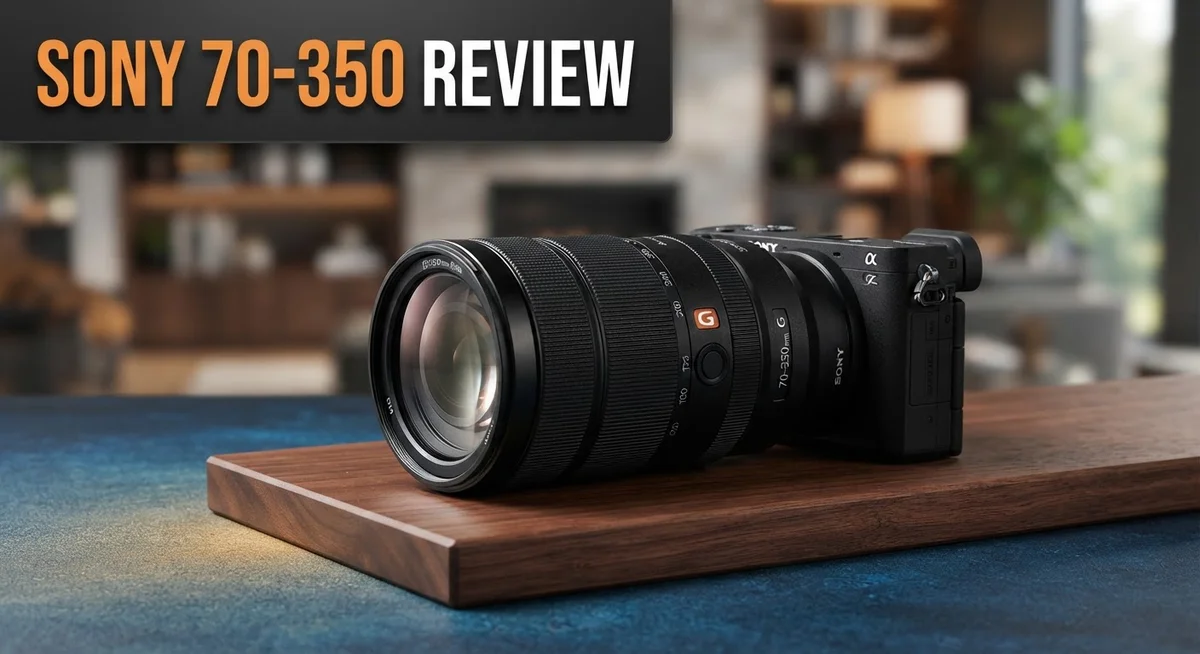
Sony E 70-350mm F4.5-6.3 G OSS Lens Review: Performance, Build Quality, and Value
Do you want a zoom lens that captures distant subjects with sharp detail? The Sony E 70-350mm F4.5-6.3 G OSS might be your answer.
This lens covers a wide focal range. It stretches from 70mm to 350mm. On APS-C cameras, that becomes a massive 105-525mm equivalent.
Wildlife shooters love this reach. Sports photographers rely on it too. Anyone who needs to get close without moving closer will find value here.
We tested this lens for sharpness, autofocus, and build quality. We also checked its performance against other telephoto options.
This review covers everything you need to know. We share the real pros and cons. You will learn if this G lens deserves a spot in your camera bag.
Let’s explore what makes this lens special.
In a Nutshell
-
Sharp images show up across the whole zoom range, from 70mm to 350mm.
-
The XD Linear motor autofocus tracks fast subjects with smooth precision.
-
Build quality feels solid, yet the lens stays light and portable for long shoots.
-
Bokeh quality impresses thanks to the G lens design, giving photos a creamy background blur.
-
Some shots show pincushion distortion, especially at the longer end of the zoom.
-
Flare can appear when shooting directly into bright light sources.
-
Manual focus operates by wire, so it feels different from traditional manual lenses.
-
Autofocus speed stays decent, though it lags behind pricier telephoto options in the same category.
This lens balances strong optical performance with a few small quirks. Sharpness and bokeh make it a strong pick for wildlife and sports photography. Distortion and flare issues remain minor drawbacks that most photographers can work around with basic editing.
Optical Performance and Image Quality
The Sony E 70-350mm F4.5-6.3 G OSS delivers exceptional optical performance across its entire zoom range. You get sharp, detailed images whether you shoot at 70mm or push to the full 350mm reach. The lens maintains consistent contrast and clarity, making it a reliable choice for demanding photography work.
Sharpness holds strong in both the center and edges of your frame. This matters because many zoom lenses struggle at the corners, especially at longer focal lengths. The G lens designation ensures premium optical quality, and you’ll notice this in every shot.
Bokeh quality stands out as a real strength here. The creamy background blur separates your subject beautifully from the background. Photographers who care about aesthetic backgrounds will appreciate how smoothly the out-of-focus areas render. The aperture design contributes directly to this pleasing bokeh character.
The lens does show some optical quirks you should know about. Pincushion distortion appears, particularly when you’re zoomed in toward the 350mm end. Straight lines bow inward slightly, though this is manageable in most real-world shooting situations. Software correction in Sony cameras can help minimize this effect.
Flare becomes an issue when you point the lens directly at bright light sources. Shooting into the sun or toward strong backlight produces visible flare patterns in your images. A quality lens hood helps reduce this problem significantly, and careful positioning of your light source makes a big difference.
The optical stabilization system works effectively for handheld shooting. You can shoot at slower shutter speeds than you’d normally expect, which is helpful in low light conditions. This feature makes the lens more versatile for travel and wildlife photography.
Overall, the optical performance justifies the lens’s position in Sony’s lineup. You receive sharp, contrasty images with beautiful bokeh. The distortion and flare issues are minor concerns that rarely impact real shooting scenarios. This lens performs like a premium tool, delivering results that satisfy serious photographers.

- Sony USA Authorized. Bundle Includes: Sony E 70-350mm f/4.5-6.3 G OSS Lens, 3 Piece Filter Kit...
- Powerful Super-Telephoto Zoom – With an equivalent focal length of 105–525 mm on APS-C cameras...
- High-Resolution G Lens Optics – The optical design features one aspherical and three extra-low...
Last update on 2026-11-07 / Affiliate links / Images from Amazon Product Advertising API
Autofocus System and Stabilization
The autofocus system on this lens relies on a XD Linear motor that delivers smooth, reliable tracking. This motor powers the lens to lock onto moving subjects with consistent precision. You get fast enough performance for most shooting situations, though it won’t match flagship telephoto lenses in pure speed.
The autofocus operates via a focus ring that works by wire. This means your manual adjustments pass through electronics rather than mechanical linkage. Some photographers prefer traditional manual focus, but this system gives you accurate control when you need it.
Optical Stabilization (OSS) is built into this lens to reduce camera shake during handheld shooting. The stabilization system activates automatically when you half-press the shutter button. This feature becomes especially useful at 350mm, where even slight hand movement can blur your images. You’ll notice sharper handheld shots in lower light conditions.
The stabilization works well for static subjects and slower pans. When tracking moving wildlife or sports, the OSS helps you maintain a steady frame without a tripod. The system doesn’t add noticeable lag to your autofocus performance either.
One thing to note: autofocus speed stays decent but not exceptional. The lens focuses quickly enough for general telephoto work like wildlife and sports. However, if you shoot fast-moving action constantly, you might notice it takes slightly longer to lock than premium options.
The combination of autofocus and stabilization makes handheld shooting practical at this focal length. You can shoot at shutter speeds that would normally require a tripod. This flexibility matters when you’re moving between locations or working in tight spaces.
The by wire manual focus takes some adjustment if you’re coming from older lens designs. You lose the direct mechanical feel, but gain precise electronic control. Overall, the autofocus system and stabilization work together to deliver reliable performance across the entire 70-350mm range.
Design, Build Quality, and Portability
The Sony E 70-350mm F4.5-6.3 G OSS strikes an impressive balance between capability and practicality. This lens feels solid in your hands without becoming a burden during extended shooting sessions.
The barrel uses quality materials that resist wear over time. The zoom ring rotates smoothly with just the right amount of resistance. You won’t accidentally shift focal lengths while carrying the lens. The focus ring sits at the front and responds quickly to your input.
At just over one pound, this lens remains remarkably portable for a super telephoto zoom. You can carry it comfortably on a strap for hours without fatigue. The compact design makes it ideal for travel photography or wildlife work where mobility matters.
The E mount connection feels secure and precise. You’ll notice no wobbling or play when attaching the lens to your Sony body. The metal mount construction suggests years of reliable use ahead.
One thing worth noting: the manual focus operates by wire, meaning the ring sends electronic signals rather than moving glass directly. This takes adjustment if you’re used to traditional manual lenses. The response feels smooth once you adapt to the system.
The zoom mechanism extends the barrel slightly as you move toward the telephoto end. This design keeps the lens compact when retracted. The extension happens gradually and smoothly without any grinding sounds.
Weather resistance features aren’t extensive on this model. The lens lacks full weather sealing, so protect it from heavy rain and dust. You should use a protective filter and lens cap during storage.
The focus ring diameter feels comfortable for precise adjustments. You get good tactile feedback when making small focus changes. The ring doesn’t rotate during autofocus, which prevents accidental adjustments.
Overall, the build quality matches professional standards while keeping weight down. The lens inspires confidence through its solid construction and smooth operation. These design choices make it a genuine option for photographers who need reach without excess bulk.
Top 3 Alternatives
Tamron 70-300mm VC

- Best-in-class optical performance
- High resolution through use of XLD glass
- New USD (Ultrasonic Silent Drive) motor for fast and quiet AF
Last update on 2026-11-07 / Affiliate links / Images from Amazon Product Advertising API
The Tamron 70-300mm VC offers excellent optical performance for photographers seeking a versatile telephoto zoom. This lens features vibration compensation technology that stabilizes your shots, even in low light conditions. The VC system works effectively at longer focal lengths where camera shake becomes more noticeable.
Build quality feels solid and dependable. The lens handles well in your hand and focuses quickly on moving subjects. Image sharpness improves significantly when you stop down to f/5.6 or f/8, making it ideal for outdoor and wildlife photography.
Nikon AF-P 70-300mm

- Items Include: Nikon AF-S VR 70-300mm f/4.5-5.6G IF-ED Telephoto Zoom Lens – VR, Lightweight...
- Covers 70–300mm focal length for wildlife, sports, and long-distance scenes. Fast, quiet AF-S...
- Built-in VR image stabilization system offers up to 4 stops of compensation for sharp handheld shots...
Last update on 2026-11-07 / Affiliate links / Images from Amazon Product Advertising API
Nikon’s AF-P 70-300mm brings modern autofocus technology to the telephoto range. The stepping motor ensures silent, smooth focusing that works great for video recording. This lens feels lightweight compared to older telephoto options, reducing fatigue during extended shooting sessions.
The optical formula delivers crisp images across the zoom range. Colors appear accurate and contrast remains strong throughout your compositions. Weather sealing provides protection against dust and moisture, making it reliable for outdoor adventures.
Canon EF 75-300mm

- EF Mount; Aperture Range: f/4-45; DC Autofocus Motor; 4.9' Minimum Focus Distance; 58mm Filter...
- 4.9-foot closest focusing distance; 32- to 8-degree diagonal angle of view
- Measures 2.8 inches in diameter and 4.8 inches long; weighs 16.8 ounces
Last update on 2026-11-07 / Affiliate links / Images from Amazon Product Advertising API
Canon’s EF 75-300mm serves as an affordable entry point into telephoto photography. The lens starts at 75mm rather than 70mm, offering a slightly tighter framing option. Despite its budget positioning, optical quality remains respectable for general photography needs.
Autofocus speed is adequate for most shooting situations. The lightweight design makes handheld shooting practical. Image stabilization helps reduce blur when shooting at longer focal lengths without a tripod. This lens works well for sports, wildlife, and travel photography when you need extended reach without premium pricing.
Lens Distortion and Optical Aberrations
Lens distortion shows up as pincushion distortion across the zoom range. This means straight lines curve inward toward the center of your frame. The effect becomes more noticeable at the wider end of the telephoto range, around 70mm to 150mm.
Sony’s optical design manages this distortion fairly well for a zoom lens. You won’t see extreme bowing in most real world shooting. Still, if you shoot architecture or geometric subjects, you may need to apply correction in post processing.
The G lens designation signals premium optical coatings that reduce aberrations. Chromatic aberration stays minimal throughout the focal range. You might spot slight color fringing only in extreme high contrast situations like tree branches against bright sky.
Spherical aberrations remain well controlled at the telephoto end. The lens maintains sharpness even when you shoot wide open at F6.3. Corner softness appears minimal at relevant apertures, though stopped down performance improves as expected.
Flare represents the main optical weakness here. Bright sunlight entering the lens directly causes visible ghosting and loss of contrast. A quality lens hood helps significantly. You’ll want to use it during outdoor shooting, especially when the sun sits near your frame edge.
Vignetting shows up as slight darkening in the corners at wider focal lengths. This effect disappears almost entirely by 200mm and beyond. Modern cameras and editing software handle this easily if needed.
The optical stabilization system introduces minimal optical degradation. Sony engineered the OSS mechanism to work without sacrificing image quality. This means you get the stabilization benefits without optical trade offs.
Overall, the Sony E 70-350mm handles distortion and aberrations responsibly for its class. The pincushion distortion requires awareness but stays manageable. Flare control matters most here, so invest in a proper lens hood. The combination of quality coatings and thoughtful optical design keeps optical issues from becoming deal breakers during typical shooting sessions.
Real-World Shooting Experience and Handling
When you pick up the Sony E 70-350mm, you immediately notice how light it feels in your hands. At just over one pound, this lens won’t tire your arms during extended shooting sessions. The barrel grips comfortably, and the zoom ring turns smoothly without any grinding or resistance.
The autofocus system uses an XD linear motor that tracks subjects reliably across the entire zoom range. You’ll notice it keeps pace with moving subjects fairly well, though it won’t match the speed of premium telephoto lenses. The motor operates quietly, which matters when you’re recording video or shooting in quiet environments.
Manual focus works through a by wire system, which takes a moment to adjust to if you’ve used older lens designs. The ring responds instantly to your input, but you lose the direct mechanical feel some photographers prefer. This electronic approach does give you precision control once you adapt to it.
Optical Stabilization makes handheld shooting practical at 350mm. The OSS system reduces camera shake effectively when you’re holding the camera steady or panning slowly. You can confidently shoot at shutter speeds that would normally require a tripod. The stabilization works best for static subjects and smooth pans rather than erratic movements.
Flare becomes noticeable when you shoot toward bright light sources. Sun in the frame often produces visible lens flare, so you’ll want to use a lens hood during bright conditions. The premium G lens coatings help reduce this issue, but it remains a consideration.
The zoom mechanism extends the barrel as you move toward the telephoto end. This design keeps the lens compact when not zoomed, making it easy to carry. The E mount connection feels solid and secure, with no play or looseness.
Weather sealing is minimal on this model. The lens lacks extensive gaskets or weatherproofing, so you should avoid heavy rain or dusty conditions. This is one area where the design prioritizes portability over ruggedness.
Pros and Cons
Pros
- Delivers sharp, contrasty images across the entire 70-350mm range with excellent corner-to-corner clarity
- XD linear motor autofocus tracks subjects reliably and consistently throughout all focal lengths
- Compact and light design makes handheld shooting practical even at maximum telephoto reach
- G-lens optical coatings produce beautiful bokeh and manage aberrations effectively
- Optical stabilization enables steady handheld shots at 350mm without a tripod
Cons
- Flare becomes noticeable when shooting toward bright light sources or the sun
- Pincushion distortion appears across the zoom range, though Sony’s design keeps it reasonably controlled
- Autofocus speed is decent but not as fast as some premium alternatives in the category
- Manual focus operates by wire, which feels less direct than traditional mechanical focus rings
Who Should Buy It
The Sony E 70-350mm works best for photographers who shoot on APS-C mirrorless cameras and need serious reach. If you own a Sony a6400, a6700, or similar E-mount body, this lens opens up new shooting possibilities.
Wildlife photographers find real value here. The 5x optical zoom gets you close to distant subjects without changing lenses. The XD linear motor autofocus tracks moving animals reliably, which matters when you’re photographing birds in flight or deer crossing a meadow.
Sports shooters appreciate the compact design. You can handhold this lens at 350mm thanks to the optical stabilization system. Unlike heavier telephoto lenses, this one won’t exhaust your arms during a full day of shooting events.
Travel photographers benefit from the lightweight build. The lens packs down small enough for a camera bag without dominating your luggage. You get telephoto reach without the bulk of traditional super-telephoto options.
Hobbyists upgrading from kit lenses will notice the jump in sharpness and contrast. The G-lens optical coatings produce noticeably better bokeh and color rendition. If you’ve been shooting with standard zooms, this lens shows what premium optics can do.
Nature and landscape photographers who want environmental context with distant subjects find this range useful. You can capture a bird perched on a distant branch while showing the surrounding habitat.
This lens isn’t ideal for studio work or indoor events where you need fast apertures. The F4.5-6.3 aperture gets narrower as you zoom, which limits low-light performance. If you shoot primarily in dim conditions, look at alternatives like the Tamron 70-180mm F2.8.
Video creators using E-mount cameras appreciate the smooth autofocus and stabilization. The by-wire manual focus system works fine for video work once you adjust to it.
Skip this lens if you need weather sealing for harsh environments. The minimal sealing means you should protect it from rain and dust.
The Sony E 70-350mm suits photographers who prioritize reach, sharpness, and portability over fast apertures or extreme durability.
Final Verdict
The Sony E 70-350mm F4.5-6.3 G OSS stands out as a smart choice for APS-C shooters who need extra reach. Its optical performance beats most consumer zoom lenses on the market today.
You get sharp images, reliable tracking, and a build that feels solid in daily use. These qualities make it a lens you can trust for years.
If you shoot wildlife, sports, or travel scenes, this lens fits your bag well. It handles distant subjects with confidence and gives you results that feel professional.
Some drawbacks exist, though. Flare shows up in bright conditions, and pincushion distortion appears in certain shots. Neither issue breaks the deal, but you should know about them before you buy.
The Tamron 70-180mm F2.8 offers a wider aperture and works great for portraits or low light situations. However, it lacks the reach that Sony’s lens gives you.
The Tamron 70-300mm suits full-frame shooters better and might not match the Sony lens in build quality or autofocus speed.
Sony’s E-mount lineup doesn’t offer many alternatives in this super telephoto zoom category. This scarcity makes the Sony 70-350mm a rare and valuable option for APS-C users.
Should you buy this lens? If reach matters to you and you shoot on an APS-C body, the answer is yes. It rewards you with consistent sharpness, dependable autofocus, and a design that stays light on long shoots.
This lens won’t replace a prime lens for indoor or studio work. But for outdoor photography where distance and detail matter, it delivers results that satisfy both hobbyists and serious enthusiasts.
Overall, this lens earns its spot in your kit if wildlife, sports, or travel photography drives your work. It combines optical quality with practical handling, making it a dependable companion for reaching subjects far beyond your standard zoom range.
Frequently Asked Questions
Does the Sony E 70-350mm work for video recording?
Yes, it works well for video. The XD linear motor autofocus tracks smoothly during recording. Optical stabilization keeps footage steady at 350mm, which is hard to achieve handheld without help.
The “by wire” manual focus feels responsive on video. You get smooth focus pulls when you adjust the ring. E-mount shooters appreciate this lens for vlogging, documentary work, and cinematic shots.
What’s the autofocus speed like in real shooting?
Autofocus is decent but not lightning fast. The XD linear motor locks onto subjects reliably across all focal lengths. It performs well for wildlife and sports, though it won’t match professional fast-aperture lenses.
Tracking consistency matters more here than raw speed. The lens maintains focus on moving subjects without hunting or losing lock. For travel and nature work, this speed is totally acceptable.
How does this lens compare to the Tamron 70-180mm F2.8?
The Tamron offers a wider aperture, which helps in low light and creates shallower depth of field. It’s better for portraits and indoor events. The Sony reaches further (350mm vs. 180mm) and has more compact design.
Choose the Tamron if you shoot indoors or need fast apertures. Pick the Sony if you want maximum reach and lightweight travel performance.
Is manual focus practical on this lens?
Manual focus works, but it operates “by wire.” You rotate the ring and the motor adjusts focus. This feels different from mechanical focus rings on older lenses.
The response is smooth and responsive. For video work, it’s quite usable. For photography, most shooters rely on autofocus instead.

DK is a tech enthusiast and product reviewer dedicated to helping readers explore the ever-evolving world of technology. With a passion for testing gadgets, apps, and appliances, DK delivers honest, in-depth reviews and practical buying guides to make your tech decisions easier.