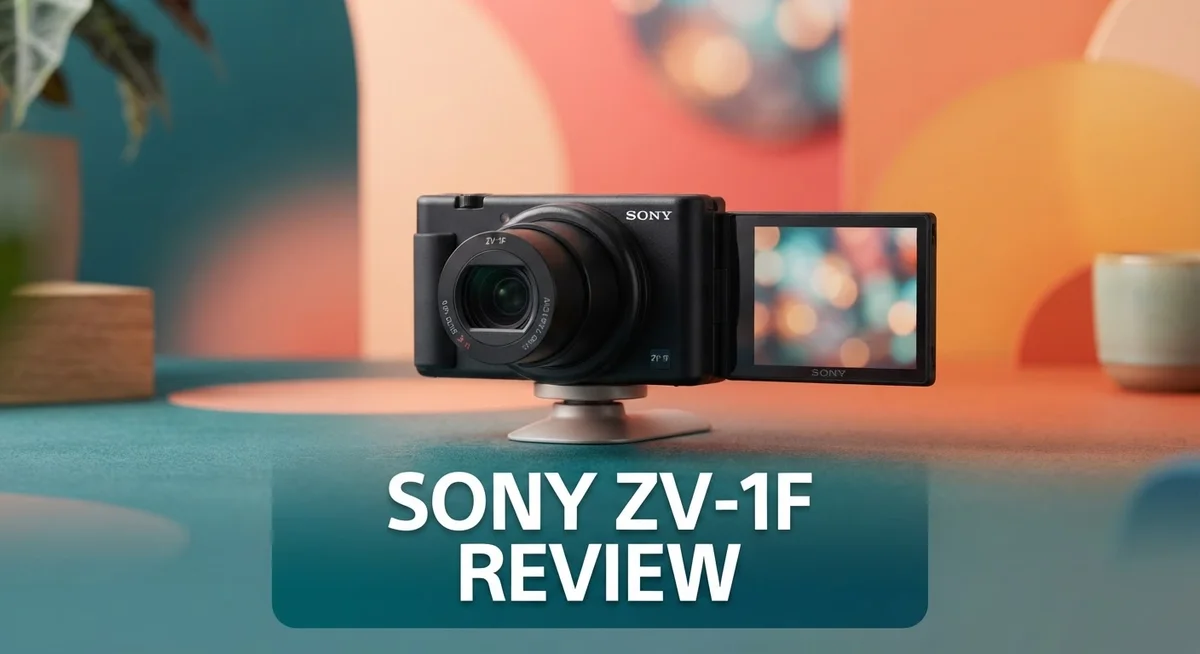
Sony ZV-1F Review: Compact Vlogging Camera with Professional Audio
Want a camera that vlogs as easily as you talk? The Sony ZV-1F aims to do just that. It packs a 20.1MP 1 inch sensor into a small, light body.
This camera skips optical zoom. Instead, it focuses on what vloggers need most. You get a wide lens, a flip screen, and clear audio.
The 3 capsule microphone catches your voice with impressive clarity. The 180° screen lets you check your shot with ease. Low light scenes look clean and sharp too.
But is it truly the best pick for content creators? Autofocus quirks and no Raw support might make you pause.
This review breaks down every feature. We will explore what works, what does not, and who should buy this camera. Let’s dive into the full picture.
In a Nutshell
Here’s the quick rundown of what this camera brings to the table:
-
Compact and lightweight body makes it easy to carry anywhere. You can slip it into a small bag or even a large pocket.
-
The 180° articulating screen flips fully toward you. This helps you frame shots perfectly while vlogging solo.
-
Low light performance stands out thanks to the 1-inch sensor. Your footage stays clear even in dim rooms or evening shoots.
-
Video comes in 4K quality with digital stabilization. Your clips look smooth without needing extra gear.
-
The interface stays simple and beginner friendly. New creators can start filming without a steep learning curve.
-
Battery life lasts around 7 hours per charge. This lets you shoot longer sessions without stopping to recharge.
-
It sits alongside models like the Sony ZV-1 II and Canon R100 in this category. Each offers different strengths for vloggers.
-
Don’t expect 4K at 60fps here. Fast action scenes may show some limits compared to pricier options.
Key Features and Specifications
The Sony ZV-1F packs a 20.1 megapixel 1-inch sensor into a body small enough to slip into a backpack. This sensor size matters because it captures more light than smaller competitors, giving you cleaner footage even when the sun dips low.
The camera uses a fixed 20mm lens with a wide field of view. You won’t find optical zoom here, but the broad angle works perfectly for selfie content and close-up talking head videos. This design choice keeps the camera lightweight and eliminates moving parts that could fail.
Video recording reaches 4K resolution with digital stabilization built in. The stabilization smooths out shaky handheld shots without requiring a tripod or gimbal. However, the maximum frame rate stops at 30fps in 4K mode. If you need faster motion capture, you’ll need to step up to pricier models.
The 3-capsule directional microphone stands as the standout audio feature. It focuses on sound coming from the front while reducing background noise from the sides and rear. This setup keeps your voice clear and present in your recordings without picking up every ambient sound around you.
The 180-degree articulating screen flips completely toward you for selfie shooting. You can see yourself while recording, which helps with framing and checking your appearance on camera. The screen responds to touch, making menu navigation intuitive.
Battery life reaches approximately 7 hours under normal shooting conditions. Real world usage varies based on screen brightness, video format, and autofocus usage. Carrying a spare battery makes sense for full day shoots.
The camera outputs JPEG still images and video files only. It does not support Raw photo format, which limits editing flexibility for photographers. This limitation points toward the ZV-1F as a video first device rather than a hybrid photo and video tool.
The menu system keeps things simple with straightforward options and logical organization. New users can start recording without wrestling through complicated settings. Advanced users might find fewer customization options than they’d prefer.

- This Digital Camera Bundle Includes: Sony ZV-1F Vlogging Camera (Black) USA Model With Limited...
- Specifically designed for vloggers and online content creators, the Sony ZV-1F Vlogging Camera is a...
- Offering 425 contrast detection AF points to cover a wide area of the captured image, the ZV-1F...
Last update on 2026-11-08 / Affiliate links / Images from Amazon Product Advertising API
Video and Audio Performance
The Sony ZV-1F delivers solid video performance for content creators who prioritize simplicity over technical flexibility. The 4K video recording captures crisp, detailed footage that looks professional on social media platforms.
Digital stabilization keeps your video smooth during handheld shooting. This feature matters when you’re walking while recording or moving around during vlogs. The stabilization works well enough for casual content without the need for extra gear.
The audio performance is where this camera truly shines. The 3-capsule directional microphone captures your voice with remarkable clarity while reducing background noise. This microphone setup prioritizes sound from the front and sides, making your speech stand out in the final recording. For vloggers, this is a game changer compared to basic smartphone microphones.
One limitation you should know about: the camera does not record 4K at 60 frames per second. You get 4K at 30fps or lower frame rates. This means your footage plays at standard speed rather than slow-motion options at higher resolutions. For most vlogging purposes, this works fine, but fast-paced action content may feel less dynamic.
The autofocus shows inconsistency during video recording. Users report occasional focus hunting or “fluttering” when the camera struggles to lock onto your face. This happens especially in tricky lighting situations. Manual focus adjustment can help, but it requires extra attention during shooting.
The fixed lens means no optical zoom capability. You cannot zoom in and out smoothly during recording. This forces you to position yourself correctly before filming or move physically closer to your subject. Some creators find this limiting, while others appreciate the simplicity.
Video files export as standard formats compatible with most editing software. The camera handles color grading reasonably well straight out of the box. Low-light video performance benefits from that large 1-inch sensor, delivering usable footage even in dim conditions without excessive grain.
Overall, the video and audio combination makes the ZV-1F a practical choice for vloggers prioritizing ease of use and clean audio capture over advanced technical controls.
Design, Portability, and Handling
The Sony ZV-1F feels genuinely comfortable to hold for extended shooting sessions. Your hand wraps around the grip naturally. The camera weighs just over a pound, so your arm won’t tire quickly during long vlogging days.
The body itself is compact. You can slip it into a messenger bag or even a large jacket pocket. This portability makes it perfect for creators who move between locations frequently. Whether you’re filming at a coffee shop or traveling across town, the ZV-1F travels light.
The 180-degree articulating screen is where this camera shines for handling. Flip it toward you, and you see exactly what your audience sees. This flip mechanism feels smooth and reliable. The screen rotates without wobbling or feeling loose after repeated use.
One-handed operation works surprisingly well here. The buttons sit exactly where your thumb naturally lands. You can press record, adjust settings, and navigate menus without switching your grip. The straightforward menu system means fewer deep dives into confusing submenus while you’re actively filming.
The microphone placement deserves mention. Those 3 capsules sit on top of the camera, positioned to capture your voice clearly while minimizing background noise. You won’t need external audio gear for basic vlogging, which keeps your setup minimal and portable.
Battery performance supports extended shoots. You get roughly 7 hours per charge under normal conditions. This means you can film an entire day of content without hunting for a power outlet mid-session.
The fixed lens might feel limiting at first. You cannot zoom optically. However, this actually simplifies handling. There’s nothing to adjust, nothing to break, and one less thing to think about while you’re focused on your content. The wide field of view works beautifully for selfie vlogging anyway.
The camera’s weight distribution feels balanced. It doesn’t tip forward or feel top-heavy. This matters when you’re holding it at arm’s length for extended periods. Comfort during extended use translates directly to better footage and fewer mistakes during recording.
Top 3 Alternatives
DJI Osmo Action 4

- Superior Low-Light Performance with 1/1.3-inch Sensor - Struggling with grainy footage in low light...
- Pro-Grade Color Science - Worried your videos lack real-life colors? 10-bit color depth captures...
- See More, Feel More - Want to capture more action and scenery? Shoot in 4K at 120fps with a...
Last update on 2026-11-08 / Affiliate links / Images from Amazon Product Advertising API
The DJI Osmo Action 4 delivers excellent video quality for content creators. This camera captures 4K footage at high frame rates. The sensor performs well in low light situations. You get a durable build that handles tough conditions. The stabilization keeps your videos smooth and professional-looking. Battery life lasts through most recording sessions. The interface is straightforward and easy to navigate.
GoPro Hero 12 Black

- High Dynamic Range Video + Photo: HERO12 Black takes its best-in-class image quality to the next...
- Unbelieveable Image Quality: With 5.3K video that gives you 91% more resolution than 4K and an...
- Emmy Award- Winning HyperSmooth 6.0 Stabilization: HyperSmooth continues to set the bar for insanely...
Last update on 2026-11-08 / Affiliate links / Images from Amazon Product Advertising API
GoPro’s Hero 12 Black stands out with powerful performance and reliability. This camera records stunning 5.3K video with sharp detail. The rugged design survives drops and impacts. You’ll appreciate the fast processor that handles demanding tasks. The stabilization technology keeps footage steady even during action. Low light recording produces clean, usable footage. The ecosystem of mounts and accessories expands your creative options.
Insta360 X3

- Think bold. A collection of stickers that capture the Insta360 spirit, freely pasted wherever you...
- NEW ERA 360 ACTION CAMERA: Insta360 X3 combines 5.7k 360 with all the power of a 4K action camera...
- 5.7K 360 CAPTURE & REFRAMING: Insta360 X3 captures 360 Active HDR video, with all the benefits of a...
Last update on 2026-11-08 / Affiliate links / Images from Amazon Product Advertising API
The Insta360 X3 offers unique 360-degree capture that sets it apart. This camera records immersive footage in all directions simultaneously. You can reframe your shots during editing. The dual lenses work together seamlessly. Video quality remains sharp across the entire frame. The compact design fits easily in bags and pockets. Stabilization keeps everything smooth during movement.
Each option serves different needs. Choose the DJI Osmo Action 4 for reliable action footage. Pick the GoPro Hero 12 Black for premium performance and durability. Select the Insta360 X3 if you want creative 360-degree possibilities. All three cameras deliver professional results for content creators and adventurers alike.
Low-Light Capability and Image Quality
The Sony ZV-1F handles low light situations better than you might expect from a compact vlogging camera. The 1-inch sensor collects plenty of light, which is the main reason why shadow areas stay clean instead of turning into grainy messes.
When you shoot indoors or during golden hour, the camera maintains detail in both bright and dark parts of your frame. The sensor’s size makes a real difference here. Larger sensors naturally pull in more light without forcing you to crank up ISO to uncomfortable levels.
ISO performance stays reasonable up to around 3200. Beyond that point, noise becomes more visible in your footage. For most vlogging scenarios—interviews in coffee shops, indoor tutorials, evening outdoor content—you won’t hit those extreme ISO values. The camera finds a good balance between brightness and image cleanliness.
Color accuracy remains consistent even when light gets dim. Skin tones look natural, and colors don’t shift into weird blue or orange casts. This matters a lot when you’re creating content that people watch on small screens or phones.
One thing to watch: the autofocus can struggle in very low light situations. It may hunt back and forth instead of locking on cleanly. Manual focus becomes your friend when ambient light drops significantly. You can tap the screen to adjust focus manually, which gives you more control.
Video noise appears earlier than still image noise. When you record 4K video in dim conditions, you’ll notice grain sooner than if you were taking photos. This is normal for compact cameras, but it’s worth knowing. Switching to 1080p recording reduces noise noticeably if you need cleaner footage.
The digital stabilization continues working smoothly in low light. Your footage stays steady without requiring extra light to function properly. This combination of decent low light handling plus smooth stabilization makes the ZV-1F practical for real world vlogging.
Bottom line: the camera performs admirably in challenging lighting. It won’t match a full frame mirrorless camera, but it delivers solid results for content creators who work in mixed or dim lighting environments regularly.
Autofocus Reliability and Limitations
The Sony ZV-1F’s autofocus system presents a mixed experience that content creators should understand before purchasing. The camera uses a contrast-detection autofocus system, which works adequately in many situations but shows notable weaknesses during video recording.
During actual filming, you’ll notice the autofocus can exhibit “fluttering” behavior. This means the focus point shifts back and forth slightly, creating an unsettling visual effect in your footage. This happens most often when you’re moving or when your subject moves across the frame. For vloggers doing talking-head videos with minimal movement, this issue becomes less noticeable. However, if you plan to walk around while filming or create more dynamic content, this limitation becomes apparent.
The autofocus struggles significantly in low light environments. When you’re shooting indoors or during evening hours, the system takes longer to lock onto your subject. In very dim conditions, it may hunt for focus repeatedly. This makes the camera less reliable for nighttime vlogging or indoor recording without supplemental lighting.
Face detection autofocus works reasonably well when lighting is adequate. The camera recognizes faces and attempts to keep them sharp, which helps for selfie vlogging. However, this feature doesn’t fully compensate for the system’s overall inconsistency.
You have manual focus available as an alternative. Switching to manual focus eliminates the fluttering problem entirely, but it requires more attention during recording. Many users find manual focus preferable for serious video work, even though it demands additional skill.
The fixed focal length actually helps autofocus performance compared to zoom cameras. Since the lens doesn’t change, the autofocus system has fewer variables to manage. Still, this advantage doesn’t fully overcome the system’s inherent limitations.
For your workflow, expect autofocus to work best in bright, stationary scenarios. If you’re creating simple, well-lit content with minimal movement, the autofocus performs acceptably. For complex, dynamic videos or low-light situations, consider relying on manual focus control instead. Understanding these limitations helps you plan your shooting approach and set realistic expectations for this camera.
Pros and Cons
Pros
- Superior directional microphone with 3-capsule system captures clean audio for vlogging without external gear
- Compact and portable design lets you shoot one-handed with comfortable weight distribution
- Excellent low-light performance with reasonable ISO up to 3200 and consistent color accuracy
- 180-degree articulating screen makes selfie vlogging and framing incredibly easy
- Straightforward menu system and controls help beginners start recording quickly
Cons
- Autofocus exhibits “fluttering” behavior during filming and struggles noticeably in low-light conditions
- Fixed lens means no optical zoom, which limits creative framing options and requires you to move closer to subjects
- No Raw file support restricts editing flexibility since you only get JPEG photos and video files
- Maximum 4K recording tops out at 30fps, which some creators find limiting for smooth slow-motion work
Who Should Buy It
The Sony ZV-1F works best for specific types of content creators. If you make vlogs and prioritize audio quality, this camera fits your needs perfectly. The 3-capsule directional microphone captures your voice clearly without requiring an external mic setup.
Selfie vlogging enthusiasts will appreciate the 180-degree articulating screen. You can frame yourself easily while recording, and the wide fixed lens keeps your surroundings visible. This setup feels natural for talking-to-camera content.
Travel creators love this camera because it’s genuinely compact. You can shoot one-handed, and the weight won’t tire your arm during long recording sessions. The portable design means you’ll actually carry it everywhere instead of leaving it home.
Low-light performers benefit from the solid ISO performance. If you shoot indoors, during evening, or in dim venues, the camera maintains image quality reasonably well. The digital stabilization keeps footage smooth even when lighting gets challenging.
Beginners appreciate the straightforward menu system. You won’t spend hours learning complicated settings. The camera lets you start recording within minutes of opening the box.
However, skip this camera if you need zoom capabilities. The fixed lens means you must physically move closer to subjects. Professional photographers wanting Raw files should look elsewhere since this camera only shoots JPEG and video.
Content creators working in very low light situations should know the autofocus can become unreliable. Face detection works fine in adequate lighting, but dimly lit environments cause the autofocus to flutter. You’ll need manual focus as a backup plan.
Smartphone users who want a dedicated camera but expect advanced features might feel limited. This camera excels at specific tasks rather than offering everything.
The ZV-1F targets vloggers and travel creators who value audio, portability, and ease of use. It’s not a general-purpose camera for photographers. It’s not a professional video tool with unlimited creative control. It’s a focused device built specifically for content creators who talk to their audience and move around while filming.
Final Verdict
The Sony ZV1F delivers real value for a specific type of creator. It shines brightest for people who prioritize audio quality and easy framing over zoom flexibility.
This camera makes sense if you already know your content style. Vloggers who talk directly to the camera will feel right at home with the fixed wide lens.
Think about your typical filming environment before buying. If you shoot mostly in bright rooms or outdoors, the autofocus quirks matter less.
Compare this to your smartphone first. Many phones now offer similar video quality with more flexibility. The ZV1F earns its place when you want dedicated hardware built for talking head content.
Against its Sony siblings, the ZV1F trades zoom range for simplicity. The ZV1 and ZVE10 offer more creative control, but they also add complexity beginners might not want.
Canon and Panasonic alternatives bring their own strengths, but few match the microphone quality here. That audio advantage alone justifies the camera for many solo creators.
The core question comes down to your priorities. Do you value plug and play simplicity over manual control? Does audio quality matter more than optical zoom?
If yes, this camera fits well. If you need Raw files or fast autofocus in dim lighting, look elsewhere.
Your final decision should match your actual filming habits, not hypothetical needs. Buy based on what you shoot today, not what you might shoot someday.
For solo creators focused on talking head content, selfie style vlogs, or simple travel diaries, the ZV1F performs its job well. It handles the basics without fuss.
This camera rewards users who embrace its limitations. Accept the fixed lens. Work with the autofocus quirks in good light. Do this, and you get a reliable tool for consistent content creation.
The ZV1F won’t replace a professional setup, but it doesn’t try to. It simply makes vlogging accessible and straightforward for the right person.
Frequently Asked Questions
Does the Sony ZV-1F shoot 4K video at 60fps?
No. The camera records 4K video, but only at 30fps maximum. If you need 4K/60fps capability, you’ll want to look at other models in Sony’s lineup like the ZV-1 II or ZV-E10 II.
The 4K/30fps output is still smooth for most vlogging work. Many creators find this frame rate perfectly adequate for their content.
Can you use the Sony ZV-1F without the articulating screen?
Yes, absolutely. The 180-degree articulating screen is a feature you can ignore if you prefer. You can film using the rear LCD or an external monitor instead.
However, the flip screen is one of the camera’s best features for selfie vlogging. It makes framing yourself incredibly easy without extra gear.
Is Raw file support available on this camera?
No. The ZV-1F only captures JPEG photos and video files. There is no Raw shooting mode.
If Raw editing flexibility matters to you, consider the ZV-E10 or ZV-E10 II, which both offer Raw support for stills.
How does the microphone compare to a smartphone?
The 3-capsule directional microphone on the ZV-1F captures audio that sounds noticeably cleaner than most smartphones. It reduces background noise and focuses on your voice.
This is a major strength for vlogging. Few cameras in this category match the audio quality here. If you talk directly to the camera, you’ll hear the difference immediately.
What happens if you need optical zoom?
You cannot zoom optically with this camera. The fixed lens stays at its wide focal length, so you must move closer to your subject or reframe your shot.
This limitation matters most for travel or event coverage. Selfie vloggers rarely notice the lack of zoom since they film themselves up close anyway.

DK is a tech enthusiast and product reviewer dedicated to helping readers explore the ever-evolving world of technology. With a passion for testing gadgets, apps, and appliances, DK delivers honest, in-depth reviews and practical buying guides to make your tech decisions easier.