
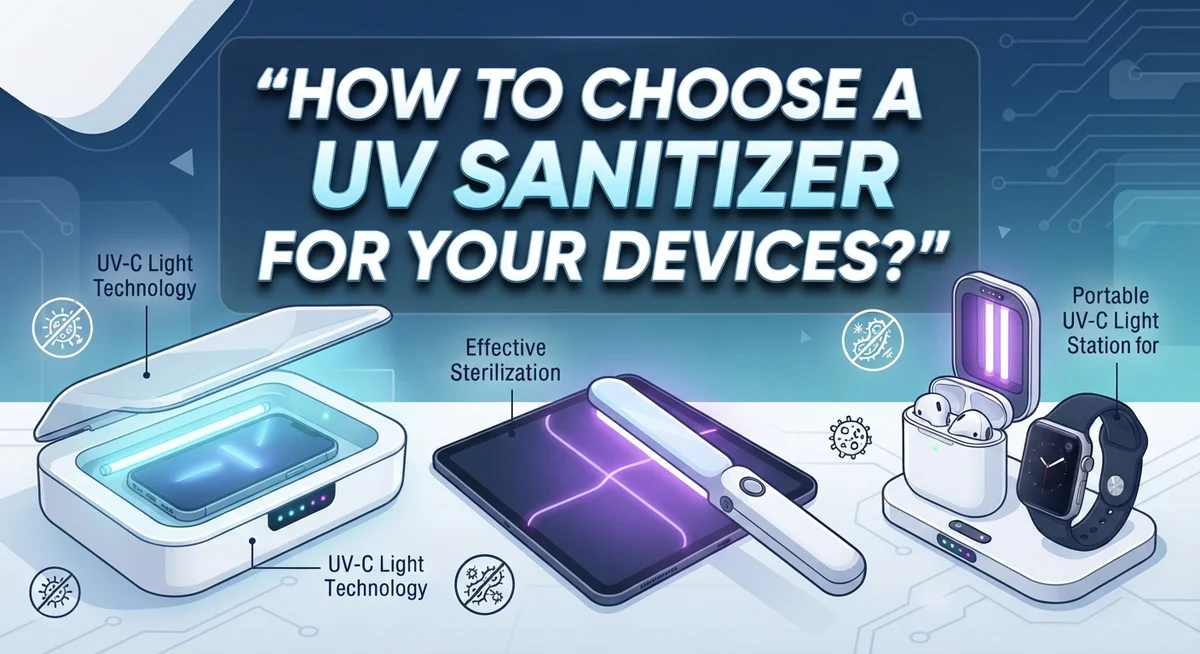
How to Choose a UV Sanitizer for Your Devices?
Your phone touches your hands, your desk, and even the bathroom counter. Germs build up fast, and wiping with a cloth only does so much. That’s where a UV sanitizer comes in.
These handy devices use UV-C light to kill germs, bacteria, and viruses on your electronics. But not all sanitizers work the same way. Some use genuine UVC light, while others use weaker UV types that barely make a difference.
The right sanitizer depends on several factors. You need to think about sterilization time, safety features, and the type of device that fits your lifestyle. Handheld wands, stationary boxes, and UV-C lamps all serve different needs.
Surface texture matters too. UV light works best on smooth, hard surfaces like phone screens. Bumpy or ridged items don’t sanitize as well.
This guide walks you through everything you need to know. You’ll learn how to spot genuine UVC technology, avoid common buying mistakes, and pick a sanitizer that actually protects your devices. By the end, you’ll know exactly what to look for and why it matters.
In a Nutshell
Here’s what you need to remember when picking a UV sanitizer:
-
Check for genuine UV-C light. Some products use the wrong UV type, which won’t kill germs effectively. Always confirm the device uses real UV-C technology.
-
Look at safety features first. Good sanitizers shield your eyes and skin from direct UV exposure. This protects you during every use.
-
Match sterilization time to your needs. Some devices work in minutes, others take longer. Faster isn’t always better—effectiveness matters more than speed.
-
Consider the distance requirement. UV-C light loses power over distance. Check how close your device needs to sit to the light source.
-
Pick the right device type for you. Handheld wands work for quick spots. Stationary boxes suit full phone sanitizing. UV-C lamps cover larger areas.
-
Remember surface texture limits. Smooth, flat surfaces get cleaned best. Bumpy or ridged spots may block UV-C rays from reaching germs.
These simple checks help you choose a sanitizer that actually works. A little research now saves disappointment later.
What Is a UV Sanitizer and How Does It Work?
UV sanitizers use a specific type of light called UV-C to clean your devices. This light works differently than the UV rays from the sun. UV-C light has a shorter wavelength that damages the DNA and RNA of germs, bacteria, and viruses.
When UV-C light hits a microorganism, it breaks down the genetic material that keeps the germ alive. The germ cannot reproduce or function after this damage occurs. This process kills the pathogen on contact without using chemicals or heat.
The key difference matters here. UV light comes in three types: UV-A, UV-B, and UV-C. Only UV-C actually disinfects your devices. Many products claim to sanitize but use the wrong UV type, which wastes your money and leaves germs behind.
UV-C light works best on smooth, hard surfaces like your phone screen or tablet. It cannot reach into cracks, crevices, or textured areas effectively. The light travels in straight lines, so bumps and ridges create shadows where germs hide.
Distance affects how well UV-C works too. The light loses power as it travels farther from the source. Most sanitizers work best when your device sits close to the UV-C lamp, usually within a few inches.
Mercury-free options now exist. Traditional UV-C lamps contained mercury, which posed safety risks. Modern sanitizers use safer lamp technology that still produces the same germicidal results.
The sterilization process takes time. Some devices need just a few minutes, while others require 15 to 30 minutes for full disinfection. The exposure time depends on the UV-C lamp’s strength and your device’s size.
Understanding how UV-C works helps you pick a sanitizer that actually kills germs. You’ll know what to look for and what questions to ask before buying.
Why UV-C Light Effectiveness Depends on Surface Type
UV-C light works differently depending on what surface you’re cleaning. Smooth, hard surfaces absorb UV-C light most effectively. Your phone screen, tablet, or laptop keyboard all have flat surfaces that allow UV-C rays to reach germs directly and destroy them.
Textured surfaces create a real problem. Bumps, ridges, and grooves on your device cast tiny shadows. These shadows block UV-C light from reaching bacteria and viruses hiding inside the crevices. A phone case with a textured grip, for example, won’t sanitize as well as a smooth glass screen.
The material itself matters too. Non-porous surfaces work best with UV sanitizers. Glass, metal, and hard plastic let UV-C light penetrate evenly. Porous materials like fabric, leather, or rubber absorb light unevenly. This means some germs escape the UV exposure while others get hit multiple times.
Surface color also plays a role. Darker surfaces absorb more UV-C energy than lighter ones. This affects how quickly sanitization happens. A black phone case sanitizes differently than a white one, even if both are smooth.
When you choose a UV sanitizer, think about what you’re cleaning most. If you mainly sanitize your phone and earbuds, a device designed for smooth surfaces works perfectly. But if you need to clean textured cases or rugged devices, you might need longer exposure times or a different approach.
The takeaway is simple: UV sanitizers work best on smooth, hard, non-porous surfaces. Before buying a sanitizer, check what surfaces you plan to clean. Flat surfaces get the best results. Textured items need special consideration. Understanding this difference helps you pick a sanitizer that actually delivers the germ-killing power you expect.
Types of UV Sanitizing Devices: Handheld, Stationary, and Lamps
UV sanitizing devices come in three main styles. Each one works differently depending on your lifestyle and what you need to clean.
Handheld wands are small, portable tools you hold in your hand. You move them slowly over your phone, earbuds, or other items. These work fast, usually taking 5 to 10 seconds per surface. They’re perfect if you travel often or want to sanitize on the go. The downside is they require you to move the wand yourself, so results depend on how carefully you use it.
Stationary boxes are larger units where you place your entire device inside. The UV-C light surrounds your item from multiple angles. These typically take 5 to 15 minutes per cycle. Stationary boxes work well because they sanitize all sides at once, including hard to reach corners. They’re ideal for your nightstand or desk since you just drop your phone in and wait.
UV-C lamps are standalone light sources you can position over items. Some come as desk lamps, others as flat panels. You arrange your devices under the lamp for a set time. These give you flexibility to sanitize multiple items at different distances. Lamps often take longer than boxes, sometimes 10 to 30 minutes depending on the lamp’s power and distance.
When choosing between these three, think about your routine. Do you need quick sanitizing throughout the day? A handheld wand fits easily in a pocket. Do you want a set it and forget it option? A stationary box handles that better. Do you want to sanitize several items at once? A lamp gives you more space and flexibility.
Each device type also varies in price range and features. Consider how often you’ll use it and what devices you own most.
Step-by-Step: How to Evaluate and Select the Right UV Sanitizer
Start by identifying what devices you need to sanitize most often. Your phone, tablet, earbuds, or glasses? This shapes which sanitizer type makes sense for your lifestyle.
Next, verify the UV light type. The device must use UV-C light, not UV-A or UV-B. Check the product specifications carefully. Many sanitizers incorrectly advertise “UV light” without specifying UV-C, which won’t kill germs effectively.
Look at the surface texture of your items. Smooth, flat surfaces like phone screens respond well to UV-C. Textured cases, ridged earbuds, or bumpy phone backs create shadows where germs hide. If you sanitize mostly textured items, UV-C may not work as well.
Check the sterilization time and distance requirements. Some devices need items placed very close to the light source. Others work from farther away but take longer. Match these specs to your patience level and device size.
Safety features matter significantly. Look for automatic shutoff timers that stop the UV light when you open the chamber. This prevents accidental UV exposure to your skin. Some devices include child safety locks too.
Consider whether you want a handheld wand, a stationary box, or a lamp setup. Handheld wands suit quick spot cleaning. Stationary boxes work better if you sanitize multiple items at once. Lamps give you flexibility to position light over various objects.
Check if the sanitizer uses mercury-free lamps. Older UV-C technology relied on mercury, creating disposal and safety concerns. Modern mercury-free options are safer and more reliable.
Finally, read user reviews about actual effectiveness. Real feedback tells you whether the device kills germs on the items you actually own. Pay attention to comments about how long items take to sanitize and whether results meet expectations.
Essential Safety Features to Look For
When you’re shopping for a UV sanitizer, safety features matter just as much as sterilization power. You need to know what to look for before making your purchase.
Check for automatic shutoff functionality. This feature stops the UV light when you open the device or remove your phone. It protects your eyes and skin from accidental exposure. Many quality sanitizers include this standard feature.
Look for safety certifications. Reputable manufacturers test their devices and provide documentation. You want proof that the sanitizer meets safety standards. This information should be easy to find on the product listing or manual.
Verify the lamp quality. Mercury free lamps are now standard in most modern sanitizers. These lamps are safer for your home and less toxic if the device breaks. Ask whether the sanitizer uses mercury or mercury free technology before buying.
Consider the design of the unit. A well designed sanitizer keeps UV light contained inside the chamber. You should never see light escaping from gaps or seams. Poor design means light exposure to your skin while using it.
Check for temperature control features. Some devices can get hot during operation. Temperature sensors prevent overheating and protect sensitive phone components like batteries. This matters especially if you sanitize frequently.
Look at the power cord quality. A sturdy, well insulated cord reduces electrical hazards. Check that the cord is long enough for your space but not damaged or frayed.
Read about warranty coverage. A good warranty shows the manufacturer stands behind their product. This protects you if something goes wrong during normal use.
Ask about UV intensity ratings. Higher intensity means faster sterilization times. However, you need to confirm the intensity is strong enough to actually kill germs without being dangerously powerful.
These safety features work together to create a reliable, effective sanitizer for your daily use.
Common Mistakes to Avoid When Choosing a UV Sanitizer
Many people make preventable mistakes when selecting a UV sanitizer. Understanding these errors helps you avoid wasting money on the wrong device.
The biggest mistake is buying the wrong UV light type. Not all UV light works the same way. UV-A and UV-B light won’t kill germs effectively. You need genuine UV-C light to sanitize your devices. Always check the product specifications before purchasing to confirm it uses UV-C technology.
Another common error is ignoring surface texture when planning your purchase. UV-C light works best on smooth, flat surfaces like phone screens and tablet backs. Textured items with bumps, ridges, or grooves create shadows where germs hide. If you mainly sanitize textured cases or devices with intricate designs, a standard UV sanitizer may disappoint you.
People often overlook sterilization time and distance requirements. Different sanitizers need different amounts of time to work properly. Some require 5 minutes while others need 15 minutes or longer. Distance matters too. Holding a handheld wand too far from your phone reduces effectiveness. Always read the instructions to understand how close and how long the UV light must reach your items.
Skipping safety feature verification is another mistake. Some sanitizers lack automatic shutoff protection, which creates health risks. Others don’t contain UV light properly, exposing you to harmful rays. Check for safety certifications from reputable testing organizations before buying.
Finally, many buyers don’t consider their actual routine. If you sanitize devices on the go, a handheld wand makes sense. If you prefer stationary sanitizing at home, a box unit works better. Matching the device type to your lifestyle prevents buyer’s remorse.
Take time to research specifications, check safety features, and honestly assess what you’ll sanitize most often. These steps eliminate common selection mistakes.
Troubleshooting: Why Your UV Sanitizer Might Not Be Working
Your UV sanitizer might not work effectively for several reasons. Understanding these issues helps you troubleshoot quickly.
The most common problem is using the wrong UV light type. UV sanitizers use UV-C light specifically. Other UV types like UV-A or UV-B do not kill germs. Check your device manual to confirm it produces genuine UV-C light. If you’re unsure, contact the manufacturer directly.
Surface texture affects sanitization results significantly. UV-C light works best on smooth, flat surfaces. Bumpy or ridged items block the light from reaching all areas. Your phone screen sanitizes easily. Textured phone cases do not. If your items have ridges, bumps, or deep grooves, the UV light cannot reach those spots effectively.
Check if you’re following the correct sterilization time. Different sanitizers require different exposure lengths. Some need 5 minutes. Others need 15 minutes or more. Running your device for too short a time leaves germs alive. Review your manual for exact timing requirements.
Distance matters too. Some handheld UV wands only work when held at specific distances from items. If you hold the wand too far away, the light loses power. If you hold it too close, some areas might not get covered. Follow the recommended distance guidelines.
Verify the lamp is working. Over time, UV lamps lose effectiveness or fail completely. Some sanitizers show lamp status through indicators. If your device has an indicator light, check if it’s on and bright. Dim light suggests the lamp needs replacement.
Make sure you’re placing items correctly. Items must sit flat inside the chamber or face the wand directly. Stacked or overlapping items block light from reaching lower layers. Arrange everything in a single layer for best results.
Final Thoughts
Choosing a UV sanitizer does not need to feel complicated. Focus on a few core facts and the decision becomes simple.
Genuine UVC light matters most. Without it, your device will not kill germs or bacteria on your phone and other items.
Think about what you actually sanitize each day. A handheld wand suits people who move often. A stationary box works better for home or office use.
Safety features protect you and your family. Automatic shutoff and light containment stop harmful exposure during use.
Remember that surface texture changes results. UVC light works well on smooth phone screens but struggles on textured cases or ridged remotes.
Sterilization time and distance are not optional details. Each device has specific requirements, and skipping them means germs survive.
Mercury free lamps are now common and safer for your home. Check for this feature before you buy anything.
A well built unit contains light inside its chamber. This keeps you safe while it works on your devices.
Testing and documentation from the manufacturer build trust. Reputable brands share proof that their sanitizer actually works as claimed.
Before your next purchase, ask yourself simple questions. What will you sanitize most often? How much time do you have for each cycle?
Your answers guide you toward the right device type. They also help you avoid the common mistakes we covered earlier.
A good UV sanitizer fits your routine, not the other way around. Pick one that matches your daily habits and space.
Take your time with this choice. A little research now saves frustration later.
In the end, the best sanitizer is the one you will actually use. Choose based on real habits, not just features on a box.
With genuine UVC light, proper safety checks, and realistic expectations about surface texture, you will make a smart choice. Your devices, and your health, will benefit from it.
Frequently Asked Questions
How does UV-C light actually kill germs on my phone?
UV-C light damages the DNA and RNA of bacteria and viruses. When these microorganisms absorb UV-C energy, their genetic material breaks down. This stops them from reproducing and spreading. The FDA confirms this method works on smooth surfaces like phone screens and cases.
Why doesn’t UV work on textured phone cases?
UV-C light travels in straight lines. It cannot reach into bumps, ridges, or grooves on textured surfaces. Germs hide in these tiny valleys where light cannot penetrate. Smooth, flat surfaces get complete coverage. Rough textures leave protected pockets of bacteria untouched.
What’s the difference between UV-A, UV-B, and UV-C?
Only UV-C sanitizes effectively. UV-A and UV-B do not kill germs at the speeds needed for home sanitizers. Many cheap devices use the wrong UV type. Always check product specs to confirm you get genuine UV-C light, not other UV wavelengths.
How long does sanitization actually take?
Sterilization time varies by device. Some units need 5 minutes. Others require 15 to 30 minutes. The distance between your items and the UV lamp also matters. Handheld wands often work only at specific distances from surfaces. Read your device manual for exact timing and positioning.
Are mercury-free lamps really safer?
Yes. Traditional UV lamps contain mercury, which poses health risks if broken. Mercury-free alternatives now exist and work just as well. They eliminate this safety concern while delivering the same sanitizing power. Most new sanitizers use mercury-free technology.

DK is a tech enthusiast and product reviewer dedicated to helping readers explore the ever-evolving world of technology. With a passion for testing gadgets, apps, and appliances, DK delivers honest, in-depth reviews and practical buying guides to make your tech decisions easier.


