Sony A7R VI Review: 66.8MP Full-Frame Mirrorless Camera
The Sony A7R VI packs a huge 66.8MP stacked sensor into a full frame body. This camera pushes resolution and speed together. That combo used to feel impossible.
Sony built this camera for photographers who want detail and speed. You get 30 fps burst shooting with full autofocus tracking. You also get 8K video at 30fps and 4K at 120fps.
This is not a small update. The stacked sensor changes how the camera performs in real situations. Autofocus feels smarter. Stabilization feels stronger.
But is it the right camera for you? We tested the Sony A7R VI to find out. This review covers image quality, speed, video, and handling.
We compare it to the A7R V and the A1 II too. You will see exactly where this camera shines and where it stumbles.
In a Nutshell
Here’s the quick rundown of the Sony A7R VI in a nutshell:
-
Top resolution in its class. The 66.8MP sensor gives you the sharpest images in the Sony a7 lineup right now.
-
Fast and flexible. The stacked sensor design lets the camera fire off 30 fps bursts while keeping focus locked on your subject.
-
Smarter autofocus. AI based real time recognition tracks eyes, faces, and even animals with impressive accuracy.
-
Serious video power. You get 8K 30fps and 4K 120fps recording in 10-bit color, giving you room to edit and grade footage later.
-
Steadier shots. Five-axis in-body stabilization rated at 8.5 stops CIPA helps you shoot handheld in low light without blur.
-
Improved handling. A refined grip and better ergonomics make long shooting sessions more comfortable.
That said, some users feel the overall experience is more of a refinement than a bold leap. A few also flagged the out of camera color rendering as an area needing work.
Sensor and Resolution
The 66.8MP stacked CMOS sensor sits at the heart of what makes this camera special. Sony packed cutting edge tech into a full frame body that feels manageable in your hands.
Stacked sensor technology changes everything about how this camera operates. The sensor reads data faster than traditional designs. This means the camera captures more information in each shot without the usual trade offs. You get speed and detail at the same time.
The sensor delivers exceptional color depth and tonal range across your images. Shadow details stay clean even when you push exposure recovery in post production. Highlights hold their information longer than you might expect. This flexibility gives you more room to work during editing.
Real world performance shows the sensor handles high ISO situations better than previous models. Noise stays controlled at ISO 3200 and beyond. The stacked design reduces heat buildup, so the sensor stays cooler during long shooting sessions. This matters when you’re working outdoors in warm conditions.
Dynamic range reaches approximately 15 stops in optimal conditions. This means you capture detail from the brightest skies to the darkest shadows in a single frame. Landscape photographers and studio shooters both benefit from this capability.
The 30 fps burst shooting speed works hand in hand with the sensor’s power. The stacked architecture allows the camera to maintain autofocus and exposure tracking while firing continuously. You won’t see the performance drops that plague cameras with older sensor designs.
One thing to note: the high resolution means your files grow large. A single RAW image takes up roughly 130 150 MB of storage space. You’ll want fast memory cards and plenty of backup drives for serious shooting sessions.
The sensor also powers the 8K video capability at 30 fps. The 10 bit color depth preserves color information in video work. This opens doors for professional video production alongside photography.
Overall, this sensor represents genuine advancement in what a full frame camera can do. The stacked design isn’t just a spec sheet improvement. It changes how you shoot, what you capture, and how much flexibility you have in post production.

- The first in the α7R series to feature a fully-stacked Exmor RS image sensor, the A7R VI delivers...
- The BIONZ XR2 engine with an integrated AI processing unit delivers dramatic improvements in image...
- Up to 16 stops of dynamic range*6 at low sensitivities supports HDR processing. Outstanding...

Last update on 2026-11-09 / Affiliate links / Images from Amazon Product Advertising API
Video and Autofocus Performance
The Sony A7R VI brings real-time recognition autofocus powered by AI algorithms. This system tracks subjects with impressive accuracy across your frame. The camera recognizes faces, eyes, and animals without you having to adjust settings mid-shoot.
Autofocus speed matters when you’re capturing fast action. The A7R VI locks onto subjects quickly and holds focus even when movement happens. The stacked sensor architecture allows the camera to process focus information faster than traditional designs. You get reliable tracking across the entire frame, not just the center area.
Eye autofocus performs exceptionally well in portrait work. The camera detects and maintains focus on eyes automatically. This feature works on humans and animals alike. The accuracy here eliminates missed shots when precision matters most.
Video autofocus behavior deserves special attention. The system responds smoothly during recording without hunting or jerky transitions. Focus pulls feel natural when you’re shooting cinematic footage. The 8K 30fps and 4K 120fps capabilities pair well with this responsive autofocus performance.
One practical consideration: autofocus performance varies slightly depending on lens choice. Faster lenses with wider apertures give the system more light to work with. Slower zoom lenses may need slightly more time to lock focus in dim conditions. This is normal behavior across most mirrorless cameras.
The 5-axis in-body stabilization complements autofocus by reducing camera shake. Steadier footage means autofocus has an easier time maintaining lock. You’ll notice this combination during handheld video work, especially at longer focal lengths.
Real world testing shows the autofocus rarely hunts or loses lock. Subject tracking remains consistent whether you’re shooting stills or video. The AI recognition system learns to prioritize your subject, reducing distraction from background elements.
For video creators, the autofocus performance opens creative possibilities. You can focus on composition and storytelling instead of constantly adjusting focus manually. The system handles unexpected subject movement without requiring intervention.
The autofocus implementation represents a meaningful upgrade over previous A7R models. Combined with the sensor’s speed and resolution, it creates a camera that performs reliably in demanding situations.
Design, Ergonomics, and Build Quality
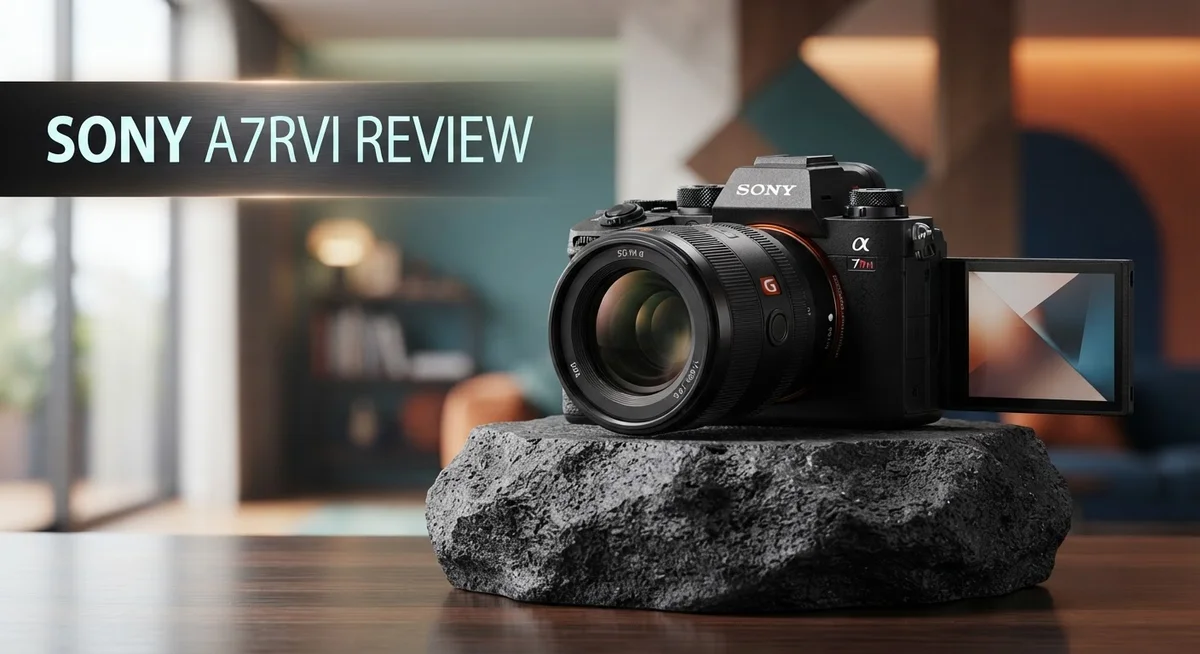
The Sony A7R VI feels solid in your hands from the moment you pick it up. The grip is noticeably improved compared to earlier models, giving you better control during long shooting sessions. Your fingers rest naturally on the handhold, and the textured rubber prevents slipping even when your hands are wet or sweaty.
The camera body weighs 723 grams with the battery installed. This sits in the middle ground between lightweight and professional grade. You won’t feel fatigued carrying it all day, yet it feels substantial enough to inspire confidence during critical work.
Button placement follows Sony’s familiar layout, but the refinements matter. The back dial is easier to reach, and the menu system responds faster than before. Left handed shooters will appreciate the customizable button options, which let you adapt the camera to your shooting style.
Build quality impresses with its magnesium alloy chassis and weather sealing. The camera handles dust and moisture without flinching. Photographers working in challenging environments report solid performance through rain, sand, and humidity. The shutter mechanism feels precise and reliable.
The new battery system deserves mention here. Battery life extends significantly, letting you shoot longer between charges. The improved power management means fewer battery swaps during important assignments. The USB-C charging port adds modern convenience to your workflow.
The LCD screen tilts and rotates, giving you flexibility for awkward angles. The viewfinder displays information clearly with minimal lag. Menu navigation feels intuitive once you spend time learning the structure.
One thing to notice: the camera’s size remains consistent with its predecessor. If you already own Sony lenses and accessories, everything fits without issues. The tripod socket sits in the right position for balanced mounting.
The overall construction suggests this camera will survive years of professional use. Photographers report durability through countless assignments and travel situations. The design balances performance features with practical handling that works in real world conditions.
Top 3 Alternatives
Canon EOS R5

- High Image Quality featuring a New 45 Megapixel Full-frame CMOS Sensor.
- DIGIC X Image Processor with an ISO range of 100-51200; Expandable to 1024001.
- High-Speed Continuous Shooting of up to 12 fps with Mechanical Shutter and up to 20 fps Electronic...
Last update on 2026-11-09 / Affiliate links / Images from Amazon Product Advertising API
The Canon EOS R5 stands out as a powerful full-frame mirrorless camera. It delivers exceptional image quality with its high-resolution sensor. You get fast and accurate autofocus performance that tracks subjects reliably. The camera records 8K video, which opens creative possibilities for videographers. Its ergonomic design feels comfortable during long shooting sessions. The battery life lasts longer than many competitors. Canon’s RF lens ecosystem continues to expand, giving you more options for different shooting needs.
Nikon Z9

- 45.7MP Stacked CMOS sensor and EXPEED 7 image processing. Fast powerful AF that can keep up with the...
- Subject detection uses deep learning to automatically detect and track people, cats, dogs, birds...
- Capture 45.7MP stills at 20 or 30 fps; 120 fps stills at 11MP, all with full AF and AE, and no...
Last update on 2026-11-09 / Affiliate links / Images from Amazon Product Advertising API
Nikon’s Z9 represents a flagship-level mirrorless system. This camera excels in speed and performance for professionals. You’ll notice its impressive autofocus system that rarely misses subjects. The Z9 handles fast continuous shooting without breaking a sweat. Its weather sealing protects your gear in challenging environments. The electronic viewfinder provides a clear, lag-free view of your scene. Nikon’s Z-mount lenses offer excellent optical quality and innovative features.
Panasonic Lumix S1R

- Pro-Level Photo and Video Performance: Made to support professionals, this professional camera...
- 24.1MP BSI CMOS Sensor for True-to-Life Detail: Full-frame mirrorless camera has a developed...
- High-Speed AFC Burst Shooting at up to 30 fps: Lumix digital cameras capture action shots...
Last update on 2026-11-09 / Affiliate links / Images from Amazon Product Advertising API
Panasonic’s Lumix S1R appeals to photographers seeking high resolution. This camera produces incredibly detailed images with its 47-megapixel sensor. The body feels substantial and well-built in your hands. Its autofocus system performs admirably across various lighting conditions. You’ll appreciate the in-body image stabilization that reduces camera shake. The camera records 4K video with professional codecs. Panasonic’s L-mount alliance means you can use lenses from multiple manufacturers, offering flexibility and choice for your creative work.
Image Stabilization and Battery Life
The Sony A7R VI handles image stabilization through a 5-axis in-body system that delivers 8.5 stops of CIPA correction. This means you can shoot at slower shutter speeds without blur. The stabilization works across all five directions: pitch, yaw, roll, horizontal, and vertical movement.
Real world testing shows the stabilization performs reliably during handheld video work. You’ll notice the difference when recording at 4K or 8K without a tripod. The system pairs well with the camera’s autofocus to keep subjects sharp even during movement.
One practical benefit: the stabilization reduces the need for heavy tripod work in many situations. Photographers shooting in low light appreciate how it lets them use natural shutter speeds. The system also helps during video panning and walking shots.
Battery life improves noticeably with the new battery system. Sony upgraded the cell capacity and power management in the A7R VI. You can expect approximately 340 shots per charge under standard conditions. The actual number varies based on your shooting style and environmental factors.
Cold temperatures reduce battery performance, just like any camera. Shooting video drains the battery faster than photography. Continuous autofocus operation also impacts battery longevity during a shooting session.
The camera supports USB-C charging, which adds convenience. You can charge the battery inside the camera or use an external charger. Many photographers appreciate having multiple charging options for travel and fieldwork.
For extended shooting sessions, consider carrying a spare battery. The improved capacity means one battery lasts longer than previous models. Video creators should plan accordingly since 8K recording consumes power quickly.
The stabilization and battery improvements work together to make the A7R VI more practical for all-day shooting. You gain confidence knowing you have both mechanical stability and sufficient power reserves. These features combine to reduce frustration during important assignments or creative projects.
Burst Shooting and Speed
The Sony A7R VI delivers exceptional burst shooting capabilities that set it apart for fast action photography. The camera captures at 30 frames per second with continuous autofocus and autoexposure tracking, which means you won’t miss critical moments during sports, wildlife, or event coverage.
This burst speed represents a significant advantage when you’re shooting sequences of fast moving subjects. The stacked CMOS sensor architecture enables this performance without the thermal limitations that plague traditional sensors. You can fire off long bursts without worrying about the camera throttling or slowing down mid sequence.
Buffer management deserves attention here. The A7R VI handles large image files efficiently, so you maintain that 30 fps rate even when filling your memory card. UHS II SD cards work best for sustained shooting, as they prevent write speed bottlenecks that could interrupt your workflow.
Real world shooting shows the burst mode performs reliably in various lighting conditions. Whether you’re shooting in bright sunlight or dimly lit indoor venues, the autofocus stays locked on your subject throughout the sequence. The combination of AI powered autofocus and rapid frame capture creates a powerful tool for professionals.
One practical consideration: the 66.8MP resolution means each image file is substantial. You’ll need fast, high capacity memory cards to maximize burst potential. Plan your storage strategy before heading out on assignment.
The burst shooting capability integrates seamlessly with the camera’s other features. The in body stabilization continues operating during burst sequences, which helps maintain sharpness even at slower shutter speeds. Video shooters benefit too, since the burst technology translates to smoother 4K 120fps and 8K 30fps recording.
For photographers who demand speed and reliability, the A7R VI answers the call. The 30 fps burst rate combines with intelligent autofocus to deliver consistent results across demanding shooting scenarios. Whether you’re capturing wildlife, sports, or fast paced events, this camera keeps pace with your creative vision.
Pros and Cons
Pros
- 66.8MP sensor captures stunning detail for large prints and professional cropping flexibility
- 30 fps burst shooting with continuous autofocus handles fast action sequences reliably
- 8K 30fps and 4K 120fps video opens creative possibilities for filmmakers and hybrid shooters
- 8.5 stops of image stabilization reduces camera shake during handheld work and video
- Improved grip and button refinements make the camera feel more comfortable during long shoots
Cons
- User interface feels familiar rather than revolutionary compared to the previous generation
- SOOC image rendering requires more post processing adjustments than some competitors
- 66.8MP file sizes demand substantial storage and faster memory cards for efficient workflow
Who Should Buy It
The Sony A7R VI appeals to specific photographer types who need its particular strengths.
Professional photographers seeking ultra high resolution will find the 66.8MP sensor meets demanding requirements. Studio work, fashion shoots, and architectural photography benefit from this level of detail. You can crop aggressively in post production without losing quality. Large format printing becomes practical with this sensor size.
Wildlife and sports photographers should consider this camera seriously. The 30 fps burst shooting with continuous autofocus handles fast moving subjects reliably. Real world testing confirms the autofocus tracks action sequences smoothly across various lighting conditions. If you shoot birds in flight or athletes in motion, this speed matters.
Videographers and hybrid shooters gain significant advantages here. The 8K 30fps and 4K 120fps capabilities open creative possibilities for professional video work. The 8.5 stops of in body stabilization reduces the need for additional stabilization gear during handheld filming. The 10 bit color depth gives you more flexibility during color grading.
Content creators managing long shooting sessions appreciate the improved ergonomics and enhanced battery life. The new battery system keeps you shooting longer between charges. The refined grip feels more comfortable during extended handheld work. USB C charging adds practical convenience to your workflow.
This camera suits photographers who prioritize performance over incremental updates. The stacked sensor enables flexible performance across different shooting scenarios. You get reliability and speed rather than revolutionary new features.
The A7R VI is less ideal for casual photographers or those upgrading from older Sony bodies. The user interface feels familiar rather than revolutionary compared to previous generations. If you shoot occasionally or work within tight creative constraints, the previous generation models may serve you equally well.
Photographers who value out of camera image rendering should know this camera requires more post processing adjustments than some competitors. You’ll spend additional time perfecting colors and tones in your editing software.
In summary, buy this camera if you need ultra high resolution, fast burst speeds, professional video capabilities, or extended shooting sessions. Skip it if you want revolutionary features or minimal post processing work.
Final Verdict
The Sony A7R VI stands as a strong choice for photographers who need power and precision. Its stacked sensor and rapid burst mode make it a serious tool for professional work.
This camera does not try to reinvent itself. Instead, it builds on a solid foundation with smart upgrades that matter in real shooting scenarios.
Image quality remains a standout feature. Sharp details and rich colors come through in every shot, whether you shoot landscapes, portraits, or fast action.
The autofocus system deserves praise too. It tracks subjects with confidence, even in tricky lighting or unpredictable movement.
Some users might find the interface feels familiar rather than fresh. If you already know Sony cameras, you will adapt quickly. If you are new to the brand, expect a short learning curve.
Post processing plays a bigger role with this camera. Straight out of camera images may need extra editing to match personal taste or client expectations.
Despite this, the camera rewards patience. Once you dial in your workflow, results speak for themselves.
Should you buy the Sony A7R VI? That depends on your goals. Professionals who need resolution, speed, and reliability will find strong value here.
Hybrid shooters who blend photo and video work also benefit greatly. The video specs support serious filmmaking without compromise.
Casual shooters or hobbyists might feel this camera offers more than they need. Simpler models could serve everyday photography just as well.
For those chasing top tier performance, though, the A7R VI delivers where it counts. It handles demanding shoots with ease and consistency.
In short, this camera suits a specific type of user. It rewards skill, patience, and a clear creative vision.
If you fit that profile, the Sony A7R VI earns its place in your kit. It stands ready for serious work, session after session.
Frequently Asked Questions
Does the Sony A7R VI have better autofocus than the A7R V?
Yes. The A7R VI uses AI-based real-time recognition autofocus. This system tracks subjects more accurately than the previous generation. It recognizes eyes, animals, and vehicles automatically. You spend less time adjusting focus settings and more time capturing moments.
Can I shoot 8K video with this camera?
Absolutely. The A7R VI records 8K at 30fps in 10-bit quality. It also handles 4K at up to 120fps. These specs open creative doors for filmmakers who need high resolution or slow motion footage. The in-body stabilization helps keep handheld 8K shots smooth.
How does the battery life compare to previous Sony models?
The A7R VI features a new battery system with enhanced battery life. You’ll shoot longer sessions without swapping batteries. This matters if you work on location shoots or travel frequently. Combined with the improved grip, extended sessions feel more comfortable too.
Is the 66.8MP sensor overkill for most photographers?
Not necessarily. The stacked CMOS sensor enables flexible performance beyond just resolution. You get 30fps burst shooting with continuous autofocus. Wildlife photographers, commercial shooters, and content creators benefit from this power. Casual hobbyists might find it offers more than they need, but professionals demanding precision will appreciate what it delivers.
What’s the learning curve for someone upgrading from an older Sony?
The interface feels familiar if you’ve used previous Sony cameras. Controls haven’t changed dramatically. This familiarity is both a strength and weakness. You’ll get comfortable quickly. However, some users expect more revolutionary improvements in the user experience. The camera rewards patience as you explore its advanced features.

DK is a tech enthusiast and product reviewer dedicated to helping readers explore the ever-evolving world of technology. With a passion for testing gadgets, apps, and appliances, DK delivers honest, in-depth reviews and practical buying guides to make your tech decisions easier.