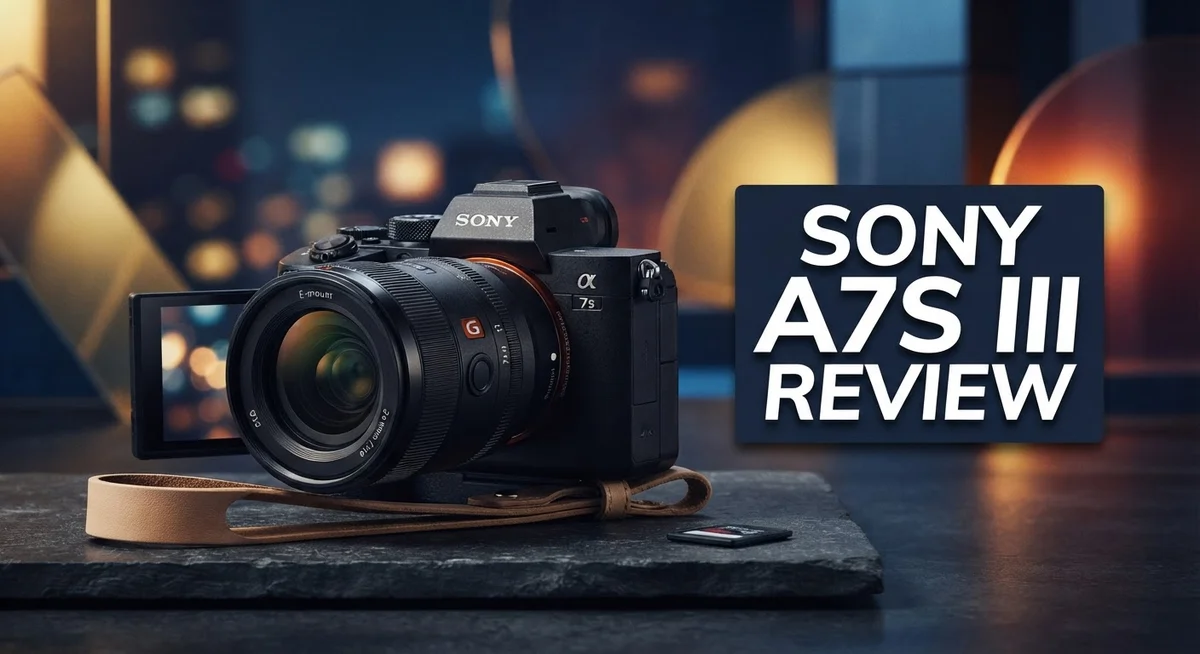
Sony A7S III Review: Professional Video Camera for Content Creators
The Sony A7S III stands as a top choice for video creators and low light shooters. This camera packs a 12.1MP full frame sensor built for one job. That job is capturing stunning footage in any light.
Video shooters love this camera for good reason. It shoots 4K at 120p with 10-bit color depth. The dynamic range hits an impressive 15 stops.
Autofocus performance sets this camera apart too. The 759-point hybrid system tracks subjects with speed and accuracy. You get reliable focus in fast moving scenes.
This review covers every detail you need. We look at real world performance, image quality, and video capability. You will learn if the A7S III fits your creative work.
Photographers seeking megapixels might look elsewhere. But video professionals will find a lot to love here. Let’s explore what makes this camera special.
In a Nutshell
Here is a quick snapshot of what makes the Sony A7S III stand out:
-
Sensor performance: The 12.1MP BSI CMOS sensor delivers clean images even in near dark conditions.
-
Dynamic range: You get up to 15 stops of dynamic range. This helps preserve detail in shadows and highlights.
-
Video quality: 4K recording at 120p with 10 bit 4:2:2 color gives footage a professional look.
-
Screen flexibility: The fully articulated LCD makes vlogging and tricky angles simple.
-
Storage safety: Dual memory card slots let you back up files instantly while shooting.
-
Build comfort: A deep grip and compact body make long shoots feel comfortable.
One thing to note: some advanced pro video tools are still missing compared to rival systems.
Overall, this camera suits video creators who value low light strength and reliable performance. Photographers who need many megapixels may want to check other Sony or Nikon models instead.
Sensor and Image Quality
The 12.1MP full-frame BSI-CMOS sensor sits at the heart of the A7S III. This sensor excels in situations where other cameras struggle. Low light performance is genuinely exceptional here.
You get native ISO sensitivity from 6400 to 12,800 and beyond. The camera handles high ISO values without introducing excessive noise. Images remain clean and usable even in near-darkness. This makes the A7S III perfect for concert filming, night events, and documentary work where lighting is unpredictable.
Dynamic range reaches up to 15 stops. This means the camera captures detail in both bright highlights and deep shadows simultaneously. You recover blown-out skies and lift dark areas during editing with minimal quality loss. This flexibility gives you real creative control in post-production.
The 759-point hybrid autofocus system works seamlessly across the sensor. It tracks moving subjects with impressive accuracy. Video recording benefits greatly from this reliable AF performance. You can focus on composition and storytelling rather than manual focus hunting.
Video output quality sets this camera apart from many competitors. The A7S III records 4K at 120p with 10-bit 4:2:2 color sampling internally. You also get 16-bit raw output options for maximum grading flexibility. Colors appear rich and smooth. Transitions between tones feel natural rather than posterized.
One consideration: the 12.1MP resolution limits still photography applications. If you need massive prints or heavy cropping flexibility, you might want more megapixels. However, for video work and low-light stills, this resolution proves sufficient. The sensor prioritizes light sensitivity over pixel count, which is the right choice for this camera’s purpose.
The BSI design means the sensor reads light from behind the pixel structures. This reduces noise and improves overall image quality. Combined with Sony’s proven image processing, the result is footage and photos that look professional straight from the camera.
Bottom line: sensor performance here directly supports the A7S III’s strength as a low-light powerhouse. Whether you’re shooting in dim venues or creating content at night, this sensor delivers the goods.

- 12.1MP1 Exmor R sensor, optimized for 4K, sensitivity and speed.Bluetooth : version 5.0
- New BIONZ XR processing engine delivers 8x more processing power2
- Low noise images with ISO up to 409,6003 and 15 plus stop dynamic range4

Last update on 2026-11-08 / Affiliate links / Images from Amazon Product Advertising API
Video Performance and Capabilities
The Sony A7S III shines brightest when you press record. This camera handles 4K video at 120 frames per second, which means you capture incredibly smooth slow-motion footage or real-time action with stunning clarity. Most cameras stop at 60p or 30p, so this puts the A7S III in rare company.
Color science matters in video work. The A7S III records 10-bit 4:2:2 color internally, which preserves more color information than standard 8-bit recording. You also get 16-bit raw output if you want maximum editing flexibility. This depth lets you grade footage in post-production without losing quality or creating banding artifacts.
Low light video performance deserves special attention. The sensor’s native ISO range of 6400 to 12,800 means you shoot in dim conditions without excessive noise. Concert venues, nighttime events, and indoor spaces become viable shooting environments. The 15-stop dynamic range captures detail in both bright and shadow areas simultaneously, so you avoid blown highlights or crushed blacks.
Autofocus during video recording performs reliably. The 759-point hybrid system tracks moving subjects smoothly and rarely hunts for focus. This matters when you’re recording interviews, events, or any situation where focus shifts between subjects. You stay sharp without manual adjustments.
The fully articulated LCD screen transforms your shooting flexibility. Flip it out for vlogging, angle it for overhead shots, or position it for low-angle work. No more guessing if your framing works.
One practical advantage: dual memory card slots let you record continuously without stopping to swap cards. One slot fills while the other stands ready. This setup prevents missed moments during important shoots.
What holds this camera back? Some professional video tools remain absent. You won’t find built-in ND filters or some advanced monitoring features found in dedicated cinema cameras. These gaps matter if you work on high-end productions, but most content creators work around them easily.
Autofocus and Handling
The Sony A7S III handles autofocus work with impressive speed and accuracy. The 759 point hybrid AF system locks onto subjects quickly, even in challenging lighting. This matters because video shooters need consistent focus without hunting or lag.
Real world performance shows the autofocus tracks moving subjects smoothly. Eye AF works well for interviews and talking head footage. Animal AF helps if you shoot wildlife content. The system responds fast enough for fast paced action without missing critical moments.
Handling feels intuitive on this camera. The deep grip sits comfortably in your hand during extended shoots. Your fingers rest naturally on the shutter button and control dials. Weight distribution stays balanced, so your arms don’t tire quickly. The compact body means you can rig it with external monitors, audio gear, and lighting without becoming unwieldy.
The menu system lets you customize buttons for quick access. You can assign AF modes, ISO, and recording functions to programmable keys. This reduces fumbling through menus mid shoot. Experienced users appreciate the logical layout, while newcomers find it approachable.
One standout feature: the fully articulated screen rotates and flips freely. This opens creative angles you can’t achieve with fixed displays. Vlogging becomes easier. Low angle shots work without contorting your neck. The screen stays responsive and bright enough to frame shots in sunlight.
Autofocus performance during video recording stays consistent and silent. The motor doesn’t produce distracting noise that gets picked up by your audio. Focus breathing remains minimal, so your footage stays smooth and professional looking.
The camera body feels durable. Controls don’t feel cheap or fragile. Weather sealing protects against dust and moisture during outdoor work. Battery life runs solid for a full day of shooting with one or two spares.
One minor point: the autofocus performs best with modern Sony lenses. Older third party lenses may not track as smoothly. This isn’t a major issue if you use current E mount glass.
Overall, the A7S III combines fast, reliable autofocus with excellent ergonomics. Handling becomes second nature quickly, letting you focus on creativity rather than fighting the camera.
Top 3 Alternatives
Canon EOS R5

- High Image Quality: Canon EOS R5 8K digital camera features a stacked, back-side illuminated...
- Powerful Image Processor: DIGIC X image processor with an ISO range of 100-51200; expandable to...
- High-Speed Shooting: High-speed continuous shooting of up to 12 fps with mechanical shutter and up...
Last update on 2026-11-08 / Affiliate links / Images from Amazon Product Advertising API
The Canon EOS R5 stands out for video creators who need speed and reliability. This camera captures 8K video at 24fps, which gives you cinema-quality footage straight from the sensor. The autofocus system tracks moving subjects with impressive accuracy, making it ideal for wildlife and sports shooting.
You get 45 megapixels for stills, so cropping and editing become much easier. The build quality feels solid, and the weather sealing protects your investment in tough conditions. Battery life runs longer than many competitors, keeping you shooting through full days on set.
Nikon Z9

- Bundle Includes: Nikon Z9 Mirrorless Digital Camera (Body Only) + 120GB G Series XQD Memory Card...
- Experience exceptional image quality with the Nikon Z9's 45.7MP FX-format stacked CMOS sensor paired...
- Capture decisive moments with continuous shooting speeds up to 20 fps in RAW, 30 fps in JPEG, and up...
Last update on 2026-11-08 / Affiliate links / Images from Amazon Product Advertising API
The Nikon Z9 excels at fast, continuous shooting with 11fps in full-frame mode. Professional photographers love its 45.7-megapixel sensor for print work and large displays. The ergonomic design fits naturally in your hands, reducing fatigue during long sessions.
Video performance includes 8K recording, though at different frame rates than Canon. The autofocus uses AI to detect eyes and faces, which saves time in post-production sorting. Nikon’s lens ecosystem keeps growing, giving you more options for different shooting scenarios.
Panasonic Lumix S1H

- V-log/v-gamut – features a wider 14 plus Stops of dynamic range which are compatible with the...
- Rugged Mirrorless camera design – dust/splash/freeze-resistant design withstands heavy field use...
Last update on 2026-11-08 / Affiliate links / Images from Amazon Product Advertising API
The Panasonic Lumix S1H targets serious video professionals with its 6K video capability and unlimited recording time. This matters when you’re filming events or documentaries without worrying about file size limits. The full-frame sensor delivers beautiful colors straight from the camera.
Build quality emphasizes durability with magnesium alloy construction. You’ll appreciate the dual SD card slots for backup recording. The stabilization system works well with both stills and video, reducing shake from handheld shooting. Audio inputs let you connect professional microphones directly to the camera body.
Low-Light Performance and Dynamic Range
The Sony A7S III excels in situations where light runs scarce. Its 12.1MP sensor captures clean images even when you push ISO sensitivity high. The camera handles native ISO up to 12,800 and extends beyond that when needed.
Shadow detail remains impressive throughout the sensitivity range. You can shoot in dimly lit rooms, outdoor night scenes, or concert venues without excessive noise. The BSI sensor design pulls light information from behind the pixel structures, which means better performance in darkness compared to traditional layouts.
The 15-stop dynamic range gives you significant flexibility in post-production. Highlights stay preserved even in bright windows or outdoor scenes. Shadows retain recoverable detail without turning into muddy black areas. This range matters most when you mix light sources or work with challenging contrast situations.
Low-light video performance stands out as a major strength. The camera records clean 4K footage at 120p in dim environments. Color reproduction stays accurate even when ambient light drops significantly. This capability makes the A7S III valuable for filmmakers who work in studios, nighttime locations, or indoor events.
Autofocus performs reliably in low-light conditions. The 759-point hybrid system tracks subjects smoothly even when illumination decreases. You get consistent focus lock without hunting or hunting delays that plague some competitors.
One practical consideration: performance varies slightly depending on your lens choice. Faster lenses (wider apertures like f/2.8 or f/4) help the autofocus system lock focus more quickly in darkness. Slower zooms may experience minor delays, though the system remains functional.
The articulated LCD screen helps you frame shots in tight spaces or unusual angles. This flexibility proves valuable during low-light work when you cannot position the camera at eye level.
Battery life deserves mention here. Extended shooting in cold temperatures or at high ISO settings drains batteries faster than daytime work. Carry spare batteries when working in low-light scenarios for extended periods.
Overall, the A7S III delivers exceptional low-light capability across both stills and video. The sensor, autofocus system, and ergonomic design work together to make dark-scene shooting straightforward and reliable.
Design, Ergonomics, and Build Quality
The Sony A7S III feels solid in your hands from the moment you pick it up. The compact body houses a surprisingly deep grip that keeps your fingers secure during long shooting sessions. This design choice matters because you’ll hold the camera steady even with heavier lenses attached.
The build quality reflects professional standards throughout. The magnesium alloy chassis resists bumps and minor drops that happen on set. Sealing around buttons and ports keeps dust and moisture away from internal components. You get confidence that this camera survives demanding work environments.
Weight distribution plays a key role here. At around 650 grams with battery and card, the A7S III stays manageable for handheld video work. The balanced design doesn’t strain your arms during extended shooting. Shoulder rig compatibility works smoothly thanks to the thoughtful placement of mounting points.
Button layout follows Sony’s established pattern. Your thumb reaches the AF joystick naturally without repositioning your grip. The shutter button sits at the right height for index finger access. Control wheels respond with satisfying clicks, never feeling mushy or loose.
The rear LCD screen rotates 180 degrees upward and flips fully around. This articulation opens creative possibilities for unusual angles and tight spaces. The screen itself feels responsive to touch commands, though you can disable this if you prefer traditional button navigation.
Memory card slots sit on the camera’s side. Both slots accept UHS II SD cards, giving you flexibility in your workflow. The door seals securely and shows no signs of wobbling or play.
Ergonomic refinements extend to small details. The eyepiece sits at a comfortable distance. The tripod socket doesn’t interfere with battery access. Strap lugs feel robust enough for daily use without concern.
One thing to note: the camera body gets warm during extended 4K 120p recording. This is normal behavior, not a defect. Thermal management keeps the sensor stable, which directly supports video quality.
Overall, the A7S III demonstrates thoughtful engineering. Every surface and control feels intentional. The design supports both handheld and mounted shooting styles equally well. Professionals appreciate cameras that simply work without fuss or surprises.
Pros and Cons
Pros
- Exceptional low-light video performance captures clean 4K footage at 120p in dim environments
- 15-stop dynamic range gives you significant flexibility when editing in post-production
- 759-point hybrid autofocus tracks moving subjects smoothly and stays silent during video recording
- Compact, ergonomic design with deep grip and fully articulated LCD screen that rotates 180 degrees upward
- Dual memory card slots provide backup storage and extended shooting capacity
Cons
- 12.1MP sensor limits still photography detail compared to higher-resolution competitors
- Missing some basic pro video tools that other high-end cameras include
- Camera body gets warm during extended 4K 120p recording sessions
Who Should Buy It
The Sony A7S III serves specific creator types exceptionally well. Professional videographers benefit most from this camera. You get 4K 120p recording with 10-bit 4:2:2 internal capture. The 16-bit raw output option opens creative doors in post-production work.
Content creators working in low-light settings find real value here. YouTube creators, live streamers, and documentary filmmakers appreciate the clean footage at high ISOs. The camera performs without excessive noise in dim environments. You won’t struggle with grainy output during evening shoots or indoor events.
Sports and wildlife shooters should consider alternatives first. The 12.1MP resolution limits your cropping flexibility. You’ll miss detail when you need to zoom in digitally. Higher-resolution competitors serve these genres better.
Wedding videographers love this camera. The articulated LCD helps you frame creative angles during ceremonies. Autofocus tracks movement smoothly and silently. Dual memory card slots mean you never miss a moment due to storage issues.
Hybrid creators who shoot both video and stills need to think carefully. If video takes 70% of your work, this camera excels. If you need 50-50 balance, the Sony A7R V might suit you better. The A7S III prioritizes motion over static images.
Studio professionals appreciate the reliability. The 759-point autofocus system rarely hunts for focus. Build quality feels professional. The ergonomic grip works during long shooting days without hand fatigue.
Budget-conscious creators should explore used models or older Sony options. This camera represents a significant commitment. Fujifilm X-T4 offers video capabilities at lower entry points, though with different strengths.
Professionals upgrading from older Sony bodies find the jump worthwhile. The improvements in autofocus, dynamic range, and video specs justify the transition. You gain practical features like the fully articulated screen and improved battery management.
Casual enthusiasts may find this camera overspecced. You pay for professional video tools you might never use. Entry-level mirrorless cameras handle hobby work perfectly fine.
The A7S III answers a clear question: do you need professional video performance above all else? If yes, this camera delivers. If your needs split between many tasks, evaluate your actual shooting priorities first.
Final Verdict
The Sony A7S III earns its place as a video first camera built for creators who demand top tier footage. Its strengths shine brightest when low light and motion come into play.
This camera does one job better than almost any competitor. It turns dark scenes into usable, clean footage without hesitation.
Video professionals will notice the difference immediately. Autofocus stays locked, colors stay accurate, and files stay flexible in post production.
Still photographers may feel the pinch. The sensor resolution caps detail work that other cameras handle with ease.
That tradeoff defines this camera. Sony built the A7S III for motion, not stills, and that focus shows in every frame.
Should you buy it? The answer depends on what you shoot most. Filmmakers, documentary creators, and event videographers gain real advantages here.
Photographers chasing sharp landscapes or detailed portraits should look elsewhere. Other Sony models serve that purpose better.
Hybrid shooters face a tougher call. They must weigh video gains against photo limitations before committing.
The camera rewards those who value performance under pressure. Low light shoots, fast paced events, and demanding video projects all benefit from what this camera offers.
Sony refined years of video technology into this one body. The result feels focused, deliberate, and purpose built.
Competitors offer higher resolution or different feature sets. But few match the video capability packed into this specific camera.
If your work depends on video quality above all else, this camera delivers consistently. It handles pressure well and rarely disappoints when conditions get tough.
Choose this camera if your priority is motion, not megapixels. Choose something else if still photography drives your income.
The Sony A7S III stands as a specialist tool. It does one thing exceptionally well, and that clarity makes the decision easier for most creators.
Know your needs first. Then let this camera prove why it earns its reputation among serious video professionals.
Frequently Asked Questions
Does the Sony A7S III work well for photography?
The A7S III prioritizes video above all else. Its 12.1MP sensor captures decent stills, but doesn’t match higher-resolution competitors when you need sharp detail. Landscape and portrait photographers will notice the resolution ceiling quickly.
That said, the sensor excels in low light. Night photography and indoor shooting produce clean, usable images. The autofocus system remains fast and accurate for stills too.
If video is your main focus and stills are secondary, you’ll be satisfied. If you shoot equal amounts of both, consider cameras with higher megapixel counts instead.
Can you record 4K video at 120fps?
Yes. The A7S III records 4K at 120fps with 10-bit 4:2:2 color sampling internally. This gives you significant flexibility in post-production for slow-motion effects and color grading.
You can also output 16-bit raw video externally. This option opens even more creative possibilities during editing.
The dynamic range extends to 15 stops, meaning you capture detail in shadows and highlights simultaneously. Professional editors appreciate this capability for challenging lighting scenarios.
How does autofocus perform during video?
The 759-point hybrid autofocus system tracks moving subjects smoothly and stays silent during recording. You won’t hear focus motors in your audio track.
The camera maintains focus reliably even when subjects move unpredictably. Videographers shooting documentaries or events report excellent results.
Face and eye detection work automatically. The system adapts quickly to scene changes without hunting or hunting.
What makes this camera different from the A7R V?
The A7S III is video first. The A7R V prioritizes still photography with 61MP resolution and slower video specs.
Choose the A7S III for filmmaking, streaming, and content creation. Choose the A7R V for photography, commercial work, and detail-heavy projects.
Both share Sony’s E-mount ecosystem and reliable build quality. Your choice depends on whether you shoot more video or stills.

DK is a tech enthusiast and product reviewer dedicated to helping readers explore the ever-evolving world of technology. With a passion for testing gadgets, apps, and appliances, DK delivers honest, in-depth reviews and practical buying guides to make your tech decisions easier.