Sony FE 50mm f/1.8 Review: Full-Frame Prime Lens Performance and Value
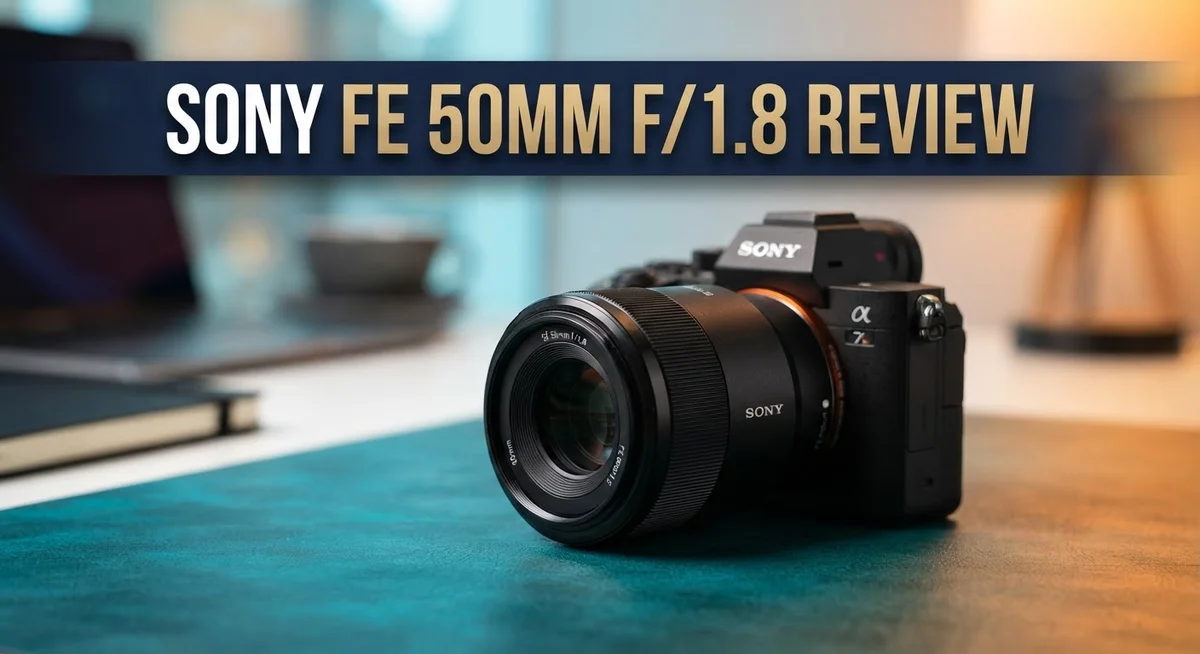
Looking for a lightweight prime lens that delivers stunning portraits? The Sony FE 50mm f/1.8 might be your answer.
This lens weighs just 186 grams. You can carry it all day without shoulder strain.
It offers a wide f/1.8 aperture. This helps you shoot in low light and create beautiful background blur.
Photographers love this lens for portraits and everyday shots. It fits easily into any camera bag.
But does it perform well for video? We will explore its autofocus quirks too.
This review covers everything you need to know. We look at build quality, image sharpness, and real world performance.
By the end, you will know if this lens suits your photography style. Let’s dive into the details.
In a Nutshell
Here is the quick rundown before we jump into details. Use this list to decide if this lens fits your bag.
- Sharp images even at f/1.8. You get clean details in the center frame right away.
- The lens delivers creamy background blur. Portraits and product shots look professional.
- Autofocus works well for stills. It struggles more during continuous video recording.
- Build feels simple but sturdy for daily use. The plastic mount keeps things light without feeling cheap.
- It pairs smoothly with most Sony E-mount bodies. No compatibility issues here.
- Great choice for street photography and travel shots. It stays discreet in a crowd.
- Compared to rivals like the Samyang 45mm f/1.8, this lens still holds its own in sharpness and color rendering.
This lens shines in situations where light gets tricky. It also handles group shots and solo portraits with equal ease.
If you shoot mostly stills, this lens rewards you well. Video shooters might want to test the autofocus first.
Optical Design and Image Quality
The Sony FE 50mm f/1.8 produces remarkably sharp images across most of the frame, even when you shoot wide open at f/1.8. You will notice crisp detail from edge to edge in real-world conditions. The lens maintains this sharpness without requiring you to stop down significantly.
Bokeh quality stands out as a real strength here. The nine-blade aperture creates smooth, creamy background blur that separates your subject beautifully from distracting elements. This makes the lens excellent for portrait work where that silky bokeh matters most. The out-of-focus areas render naturally without harsh transitions.
Color rendering feels accurate and pleasing straight out of camera. Skin tones appear natural and flattering. The lens does not introduce unwanted color fringing or strange casts. You get honest color reproduction that requires minimal post-processing adjustment.
Chromatic aberration stays minimal even in high-contrast situations. This means colored halos rarely appear along sharp edges. The optical design handles this problem well for a lens at this level. You can shoot confidently without worrying about cleanup work later.
Distortion sits at very low levels. Straight lines stay straight, which matters for architecture and product photography. The barrel distortion you do see is so subtle that most photographers never notice it during normal shooting.
Flare resistance works decently when you point the lens toward bright light sources. The coatings do a solid job of controlling internal reflections. You might see some ghosting in extreme backlit situations, but this rarely impacts your actual shots.
The lens handles close focusing reasonably well. While not a macro lens, it lets you get close enough for detailed shots and environmental portraits. The minimum focus distance feels practical for everyday use.
Low light performance shines thanks to that wide f/1.8 aperture. You can shoot in dim conditions without pushing your ISO too high. The fast aperture gives you creative control over depth of field in challenging lighting. This optical design delivers the image quality you expect from a modern 50mm prime.

- Sony E 50mm f/1.8 OSS Lens (Silver) - Sony ALC-SH116 Lens Hood - Front & Rear Lens Caps - Sony...
- Built-in Optical SteadyShot image stabilization: The built-in Optical SteadyShot image stabilization...
- Compact and lightweight: The SEL50F18 is remarkably compact and lightweight for a large-aperture...
Last update on 2026-11-08 / Affiliate links / Images from Amazon Product Advertising API
Autofocus Performance and Limitations
The autofocus system on this lens uses older motor technology. You will notice this most when shooting video or tracking moving subjects. The focus motor hunts noticeably, meaning it searches back and forth before locking onto your target.
For still photography, autofocus works acceptably. It locks onto stationary subjects without drama. Portraits and landscapes pose no real problem. You press the shutter, and the lens focuses. Simple and reliable for that use case.
Video work tells a different story. The autofocus struggles significantly during continuous shooting. If you pan across a scene or follow a moving subject, expect visible focus breathing and hunting. The motor simply cannot keep pace with modern video demands. Filmmakers will find this frustrating.
Contrast detection AF on Sony bodies does its best here. The lens itself cannot overcome its hardware limitations. Even pairing it with a newer camera body does not solve the core issue. The motor speed remains the constraint.
Manual focus feels smooth and responsive. The focus ring turns with light resistance. You can focus precisely by hand without grinding or catching. This makes manual focus a viable workaround for video shooters who want precision.
Fast moving subjects challenge the autofocus system. Sports photography and wildlife work require faster focus motors. This lens simply lacks that capability. You may miss critical moments waiting for focus confirmation.
Low light autofocus performance drops further. The contrast detection system struggles in dim conditions. You might experience more hunting or focus failures. Adding an external light source helps tremendously.
For hybrid shooters mixing stills and video, this autofocus limitation matters. You will need workarounds like manual focus or external focus aids. Serious videographers should look elsewhere.
The good news? If you shoot primarily stills, this limitation barely affects your experience. Static subjects focus quickly enough. The outdated motor becomes a non issue for portraits, landscapes, and studio work. Your shooting style determines whether this weakness matters to you.
Build Quality, Weight, and Portability
The Sony FE 50mm f/1.8 prioritizes portability without sacrificing structural integrity. This lens weighs just 186 grams, making it one of the lightest options in its class. You can slip it into a camera bag or even a jacket pocket without noticeable bulk.
The compact design measures approximately 40mm in length. This makes it ideal for photographers who travel frequently or prefer minimal gear weight. Street photographers and travel enthusiasts will appreciate how this lens doesn’t tire your neck or shoulder during long shooting sessions.
The build quality feels simple but sturdy for daily use. The lens body uses a combination of plastic and metal components. Plastic housing reduces weight while metal elements reinforce critical areas. This balance keeps the lens durable without adding unnecessary heft. The focus ring rotates smoothly, and the barrel feels solid in your hand.
Compared to alternatives like the Samyang 45mm f/1.8 (which weighs 162g), the Sony sits just slightly heavier. However, the Sony offers autofocus capability, which justifies the minimal weight difference. The Nikon and Canon equivalents in this category typically weigh more, so the Sony maintains an advantage here.
The lens lacks weather sealing, so you’ll want to protect it from rain and dust. This is a reasonable trade-off for keeping weight down. If you shoot in harsh conditions regularly, you might want to consider a protective filter or lens hood.
The compact size pairs smoothly with most Sony E-mount bodies. Whether you use a full-frame camera or an APS-C model, this lens balances well optically and physically. The short barrel doesn’t create front-heavy handling issues that plague larger lenses.
Portability truly sets this lens apart. You gain the optical performance of a professional 50mm prime while maintaining the freedom to move quickly. The lightweight construction never feels cheap or fragile during actual use. For photographers constantly on the move, this combination of weight, size, and build quality delivers real practical value.
Top 3 Alternatives
Sigma 50mm f/1.4 DG HSM

- 50mm focal length
- 75mm equivalent focal length on APS-C cameras, 80mm equivalent focal length on Canon APS-C cameras
- F1.4 maximum aperture; F16 minimum
Last update on 2026-11-08 / Affiliate links / Images from Amazon Product Advertising API
The Sigma 50mm f/1.4 DG HSM offers a wider aperture than the Sony option. This lens lets in more light, which helps you shoot in darker conditions. The fast f/1.4 aperture creates beautiful background blur for portraits. Sigma built this lens with solid construction and smooth autofocus performance. You get sharp images across the frame, even at maximum aperture. The lens works well for both photography and video work.
Tamron 50mm f/1.8 SP

- Compact Fast Zoom with VC (Vibration Compensation).
- Fast Constant F/2.8 Aperture. Angle of view - 78-31
- For use on APS-C size DSLR cameras.
Last update on 2026-11-08 / Affiliate links / Images from Amazon Product Advertising API
Tamron’s 50mm f/1.8 SP delivers excellent optical performance at a reasonable price point. This lens produces crisp, detailed images with minimal distortion. The autofocus runs quietly and accurately, making it ideal for video recording. Tamron included vibration compensation, which helps reduce camera shake. The build quality feels premium with weather-sealed construction. This lens balances speed and practicality for everyday shooting needs.
Zeiss Milvus 50mm f/1.4

- CREATIVE STILL AND VIDEO PHOTOGRAPHY THROUGH PRECISE MANUAL FOCUSING: The top-quality focusing...
- FUTURE-PROOF SOLUTION FOR HIGH-RESOLUTION CAMERA SYSTEMS: The excellent image performance of the...
- EXCELLENT IMAGERY, EVEN IN DIFFICULT LIGHT CONDITIONS: All lenses features ZEISS T* antireflective...
Last update on 2026-11-08 / Affiliate links / Images from Amazon Product Advertising API
The Zeiss Milvus 50mm f/1.4 represents a premium manual focus option. This lens prioritizes optical excellence with exceptional color rendering and contrast. Manual focus precision gives you complete control over your images. Zeiss engineered this lens for professional work, delivering outstanding sharpness and minimal aberrations. The robust construction means this lens lasts for decades. You’ll appreciate the mechanical feel and vintage aesthetic. This option suits photographers who value optical quality above all else.
Aperture and Depth of Field Capabilities
The f/1.8 aperture sits at the heart of what makes this lens shine for specific shooting styles. You get a genuinely wide opening that lets in plenty of light, which means you can shoot in dim rooms, during golden hour, or even at dusk without cranking your ISO sky high.
Depth of field control becomes your creative playground. When you shoot wide open at f/1.8, the background melts into a soft blur. Portraits pop because your subject separates cleanly from the scene behind them. Street photography gains that cinematic quality where the main subject stays tack sharp while everything else falls away.
The shallow depth of field also works beautifully for product shots and still life work. You can isolate a single flower in a vase or make a coffee cup the undeniable star of your frame. This separation happens naturally without any post processing tricks.
If you need more depth of field, stopping down to f/2.8 or f/4 gives you flexibility. You maintain sharpness across a wider plane while still keeping that lovely background separation. Landscape photographers can stop down further to f/8 or f/11 and get everything from foreground to horizon in focus.
The bokeh quality deserves special mention here. The out of focus areas render smoothly and pleasingly. You won’t see harsh edges or nervous patterns in the blur. This matters because bad bokeh can ruin an otherwise sharp image.
One practical note: the shallow depth of field demands precision with focus point selection. At f/1.8, your margin for error shrinks significantly. If you miss focus by even a fraction, the subject goes soft. This is where manual focus becomes your friend for tricky situations.
For video creators, the shallow depth of field creates challenges because focus tracking becomes harder. Still photographers benefit enormously from this capability. The wide aperture paired with smooth bokeh makes this lens a genuine joy for portrait and creative work. You get professional depth of field control in a compact package.
Suitability for Photography Genres
This lens excels in specific photography genres where its strengths shine brightest. Understanding which styles suit it best helps you decide if it matches your creative needs.
Portrait photography stands as the primary strength of this 50mm prime. The f/1.8 aperture creates beautiful subject isolation. Your model’s face stays sharp while the background blurs into soft bokeh. This separation makes portraits pop with professional polish. The 50mm focal length sits perfectly for head and shoulder shots on full frame bodies. You capture flattering proportions without unflattering distortion.
Street photography benefits enormously from this lens’s compact size. You move through crowds without drawing attention. The lightweight design reduces fatigue during long shooting sessions. The wide aperture handles dim urban lighting without forcing high ISO values. Fast shutter speeds stay achievable even in overcast conditions.
General purpose shooting works wonderfully with this focal length. The 50mm range covers everyday situations effectively. From casual family moments to environmental portraits, this lens adapts well. It encourages you to move your feet rather than zoom, which often improves composition instincts.
Still life and product photography benefit from the shallow depth of field capabilities. You isolate small subjects from cluttered backgrounds. The close focusing distance lets you capture detail shots. Precise focus selection becomes essential here, but manual focus delivers smooth control when needed.
Landscape photography requires stopping down to f/5.6 or smaller for adequate depth of field. The lens performs adequately in this role, though it wasn’t designed specifically for wide vistas. You can certainly shoot landscapes, but other focal lengths serve this purpose better.
Avoid this lens for fast action sports or wildlife work. The autofocus struggles with rapid subject movement. Tracking fast moving athletes or animals becomes frustrating. The fixed 50mm focal length limits your ability to frame distant subjects. Telephoto lenses suit these genres far better.
Documentary and event photography present mixed results. Static moments photograph beautifully. Candid shots of moving subjects test the autofocus system’s patience. Many documentary photographers pair this lens with faster bodies or accept manual focus for creative control.
Pros and Cons
Pros
- Wide f/1.8 aperture lets you shoot in low light and create beautiful background blur for portraits
- Compact and lightweight design at 186g makes it easy to carry all day
- Fast autofocus performance keeps up with most everyday shooting situations
- Versatile 50mm focal length works for portraits, street photography, and general purpose use
- Strong build quality feels sturdy enough for regular daily shooting
Cons
- Autofocus motors are outdated and struggle with focus hunting, making video work frustrating
- No weather sealing means you need to protect it from rain and dust during shoots
- Shallow depth of field at f/1.8 demands precise focus point selection or you’ll miss your shot
- Limited depth of field makes landscape photography difficult without stopping down significantly
Who Should Buy It
This lens works best for photographers who want a versatile, lightweight prime without complexity. You’ll love it if you shoot portraits regularly and want that beautiful background blur at f/1.8.
Street photographers benefit hugely from the compact 186g design. You can carry this lens all day without fatigue, making it ideal for exploring cities or documenting everyday moments. The 50mm focal length gives you enough reach without feeling restrictive.
Content creators focusing on still photography will find this lens reliable. Product shots, food photography, and flat lay work all shine with the shallow depth of field. The wide aperture lets you isolate subjects beautifully from their backgrounds.
This lens suits you if you shoot mostly in good lighting conditions. The autofocus works fine for static subjects and planned shots. However, if you need fast, silent autofocus for video or unpredictable situations, you’ll want something newer.
Hobbyists and enthusiasts looking to expand their lens collection should consider this option. It teaches you about prime lenses and focal length without overwhelming your budget or gear bag. Many photographers use this as their first 50mm to learn the focal length.
Casual photographers who want one versatile lens for general use will appreciate the flexibility here. The 50mm works for everything from headshots to environmental portraits to everyday snapshots. You’re not locked into one specific genre.
Budget conscious photographers building a system benefit from this lens. You get solid image quality and a fast aperture without unnecessary features you won’t use.
Skip this lens if you need weather sealing for outdoor adventures. Rain and dust aren’t your friends with this design. Also avoid it if you shoot video regularly, since the autofocus struggles with smooth focus tracking and focus hunting creates audible noise.
Professional videographers should look elsewhere too. The outdated autofocus motors simply don’t perform well for continuous focus work. Your videos will suffer from hunting and jerky focus transitions.
Finally, if you need fast autofocus for sports, wildlife, or unpredictable action, this isn’t your match. The focus speed works fine for posed situations but falters when subjects move quickly or unpredictably.
Final Verdict
The Sony FE 50mm f1.8 earns its spot as a reliable prime lens for everyday photography. It delivers sharp images and creamy backgrounds without asking much from your bag or your patience.
This lens shines brightest in the hands of photographers who value simplicity. You point, you shoot, you get great results. That’s the core appeal here.
If video is your main focus, look elsewhere. The autofocus struggles hold this lens back from serious video work. Competitors like the Canon RF STM 50mm f1.8 offer smoother focus pulls for hybrid shooters.
For stills only shooters, this concern fades quickly. Photos come out crisp and full of character, especially in portrait and street settings.
Compared to the Samyang 45mm f1.8, this Sony lens carries slightly more weight but matches it in versatility. Both serve as excellent starter primes for new E-mount users.
The Sigma 50mm options bring different rendering styles worth exploring if you want alternatives. Still, Sony’s native lens integrates seamlessly with in-camera profiles and firmware updates.
Longevity stands out as a real strength. This lens will likely serve you for years without needing an upgrade unless your genre shifts toward action or video heavy work.
Think of this lens as a foundation piece. It teaches you how a fast aperture behaves. It shows you what a 50mm perspective offers. These lessons carry forward no matter how your kit grows later.
Our final take: this lens deserves a place in most Sony shooters’ bags. It handles daily tasks with ease and rewards you with lovely image quality.
Skip it only if video autofocus performance sits high on your priority list. Otherwise, this lens delivers exactly what a nifty fifty should. Simple, sharp, and satisfying to use every single day.
Frequently Asked Questions
Is the Sony FE 50mm f/1.8 good for video work?
Not really. The autofocus motors are outdated and struggle with focus hunting. This means the lens hunts back and forth when trying to lock focus during video recording. If you shoot mostly stills, this won’t bother you. Video creators should look at other options instead.
What makes this lens different from the Samyang 45mm f/1.8?
Both lenses are compact and lightweight. The Samyang weighs just 162g, while the Sony sits at 186g. The Sony offers a true 50mm focal length, which many photographers prefer for portraits and general shooting. The Samyang gives you a slightly different angle at 45mm. Choose based on your preferred focal length and rendering style.
Can I use this lens in rainy or dusty conditions?
No weather sealing means you need to be careful. Rain and dust can damage the internal elements. Protect the lens with a rain sleeve or keep it in your bag during bad weather. If you shoot outdoors in harsh conditions regularly, consider a weather sealed alternative instead.
Who should buy this lens?
Stills photographers will love it. Street photographers benefit from the compact 186g design. Hobbyists building a Sony system find it reliable and versatile. Casual shooters appreciate one simple lens that handles portraits, street work, and everyday moments. Skip it only if you need weather sealing or video autofocus performance.
Does the shallow depth of field at f/1.8 cause problems?
Yes, it demands precision. At f/1.8, your focus point must be exact or your subject goes soft. This teaches you better focusing discipline. For portraiture and creative work, that shallow depth of field becomes a real strength, not a weakness.

DK is a tech enthusiast and product reviewer dedicated to helping readers explore the ever-evolving world of technology. With a passion for testing gadgets, apps, and appliances, DK delivers honest, in-depth reviews and practical buying guides to make your tech decisions easier.