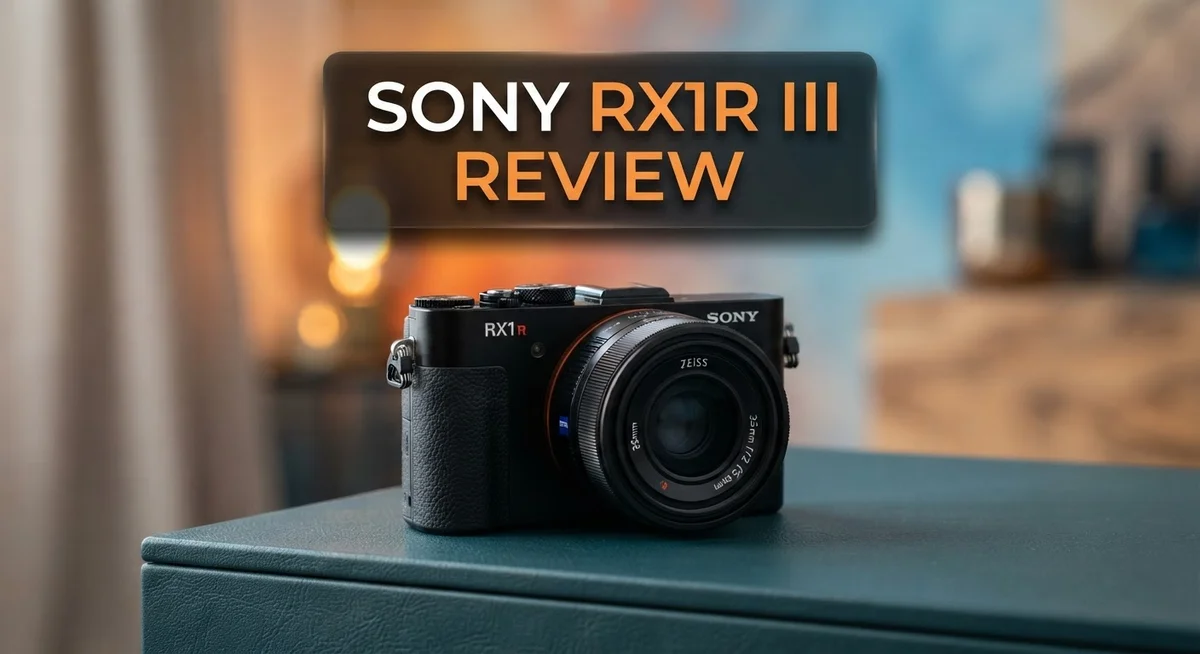
Sony RX1R III Review: Full-Frame Compact Camera Performance and Image Quality
The Sony RX1R III packs a full-frame sensor into a tiny body. It fits in your pocket, yet it shoots like a professional camera. That combination is rare.
This camera brings a 61MP sensor to a compact design. You get incredible detail in every shot. Low light scenes still look clean and sharp.
The fixed ZEISS Sonnar T 35mm F2 lens* stays glued to the body. You cannot swap it out. But the image quality it delivers is hard to beat.
Autofocus gets a big boost here too. With 693 phase-detection points, the camera tracks eyes, animals, and even birds. It reacts fast in most situations.
Is this the ultimate travel and street camera? Or does its fixed lens hold it back? Let’s break down what makes the RX1R III special, and where it stumbles.
In a Nutshell
Here’s what you need to know about the Sony RX1R III before diving deeper.
-
Image quality shines in low light. The sensor pulls in detail even when light fades fast.
-
AI powered autofocus tracks eyes, animals, and birds. Human Pose Estimation helps lock onto people in tricky poses.
-
The body stays pocketable. You get full-frame power without a bulky kit.
-
Sony’s professional menu system feels familiar to existing users. Settings sit exactly where you expect.
-
Continuous autofocus struggles with fast moving subjects. Sports or wildlife shooters may find this frustrating.
-
The lens gets a bit soft at wide apertures. Stopping down helps sharpen results.
-
A fixed lens means no swapping glass. This limits creative flexibility compared to interchangeable options.
-
Competitors like the Leica Q3 and Fuji X100 series offer different takes on this compact full-frame idea.
This camera rewards photographers who value quality and portability over speed and flexibility.
Sensor and Image Quality
The 61MP Exmor R CMOS sensor forms the heart of this compact camera. This full-frame chip delivers exceptional clarity and detail across the frame. You get the same sensor technology found in Sony’s professional bodies, shrunk down for portability.
Low light performance stands out as a genuine strength. The sensor handles ISO 100 to 25600 natively, with extended modes pushing higher. Shadows reveal detail without excessive noise, and highlights stay controlled. Night photography becomes genuinely enjoyable with this camera.
The fixed ZEISS Sonnar T 35mm F2 lens* works in tandem with the sensor to create the final image. At F2, the aperture opens wide enough for shallow depth of field work. However, the lens shows softness when you shoot wide open. Stop down to F4 or F5.6, and sharpness improves noticeably across the frame.
Color rendition feels natural and film-like out of the box. Sony’s color science leans slightly warm, which many photographers appreciate. The camera captures vibrant greens and skin tones without looking oversaturated.
Dynamic range impresses for a compact camera. Highlights retain texture even in bright scenes. RAW files offer significant latitude for post-processing adjustments. JPEG files look polished straight from the camera without heavy editing.
The AI processing unit adds real value to image capture. Human pose estimation and eye tracking work smoothly. Animal and bird detection actually finds subjects faster than manual focusing. These features prove helpful for street and wildlife photography.
Resolution sits at 61 megapixels, which gives you flexibility in cropping and printing. Large prints show impressive detail. However, file sizes demand fast memory cards and substantial storage space.
Autofocus uses 693 phase-detection points covering 78 percent of the frame. Single AF performs reliably and quickly. Continuous autofocus struggles with fast-moving subjects, which limits sports and action work.
The sensor ultimately delivers professional-grade image quality in a pocket-sized package. Most photographers will find the output satisfying for travel, street, and landscape work.

- Sony USA Authorized. Items Include: Sony RX1R III Full-Frame Compact Digital Camera – 35mm f...
- The Sony RX1R III brings professional-grade image quality to a remarkably compact design, featuring...
- The RX1R III incorporates Sony’s state-of-the-art AI-powered autofocus, inherited from its...
Last update on 2026-11-08 / Affiliate links / Images from Amazon Product Advertising API
Lens Performance and Optical Design
The ZEISS Sonnar T* 35mm F2 lens forms the optical backbone of this compact camera. This fixed focal length gives you a natural field of view that works beautifully for street photography, travel, and everyday shooting.
The lens delivers sharp, detailed images across most of the frame when stopped down to F4 or F5.6. At wider apertures like F2, you’ll notice some softness creeping into the corners and edges. This is normal behavior for a compact 35mm design, but it’s worth knowing if you shoot frequently at F2.
Color rendering through the ZEISS glass feels warm and pleasant. You get natural skin tones and accurate color separation without harsh digital artifacts. The lens resists flare well, even when shooting directly into sunlight, thanks to the T* coating technology.
Autofocus performance shines in most situations. The 693 phase-detection AF points spread across 78 percent of the frame give you fast, accurate focusing on stationary subjects. Eye tracking works remarkably well on people, and the animal detection mode locks onto birds and other creatures with impressive speed.
However, continuous autofocus stumbles when tracking fast moving subjects. If you’re shooting sports or wildlife, you’ll experience hunting and occasional focus loss. This camera simply wasn’t built for that kind of work.
The fixed 35mm focal length does limit creative options. You cannot zoom in or out. Some photographers love this constraint because it forces intentional composition. Others find it restrictive.
Optical stabilization is absent from this design. The compact size and F2 aperture help with handheld shooting in moderate light, but you’ll need steady hands or a tripod in dim conditions. The high resolution sensor does give you some flexibility to crop in post production if your framing isn’t perfect.
The optical package prioritizes image quality and portability over versatility and speed. For photographers who value a fixed, premium lens paired with a full frame sensor in a pocket sized body, this lens and sensor combination delivers excellent results.
Autofocus and Subject Recognition
The Sony RX1R III brings intelligent autofocus technology that goes beyond basic phase detection. The camera uses 693 phase-detection AF points spread across 78 percent of the frame, ensuring fast and accurate focusing in most shooting scenarios.
What sets this camera apart is its AI powered subject recognition system. The built in AI processing unit identifies and tracks human eyes with impressive accuracy. This means portraits stay sharp even when your subject moves slightly within the frame.
Beyond people, the camera excels at recognizing animals and birds. The eye tracking locks onto animal eyes with the same precision it uses for humans. This feature proves invaluable for wildlife photographers who want a compact full frame option. Bird tracking works particularly well for stationary or slow moving birds in good light conditions.
The autofocus system performs beautifully in static and semi dynamic situations. When your subject holds relatively still, focus acquisition feels snappy and reliable. The camera locks focus quickly, letting you capture the moment without delay.
However, continuous autofocus reveals a weakness. Tracking fast moving subjects proves challenging for this compact camera. If you photograph sports or action, you may find the continuous AF loses lock during rapid movement. This limitation stems from the camera’s compact design and processing power constraints.
Real world performance depends heavily on your shooting style. Travel photographers and street shooters find the autofocus more than adequate. The subject recognition makes street portraits effortless, as the camera prioritizes faces and eyes automatically.
For video work, autofocus performance feels less polished. Focus breathing occurs during focus transitions, and tracking moving subjects remains unreliable. If video is your primary use, this camera may frustrate you.
The fixed 35mm focal length actually complements the autofocus system well. The moderate wide angle perspective means subjects stay within the focus zone more easily than with longer lenses. This design choice supports reliable autofocus performance across the frame.
Overall, the autofocus system shines for deliberate photography and portraiture. It struggles when speed and continuous tracking matter most. Your shooting priorities should guide whether this autofocus implementation meets your needs.
Top 3 Alternatives
Leica Q3

- Leica Q3: A groundbreaking digital camera renowned for its innovative features and performance...
- Triple Resolution Sensor: Featuring a first-ever 60MP BSI CMOS sensor with Triple Resolution...
- Versatile Framing: Offers digital zoom options up to 90mm, providing unmatched flexibility in...
Last update on 2026-11-08 / Affiliate links / Images from Amazon Product Advertising API
The Leica Q3 delivers exceptional image quality with its fixed 28mm lens. This camera excels at capturing sharp, detailed photos in various lighting conditions. The compact design makes it perfect for photographers who want premium performance without carrying heavy gear.
The Q3 features a full-frame sensor that produces vibrant colors and excellent contrast. Its autofocus system responds quickly, helping you catch fleeting moments. The build quality feels solid and professional, with weather sealing that protects against dust and moisture.
Canon EOS R7

- High Image Quality: Canon EOS R7 4K digital camera features a 32.5-megapixel APS-C CMOS sensor...
- Advanced Autofocus: Dual Pixel CMOS AF technology with up to 651 AF zones; uses every pixel on the...
- High-Speed Shooting: Capture every split second of the action with the high-speed 15 fps mechanical...

Last update on 2026-11-08 / Affiliate links / Images from Amazon Product Advertising API
The Canon EOS R7 offers versatility with its APS-C sensor and interchangeable lens system. This camera performs well for both photography and video work. The autofocus technology tracks subjects smoothly, making it reliable for dynamic shooting situations.
The R7 provides access to Canon’s extensive RF lens collection. Its ergonomic grip feels comfortable during extended shooting sessions. The camera delivers consistent results across different genres, from portraits to landscapes to wildlife photography.
Nikon Z6 III

- VIDEO - 6K/60p Internal N-RAW video recording + oversampled 4K UHD, 4K/120p, Full HD/240p slow...
- BEST IN CLASS EVF - Max brightness of 4000 nits gives a clear, vibrant view even in very bright...
- WIDE ISO RANGE - ISO sensitivity range of 100-64000, with extended range up to Hi 1.7 (equivalent to...
Last update on 2026-11-08 / Affiliate links / Images from Amazon Product Advertising API
The Nikon Z6 III combines full-frame capabilities with impressive autofocus performance. This camera handles fast-moving subjects effectively thanks to its advanced tracking system. The sensor captures excellent detail and maintains good color accuracy across various scenes.
The Z6 III supports both photography and video, making it flexible for content creators. Its battery life performs admirably, allowing longer shooting sessions without frequent changes. The camera integrates well with Nikon’s Z-mount lens ecosystem, offering photographers multiple creative options for different projects.
Design, Build, and Portability
The Sony RX1R III stands out as one of the smallest full-frame compact cameras available today. You get a 61MP sensor packed into a body that fits easily in your jacket pocket or small camera bag.
The camera weighs just over one pound, making it genuinely portable for everyday shooting. The magnesium alloy chassis feels solid and professional in your hands. The build quality reflects Sony’s attention to detail, with a matte finish that resists fingerprints and scratches.
The fixed 35mm lens is permanently attached, which eliminates the need for lens changes. This design choice keeps the overall footprint minimal and sealed. You won’t deal with dust entering the sensor or carrying multiple lenses. The lens barrel rotates smoothly for manual focus adjustments when needed.
The grip area provides enough space for comfortable handling, even with larger hands. The control layout places essential buttons within easy reach. The rear LCD screen is bright and responsive, making menu navigation straightforward. The electronic viewfinder offers a clear, real-time preview of your shot.
Portability becomes the real hero here. This camera genuinely replaces a full-frame system for travel or street photography. You sacrifice nothing in sensor capability but gain everything in convenience. The compact size means you’ll actually carry it, unlike larger cameras that stay home.
The lack of optical stabilization is worth noting. You’ll need steady hands or faster shutter speeds in low light. The fixed 35mm focal length also means you cannot zoom in or out. This limitation forces intentional composition rather than random framing.
The body design prioritizes simplicity and durability. There are no weather sealing gaskets, so rain protection is limited. The camera handles light moisture but isn’t built for harsh conditions. For casual outdoor use and urban photography, the build quality proves more than adequate.
The overall package delivers a unique proposition. You get professional full-frame imaging in a size that doesn’t feel like a compromise. The portability factor makes this camera special for photographers who value carrying something light and capable.
Low-Light Performance and Video Capabilities
The Sony RX1R III handles low light situations with impressive skill. The 61MP full-frame sensor captures plenty of light even when conditions get dark. You’ll notice clean images with minimal noise when shooting at higher ISO values. The F2 aperture helps gather more light, which makes nighttime photography feel more natural.
Video capabilities shine here too. The camera shoots 4K video with solid autofocus support. Colors remain accurate, and the ZEISS lens provides excellent optical quality for moving footage. However, continuous autofocus becomes less reliable when subjects move quickly across the frame. Static or slow-moving scenes work beautifully for video work.
The sensor’s AI processing unit adds real value for video creators. Human pose estimation and eye tracking work during recording, though tracking moving subjects still presents challenges. You get professional color science that matches Sony’s cinema lineup, which helps if you edit footage later.
One limitation worth noting is the absence of in-body stabilization. Handheld video work requires steady hands or external support. The fixed 35mm lens actually helps here by keeping the image frame consistent. This focal length works well for documentary style shooting and environmental storytelling.
Low light autofocus performs exceptionally well for still photography. The 693 phase-detection AF points ensure the camera finds focus quickly, even in dim environments. Eye and animal recognition keep working even when light drops significantly. This makes the RX1R III excellent for indoor events or evening portraits.
The combination of a fast lens and capable sensor means you rarely need to push ISO to uncomfortable levels. Images stay clean and detailed. Night photography becomes accessible without sacrificing image quality. The compact size means you can carry this full-frame powerhouse anywhere, ready for low-light opportunities.
Video enthusiasts should know that autofocus performance feels less polished than still shooting. Recording moving subjects requires patience and practice. For static scenes, interviews, and controlled video work, this camera delivers excellent results with that signature Sony color science and optical excellence.
Pros and Cons
Pros
- Captures stunning 61MP images with exceptional clarity and detail in any light
- Fits in your pocket while delivering full-frame sensor performance
- Subject recognition locks onto people, animals, and birds instantly
- Lightweight design at just over one pound makes daily carrying effortless
- Fixed 35mm lens eliminates the need to swap optics
Cons
- Continuous autofocus struggles with moving subjects during video work
- Lens softness appears at wider apertures, requiring stopped-down shooting
- No optical image stabilization limits handheld video smoothness
- Fixed focal length removes flexibility for different framing options
Who Should Buy It
The Sony RX1R III appeals to a specific group of photographers. If you shoot street photography or travel regularly, this camera fits your needs perfectly. The compact size means you can carry full-frame quality without the bulk of traditional DSLRs or mirrorless systems.
Professional photographers who value image quality will appreciate the 61MP sensor and exceptional low-light performance. The fast 35mm lens lets you work in dim conditions without excessive ISO noise. This camera delivers professional results in a pocket-sized package.
Content creators benefit from the AI processing unit and subject recognition features. The eye, animal, and bird tracking works reliably for stills. If you shoot mostly video with moving subjects, consider other options first since continuous autofocus struggles during video work.
Minimalist shooters love fixed-lens cameras. You eliminate decision paralysis about which lens to bring. The 35mm focal length suits street, documentary, and environmental portraiture beautifully. No lens swaps mean more time shooting and less time fiddling with gear.
Hybrid shooters who want one versatile tool should look elsewhere. The fixed 35mm lens limits framing options. If you frequently need wider or longer perspectives, you’ll feel restricted.
Casual photographers might find the learning curve steep. The professional Sony menu interface requires patience to master. Budget-conscious shooters should explore alternatives since this represents a significant investment for occasional use.
The RX1R III excels for photographers who embrace constraints. You work within the 35mm focal length rather than against it. This forces creative thinking and often produces more cohesive photo series.
Weekend adventurers appreciate the lightweight design. Hiking trips, city explorations, and casual outings become easier when your camera weighs just over one pound. The pocketable form factor encourages you to actually bring the camera instead of leaving it at home.
Bottom line: Buy this camera if you value image quality, portability, and simplicity over versatility. The fixed lens and compact body aren’t limitations for the right photographer. They’re features that define a focused, purposeful shooting experience.
Final Verdict
The Sony RX1R III stands as a unique tool for a specific kind of creator. It rewards patience and punishes haste. This camera asks you to slow down and think before you shoot.
Image quality remains its strongest calling card. Few cameras this size can match the detail and clarity it produces. That alone makes it worth serious consideration for image focused shooters.
Compared to rivals like the Leica Q3 or Fuji X100 series, the RX1R III leans harder into raw sensor performance. Other brands often balance features differently, spreading strengths across video, zoom, or stabilization.
This camera does not try to be everything. It focuses on one job and does that job well. That focus is either its biggest strength or its biggest limitation, depending on your needs.
If you shoot events, sports, or fast paced video, look elsewhere. The autofocus quirks and fixed lens will frustrate you over time. Frustration grows fast when a tool fights your workflow.
If you shoot portraits, landscapes, street scenes, or personal projects, this camera fits naturally. It becomes an extension of your eye rather than a barrier between you and the shot.
Think of the RX1R III as a specialist instrument. Surgeons do not use a swiss army knife. They use precise tools built for one task. This camera follows that same philosophy.
Buyers should ask themselves one honest question: do you want flexibility or do you want purity? The RX1R III answers that question clearly. It chooses purity every time.
For photographers who already know their style and shooting habits, this camera feels like a natural fit. For those still exploring different genres, a more flexible system may serve better.
In the end, the Sony RX1R III is not for everyone. It is for the photographer who values craft over convenience and quality over quick convenience. If that sounds like you, this camera deserves a spot in your bag.
Frequently Asked Questions
Does the Sony RX1R III have autofocus for moving subjects?
Yes, it has 693 phase-detection AF points covering 78% of the frame. Autofocus is fast for still subjects and portraits. However, continuous autofocus struggles when tracking moving subjects during video or fast action. If you shoot events or sports, this camera may frustrate you. The AF excels for static scenes, landscapes, and deliberate compositions.
Can I use different lenses with the RX1R III?
No. The camera has a fixed 35mm F2 ZEISS lens that you cannot remove or swap. This is by design. Some photographers see this as a limitation. Others view it as a strength that forces intentional framing. You get one focal length. You learn to work within it or choose a different camera.
How does the 61MP sensor perform in low light?
The full-frame Exmor R CMOS sensor delivers exceptional low-light performance. The 61MP resolution does not compromise sensitivity. You can shoot at higher ISOs without excessive noise compared to smaller sensors. This makes the RX1R III excellent for indoor photography, evening shoots, and dimly lit environments. Image quality remains strong even when light fades.
Is the lens sharp at F2?
The ZEISS Sonnar lens produces outstanding detail when stopped down. At the widest F2 aperture, you may notice some softness, especially at frame edges. Stopping down to F2.8 or F4 sharpens the image noticeably. For landscape and street photography, this is not a problem. For wide-open bokeh work, manage your expectations.
What makes this camera different from the Leica Q3?
Both are fixed-lens full-frame compacts. The RX1R III emphasizes sensor resolution and AI processing for subject recognition. The Leica Q3 offers a faster F1.7 lens and simpler interface. Choose the Sony for technical image quality and advanced features. Choose the Leica for optical speed and minimalist design.

DK is a tech enthusiast and product reviewer dedicated to helping readers explore the ever-evolving world of technology. With a passion for testing gadgets, apps, and appliances, DK delivers honest, in-depth reviews and practical buying guides to make your tech decisions easier.