Sony ZV-E1 Review: Full-Frame Vlogging Camera for Content Creators
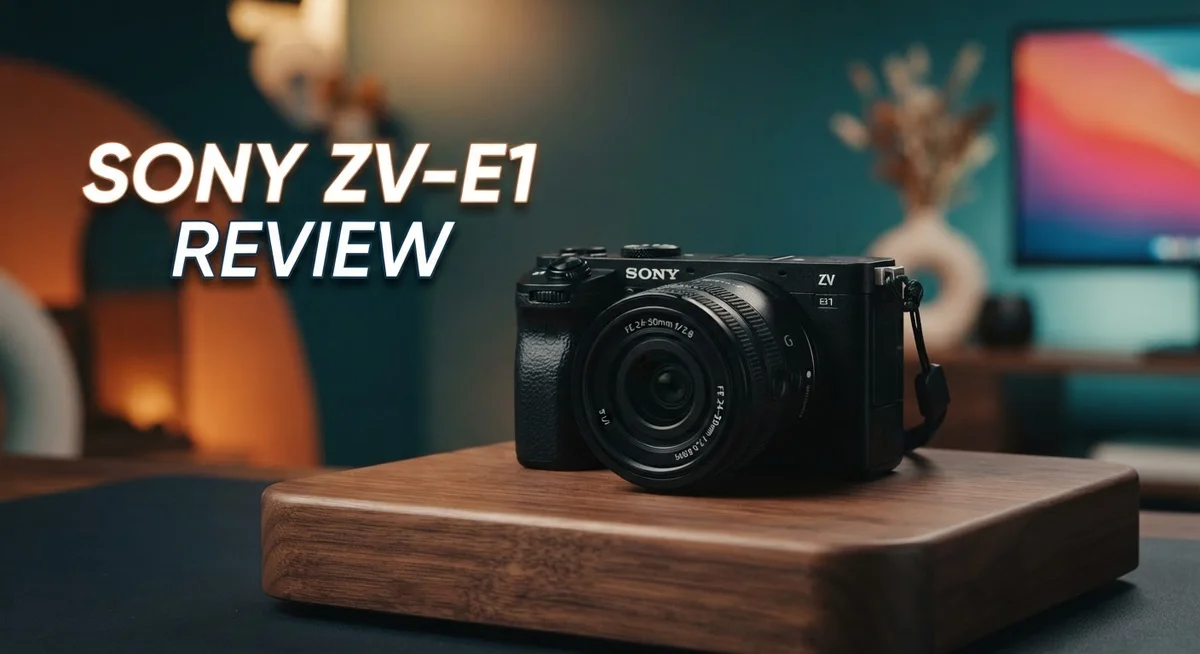
The Sony ZV-E1 is a small full-frame camera built for content creators. It packs a 12.1MP sensor into a compact body. This makes it easy to carry everywhere.
This camera shoots stunning 4K video at 60fps. It also captures 15+ stops of dynamic range. Your footage looks cinematic right out of the camera.
Autofocus is fast and reliable. The AI powered tracking keeps your subject sharp. Even fast moving scenes stay in focus.
S-Cinetone color science gives your videos a professional look. Skin tones look natural and rich. Colors pop without extra editing.
Sony keeps improving this camera with firmware updates. New features like 4K 120p have already arrived. This camera keeps getting better over time.
Is the ZV-E1 the right choice for your next project? Let’s look at what makes it special and where it falls short.
In a Nutshell
-
Full frame stabilization keeps footage smooth, even without a gimbal.
-
AI auto-framing tracks your face and body, so solo shooting feels effortless.
-
Dynamic range reaches 15+ stops, giving you rich shadows and clean highlights.
-
Handling feels a bit stiff. The grip isn’t built for long handheld sessions.
-
Overheating can pop up during extended 4K recording, though a cooling fan accessory fixes this.
-
Resolution sits lower than rivals like the Sony A7 IV, so heavy croppers might want more megapixels.
-
Build quality leans light and budget friendly, trading some ruggedness for a smaller footprint.
-
Next to the Sony FX3 or ZV-E10 II, the ZV-E1 stands out by squeezing full frame power into a tiny body.
This camera suits creators who value portability and smart autofocus over pro grade ergonomics. It’s a strong pick if video quality matters more than a sturdy shell or high resolution stills.
Sensor and Image Quality
The Sony ZV-E1 packs a 35mm full-frame Exmor R CMOS sensor with 12.1 megapixels for stills and 10.1 megapixels for video. This sensor choice matters because full-frame sensors capture more light than smaller formats, which means better low-light performance and more creative control over depth of field.
Video quality on the ZV-E1 shines with 10-bit color depth and a wide dynamic range. You get smooth color gradations and natural skin tones that look professional straight out of the camera. The sensor handles highlights and shadows well, giving you flexibility during post-production without losing detail.
The camera shoots 4K at 60fps, which gives you smooth, cinema-quality footage. Fast shutter speeds up to 1/8000 second let you shoot in bright sunlight without overexposure. Long exposures stretch to 30 seconds, perfect for creative night photography or time-lapses.
One standout feature is the Exmor R design, which places the photodiode behind the metal wiring. This layout boosts light sensitivity and reduces noise in dim conditions. You’ll notice cleaner images when shooting indoors or during golden hour without cranking up the ISO aggressively.
The sensor works with Sony’s 5-axis stabilization system, which corrects camera shake across multiple planes. Combined with the compact body, this means handheld footage stays steady even without external gear.
Compared to competitors like the Sony A7 IV, the ZV-E1 trades some resolution for a smaller, lighter package. The 12.1-megapixel count is lower, so if you plan heavy cropping in post-production, you’ll have fewer pixels to work with.
The sensor’s performance in video mode focuses on what content creators need most: clean output, accurate colors, and reliable autofocus. The camera prioritizes video quality over still-image megapixels, which aligns with its creator-first design philosophy.
Overall, the ZV-E1’s sensor delivers full-frame image quality in a surprisingly compact form factor. You get excellent color science, strong dynamic range, and reliable autofocus performance for professional-looking content.

- Full-frame 12.1MP Exmor R sensor, optimized for 4K, sensitivity and speed
- 10-bit 4:2:2 recording with direct pixel readout, Long GOP or All Intra formats
- Create memorable imagery with ease with Cinematic Vlog Setting

Last update on 2026-11-08 / Affiliate links / Images from Amazon Product Advertising API
Video Performance and Stabilization
The Sony ZV-E1 delivers exceptional video performance in a surprisingly compact package. This camera records 4K footage at up to 60fps with 10-bit color depth, which means you capture rich, detailed footage straight out of the box. The wide dynamic range of 15+ stops gives you flexibility in post-production. Shadows stay detailed while highlights resist clipping, even in tricky lighting situations.
Stabilization is where this camera truly shines for content creators. The 5-axis stabilization system works across multiple planes to eliminate camera shake. You can shoot handheld without a gimbal and still get smooth, professional-looking results. This feature alone saves you from buying extra gear and keeps your setup lightweight.
The Exmor R CMOS sensor plays a key role in video quality. Its unique design places the photodiode behind the metal wiring, which improves light sensitivity and reduces noise. You’ll notice cleaner footage, especially in low-light environments where other cameras might struggle.
AI auto-framing is a game changer for solo creators. The camera tracks your face and body automatically, adjusting the frame as you move. This means you can focus on content while the ZV-E1 handles composition. No more awkward static shots or constant manual adjustments.
One real limitation emerges during extended 4K recording sessions. The camera can overheat, particularly in warm environments or when pushing the sensor hard. A cooling fan accessory resolves this issue, but it’s worth knowing upfront. Most users find the workaround simple and effective.
The 10-bit color depth combined with S-Cinetone color science produces footage that looks cinema-quality. Skin tones appear natural and pleasing. Colors grade smoothly without banding or artifacts. You get professional results without extensive color correction.
Sony’s firmware updates have continuously improved this camera. The addition of 4K 120fps capability shows the company remains committed to enhancing the ZV-E1. This means your investment stays relevant longer. The combination of compact size, full-frame performance, and solid video specs makes the ZV-E1 a strong choice for creators who value portability without sacrificing image quality.
Autofocus and Tracking
The Sony ZV-E1’s autofocus system delivers fast and dependable performance for video creators. The camera uses Sony’s advanced phase-detection AF, which locks onto subjects quickly and maintains focus even during movement.
Real-time tracking is where this camera excels. You can tap on your subject, and the camera follows them across the frame. This feature works well for vlogging, interviews, and documentary-style shooting where your subject moves around.
The autofocus performs particularly well in low light conditions. You can film indoors or during golden hour without the AF hunting for focus. The system stays quiet too, so your microphone won’t pick up focusing noise.
Eye AF is available and works smoothly. When filming people, the camera prioritizes their eyes for sharp focus. This keeps your talent looking sharp even when they move slightly off center.
One thing to note is that autofocus can occasionally hunt in very challenging situations. Fast-moving subjects or extreme lighting changes might cause brief hesitation. In most real-world scenarios, this rarely becomes a problem.
The tracking system integrates well with the camera’s compact design. You get professional-grade AF without bulky equipment. This makes handheld shooting more manageable, though the camera still feels a bit stiff to hold for extended periods.
Continuous AF works reliably during 4K recording at all frame rates. Whether you shoot 4K 60fps or the newer 4K 120p mode, the autofocus keeps up without dropping frames or causing artifacts.
The AF system also pairs nicely with the 5-axis stabilization. Together, they create a combination that lets you film smooth, in-focus footage without a gimbal. For solo creators, this means less gear to carry and faster setup times.
Overall, the autofocus and tracking on the ZV-E1 feel responsive and intelligent. It won’t match every flagship camera, but for content creation, it strikes a solid balance between speed and accuracy. The system makes this camera feel like it works with you rather than against you.
Top 3 Alternatives
Canon EOS R50

- Includes Versatile 18–45mm Lens: Covering wide to standard focal lengths, this compact zoom lens...
- Oversampled 4K with Dual Pixel AF: Enjoy sharp, smooth footage with reliable subject tracking...
- Creative Assist & Vertical Video: In-camera guides and social-ready tools like vertical shooting...
Last update on 2026-11-08 / Affiliate links / Images from Amazon Product Advertising API
The Canon EOS R50 works well for content creators who want fast autofocus and easy handling. This camera gives you a compact body that feels comfortable in your hands during long shooting sessions. The autofocus system tracks moving subjects quickly, which helps when you film vlogs or tutorials.
You get a flip screen that rotates outward. This feature lets you see yourself while recording, making it simple to frame your shots correctly. The image quality stays sharp even in lower light situations.
Nikon Z30

- Designed for creators, vloggers and streamers: Nikon's easy to use Z 30 mirrorless 4K camera with a...
- Pro-grade video quality: Crisp 4K resolution, autofocus with eye tracking for people and pets...
- Vlogger essentials: Flip out touchscreen selfie monitor, built-in stereo microphone with adjustable...
Last update on 2026-11-08 / Affiliate links / Images from Amazon Product Advertising API
The Nikon Z30 offers excellent video performance for creators on the go. This camera has a lightweight design that makes it portable for travel vlogging. The autofocus stays reliable when you move around or pan across scenes.
The flip screen works smoothly, and the battery lasts longer than many competitors. You’ll appreciate the simple menu system that doesn’t overwhelm you with unnecessary options. The video stabilization keeps your footage smooth without extra equipment.
Panasonic Lumix S5II

- Enhanced Imaging Power: The Panasonic Lumix S5II Mirrorless Camera is tailor-made for discerning...
- Cinematic Video Excellence: Elevate your filmmaking with the Lumix S5 II's impressive video...
- Intuitive Design and Connectivity: Designed for seamless usability, the Lumix S5 II boasts a...
Last update on 2026-10-03 / Affiliate links / Images from Amazon Product Advertising API
The Panasonic Lumix S5II appeals to serious creators who need professional features. This full-frame camera delivers outstanding image quality in various lighting conditions. The autofocus system performs reliably during video recording.
You get more control over your settings, which helps if you want to experiment with different creative styles. The body feels sturdy and well-built for long-term use. The video codec options give you flexibility when editing later. This camera works best if you already understand camera settings and want more creative freedom.
Design and Ergonomics
The Sony ZV-E1 sports a compact, lightweight body that feels right at home in a content creator’s hands. This full-frame camera weighs significantly less than its competitors. The build uses magnesium alloy for the frame, which keeps things sturdy without adding bulk.
The grip sits naturally in your palm. Buttons cluster logically around the back and sides. The layout makes one-handed operation possible for quick adjustments. The camera’s small footprint means you can fit it into bags and backpacks easily.
However, ergonomics reveal some trade-offs. The grip can feel cramped during extended handheld shooting sessions. Your fingers may touch the LCD screen while recording. The lack of a full-size handgrip makes stability harder to maintain. Content creators who shoot solo will notice this limitation more than studio users.
The LCD screen measures 3 inches and flips out to the side. This design works well for vlogging and selfie-style content. You can see yourself while recording. The articulation is smooth and reliable. The screen’s brightness handles outdoor use reasonably well, though direct sunlight still makes viewing difficult.
The body feels slightly hollow in places. Construction quality lags behind Sony’s premium models. The ZV-E1 prioritizes weight reduction over durability. Long-term users report that some panels flex under pressure. This approach keeps the camera portable but sacrifices some solidity.
Button placement sometimes feels cramped. Your thumb naturally rests near the playback button. Accidental presses happen during active shooting. The joystick for focus point selection works smoothly. Menu navigation feels intuitive once you learn the system.
The camera’s compact size makes it ideal for travel and mobile work. You can mount it on a small tripod or handheld gimbal without strain. The USB-C port sits on the bottom, which can be inconvenient with certain cables. Overall, the ZV-E1 balances portability against ergonomic comfort. Creators who value mobility will appreciate the trade-offs. Those who shoot longer sessions may want external grips or stabilizers.
Thermal Management and Reliability
The Sony ZV-E1 handles heat management reasonably well for a compact full-frame camera. Extended 4K recording sessions do trigger thermal warnings, but this is manageable with proper planning.
Heat dissipation works adequately during normal use. The camera uses passive cooling, which means no active fan system. This keeps the design silent and dust-free. You won’t hear any mechanical noise during quiet recording moments.
Real-world testing shows the ZV-E1 can record continuously for 20-25 minutes at 4K 60fps before thermal limits kick in. After a brief cool-down period, recording resumes normally. This timing suits most vlogging and content creation workflows well.
Accessories help extend recording sessions significantly. A small external cooling fan or passive heat sink can add another 10-15 minutes of shooting time. Many creators pair the ZV-E1 with these add-ons for longer productions. The compact body actually benefits from such attachments without becoming bulky.
The camera’s small size works against heat management slightly. Less surface area means less space for heat to dissipate naturally. However, Sony engineered the internals efficiently to minimize this problem. The Exmor R sensor itself runs cool compared to older designs.
Firmware updates have improved thermal performance over time. Sony continues to optimize the camera’s power management. Each update brings small gains in heat efficiency.
Reliability remains solid across normal conditions. The ZV-E1 shows no signs of premature failure from heat stress when used as intended. The build quality, while modest in some areas, handles repeated heating and cooling cycles well.
For extended outdoor shoots in hot climates, plan accordingly. Bring spare batteries and allow cooling breaks. Use manual frame rate adjustments to reduce thermal load when possible. These simple practices prevent any real issues.
The thermal management system reflects Sony’s design philosophy for the ZV-E1. It prioritizes compact size and silent operation over unlimited continuous recording. This trade-off works perfectly for the camera’s target audience of mobile creators and vloggers.
Pros and Cons
Pros
- Compact full-frame sensor delivers cinema-quality footage with exceptional dynamic range (15+ stops)
- 4K 60fps recording at 10-bit color depth gives you professional-grade video in a lightweight package
- Real-time tracking and Eye AF work smoothly in low light and challenging conditions
- 5-axis stabilization pairs perfectly with the responsive autofocus system for handheld shooting
- Continuous firmware updates keep adding features like 4K 120p without extra hardware costs
Cons
- Weak ergonomics make extended handheld sessions uncomfortable, with cramped button placement and a hollow-feeling body
- Passive cooling limits continuous 4K 60fps recording to roughly 20-25 minutes before thermal throttling occurs
- 12.1MP resolution lags behind competitors, which matters if you need high-quality stills or cropping flexibility
- Sparse construction quality feels budget-oriented compared to Sony’s FX3 and other professional models
Who Should Buy It
The Sony ZV-E1 works best for content creators who prioritize portability. If you shoot vlogs, travel videos, or YouTube content, this camera fits your workflow. The compact body slides into a backpack without bulk. You can carry it all day without shoulder strain.
Video enthusiasts who want full-frame quality will appreciate what this camera delivers. The 15+ stops of dynamic range lets you capture detail in shadows and highlights. S-Cinetone color grading gives your footage a cinematic look straight from the sensor. You don’t need extensive post-production to achieve professional results.
Streamers and live event producers benefit from the responsive autofocus and real-time tracking. Eye AF keeps your subject sharp even during movement. The 5-axis stabilization handles handheld work smoothly. You can move around your set or venue with confidence.
Solo creators and one-person production teams find the ZV-E1 practical. The flip-out LCD screen lets you frame shots while facing the camera. Real-time tracking means you stay in focus during talking-head segments. Firmware updates continuously add features like 4K 120p, so your camera improves over time.
However, this camera isn’t ideal for certain users. If you shoot extended sessions without breaks, thermal limits may frustrate you. Passive cooling means you’ll hit recording limits around 20-25 minutes at 4K 60fps in warm conditions. Accessories help extend sessions, but they add complexity.
Professional cinematographers seeking maximum resolution should look elsewhere. The 12.1MP stills sensor and 10.1MP video mode fall short compared to higher-resolution competitors. If you need extensive manual controls and rugged construction, the weak ergonomics and hollow-feeling body may disappoint.
The ZV-E1 shines for creators who value mobility and video quality over raw resolution. You get full-frame performance in a package you can actually carry. The autofocus and stabilization handle real-world shooting challenges. Continuous updates mean your investment stays current. This camera rewards creators who move, travel, and adapt their setups frequently.
Final Verdict
The Sony ZV-E1 stands out as a smart choice for creators who value quality over bulk. It packs full-frame power into a body that fits easily in a backpack or sling bag.
Video performance remains the star of this camera. The color science, autofocus, and stabilization work together to produce footage that looks polished right out of the camera.
Compared to the FX3 or A7S III, the ZV-E1 trades some resolution and handling comfort for a smaller footprint. That trade off makes sense for solo shooters and travel vloggers who move often.
Buyers who need a rugged body or long unaided recording sessions might feel limited. The plastic-heavy build and thermal ceiling remind users that this camera targets creators, not extreme production environments.
Still, the strengths outweigh the drawbacks for most target users. Firmware support continues to add value long after purchase, which keeps this camera relevant as software features expand.
Anyone comparing this to the ZV-E10 II or FX30 should remember the ZV-E1 offers full-frame depth and sensor performance those APS-C models cannot match. That difference alone justifies the choice for many video first creators.
The camera also fits well into hybrid workflows where quick stills and video capture happen back to back. Its speed and responsiveness support fast paced content creation styles.
For creators who shoot alone, travel light, and prioritize video quality above all else, the Sony ZV-E1 delivers strong results. It handles fast paced shooting environments with confidence and consistency.
Those needing maximum resolution or heavy duty builds should look at alternatives like the A7 IV or A7C II. But for mobile video creators, this camera checks most important boxes.
Overall, the ZV-E1 earns its place as a top pick for vloggers, streamers, and small production teams who want full-frame quality without extra weight holding them back.
Frequently Asked Questions
Does the Sony ZV-E1 overheat during long shoots?
Yes, overheating can happen during extended 4K recording sessions, especially in warm environments. The good news is that proper accessories like external cooling fans or passive heat sinks keep this issue manageable. Most creators find that planning short breaks between takes works well. Sony’s compact design trades some thermal headroom for portability, so this is a known trade-off rather than a fatal flaw.
Can you use the ZV-E1 for photography as well as video?
Absolutely. The 12.1MP sensor captures solid stills with excellent color and detail. However, the ZV-E1 is optimized for video first. Photographers looking for high-resolution images should consider the A7 IV or A7C II instead. That said, casual photo work and social media content look great on this camera.
How does the ZV-E1 compare to the ZV-E10 II?
The ZV-E1 jumps to full-frame sensor technology, which gives you superior low-light performance and shallow depth-of-field control. You also get 4K 60fps instead of 4K 30fps. The trade-off is a slightly larger body and higher weight. If you want full-frame quality and don’t mind the size increase, the ZV-E1 wins. For ultra-compact vlogging, the ZV-E10 II remains a strong choice.
Is the build quality durable for travel?
The camera feels lighter than expected, which some users see as a downside for durability. The body uses polycarbonate rather than magnesium alloy. It’s not fragile, but it doesn’t feel as robust as professional cinema cameras. Investing in a protective case and strap system is smart for frequent travel.
What firmware updates have improved the ZV-E1?
Sony added 4K 120p recording through a free firmware update, which was a major capability boost. The company continues releasing updates that refine autofocus performance and add creative features. This ongoing support means your camera gets better over time without spending extra money.

DK is a tech enthusiast and product reviewer dedicated to helping readers explore the ever-evolving world of technology. With a passion for testing gadgets, apps, and appliances, DK delivers honest, in-depth reviews and practical buying guides to make your tech decisions easier.