Sony A7C II Review: Full-Frame Mirrorless Camera for Content Creators and Photographers
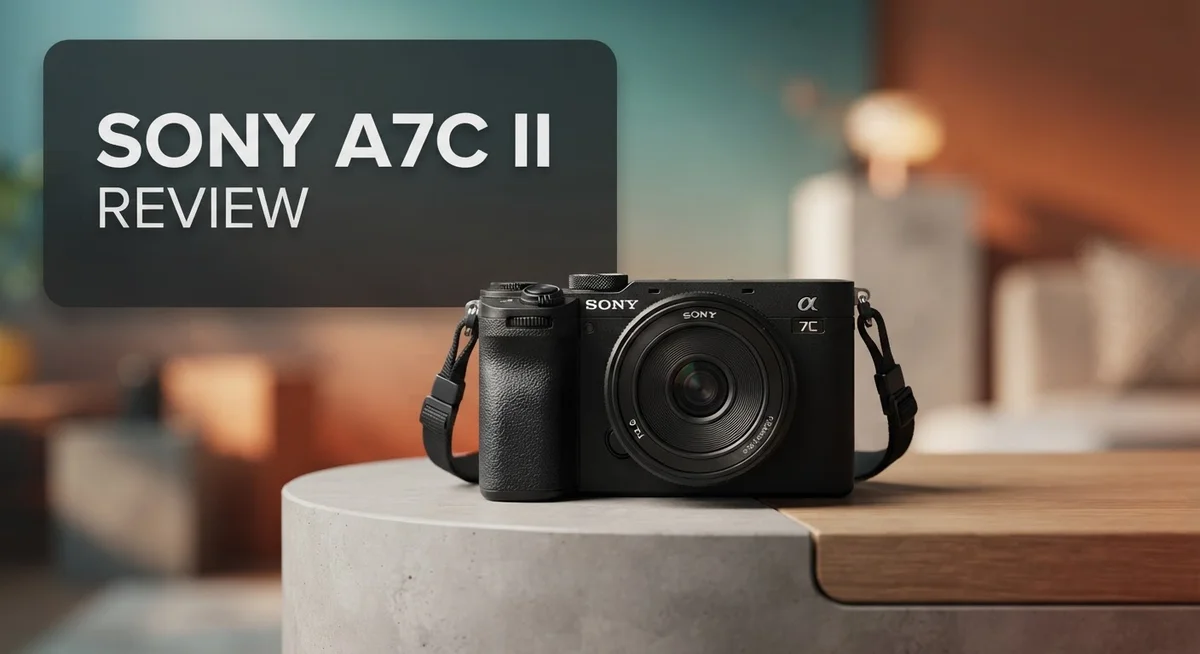
The Sony A7C II packs full-frame power into a small body. It brings a 32.7MP sensor and smart autofocus into one neat package.
This camera suits photographers who want pro results without extra bulk. It fits easily into a bag and feels natural in your hand.
Sony added a dedicated AI processor for sharper subject tracking. The improved in-body image stabilization helps you shoot steady shots, even in tricky light.
Video creators will love the 4K 60p full pixel readout. It captures clean, detailed footage without pixel binning.
This review breaks down every feature of the A7C II. We look at its autofocus, video power, ergonomics, and screen quality.
Is this compact body the right fit for your next adventure? Let’s find out together.
In a Nutshell
Here is a quick look at what makes the Sony A7C II stand out and where it falls short.
- The camera uses a 32.7MP full-frame sensor. This gives you sharp, detailed photos in a small package.
- In-body image stabilization got a big boost. Your shots stay steady even in tricky lighting.
- The grip and buttons feel more comfortable now. Ergonomics improved a lot over the older model.
- One downside is the single card slot. Backup shooters may find this limiting.
- The EVF is smaller and has lower magnification. Some photographers might miss a bigger viewfinder.
- The rear screen has lower resolution than some rivals. It still works well for everyday framing.
- Max shutter speed caps at 1/4000th electronically. Fast action shooters should note this limit.
Overall, the A7C II balances portability with strong performance. It fits creators who want power without heavy gear. Check how it stacks up against the A7 IV or Fujifilm X-H2S before you decide.
Sensor and Image Quality
The 32.7MP full-frame BSI-CMOS sensor sits at the heart of the A7C II’s imaging system. This sensor delivers sharp, detailed photos across a wide range of lighting conditions. The back-side illumination design helps capture more light, which means cleaner images in dim environments.
Raw file quality stands out as a major strength. You get excellent color accuracy and smooth tonal transitions in your shots. The sensor processes information faster than before, thanks to the BIONZ XR engine. This means less noise at higher ISO settings compared to the previous generation.
Dynamic range performance is solid for a compact mirrorless camera. Shadows retain detail without looking crushed, and highlights stay controlled in bright scenes. You can recover lost detail during post-processing with ease.
The enhanced in-body image stabilization makes a real difference in everyday shooting. Handheld shots stay sharp even at slower shutter speeds. This feature becomes especially useful when you’re traveling light or shooting video without a tripod.
Color science deserves mention here. Sony’s color profiles produce natural skin tones and vibrant landscapes right out of the camera. The film simulation modes add creative options without feeling gimmicky.
One consideration: the 33MP resolution sits lower than some full-frame competitors. This matters less for web use and standard prints, but it becomes relevant if you plan heavy cropping or large format output.
Autofocus performance ties directly to image quality. The dedicated AI processor tracks subjects with impressive accuracy. Eyes, faces, and animals stay locked in focus, which means more keepers and fewer missed moments.
Video shooters benefit from the 4K 60p full pixel readout. No binning means you capture all sensor data for maximum detail. Colors grade beautifully in post, and the footage remains stable thanks to IBIS.
Low light performance impresses for a camera this size. ISO performance stays clean up to around 3200, with acceptable results pushing higher. The compact body doesn’t compromise sensor capability.
Overall, the sensor and image quality combination makes the A7C II a capable tool. You get full-frame results in a body that fits your everyday bag.

- Incredibly compact and lightweight, packed with full-frame performance
- 33.0MP full-frame Exmor R CMOS sensor
- BIONZ XR processing power for exceptional image quality

Last update on 2026-11-09 / Affiliate links / Images from Amazon Product Advertising API
Design and Build Quality
The Sony A7C II maintains the rangefinder-style design that made the original A7C popular. This compact form factor feels natural in your hands during long shooting sessions. The body measures just 5.1 x 2.9 x 1.6 inches, making it genuinely pocketable for a full-frame mirrorless camera.
Sony redesigned the grip to sit higher on the body. Your fingers now wrap around the camera with better support and control. The textured surface prevents slipping even when your hands are wet or cold. Button placement improved significantly, so you reach essential controls without awkward stretches.
The build uses a magnesium alloy chassis that feels solid without being heavy. The camera weighs only 509 grams with a battery, so it won’t tire your arms during all-day shoots. Dust and moisture sealing protects the internals from rain, sand, and splashes. You can shoot confidently in challenging environments.
The fully articulated LCD screen rotates 180 degrees forward for vlogging and selfies. This screen flips down 90 degrees for overhead shots. The display itself offers lower resolution than some competitors, but it remains functional and bright enough for outdoor use. The articulating design adds practical value for content creators and travel photographers.
The electronic shutter maxes out at 1/4000th of a second. This limitation means you may need an ND filter when shooting fast lenses in bright sunlight. The mechanical shutter option would have provided more flexibility, but Sony prioritized compact dimensions here.
The single SD card slot represents a trade-off for portability. Professional photographers who demand dual card redundancy may find this limiting. However, the slot accepts UHS-II cards for fast write speeds during 4K recording.
The EVF sits in the top left corner and offers lower magnification than larger Sony models. The viewfinder still delivers useful information and responds quickly to focus changes. Overall, the A7C II’s design philosophy prioritizes portability without sacrificing essential features. Every component serves the goal of creating a camera you’ll actually carry every day.
Video Performance and Features
The Sony A7C II delivers impressive video capabilities that punch well above its compact size. The camera records 4K video at up to 60 frames per second with full pixel readout, meaning no pixel binning compromises your footage. This approach captures maximum detail and color information from the sensor.
BIONZ XR processing engine powers the video system and handles real time autofocus during recording. The camera tracks subjects smoothly across the frame, making it ideal for vlogging, interviews, and documentary work. You get reliable performance even when your subject moves unpredictably.
The enhanced in body image stabilization works overtime during video capture. Handheld shots remain steady without requiring a tripod or gimbal, which matters when you’re moving between locations. Stabilization pairs nicely with the compact body for run and gun shooting scenarios.
Video output options include internal recording to the SD card or external recording via USB C. You can capture to external SSDs for longer sessions without worrying about card space limitations. This flexibility helps when you’re away from your desk for extended shoots.
The fully articulated LCD screen rotates forward completely, making it easy to frame yourself during selfie videos or vlogging. You see exactly what the camera sees without guessing angles or distances. The touchscreen also lets you tap to focus during recording, adding another layer of control.
One thing to note: the single SD card slot means you cannot back up footage simultaneously while recording. You’ll need to manage your workflow carefully on longer production days. Some shooters carry multiple cards to swap between takes.
Color science in video mode produces natural skin tones and pleasant highlights. The camera handles mixed lighting situations without requiring extensive color correction in post production. This saves time in your editing workflow.
The A7C II handles slow motion recording at 1080p up to 240 frames per second. This opens creative possibilities for dramatic reveals or product demonstrations. Overall, the video feature set makes this camera genuinely useful for content creators who value portability alongside professional results.
Top 3 Alternatives
Canon EOS R6 Mark II

- FULL-FRAME CMOS SENSOR: 24.2 effective megapixels (approx.) lets you capture sharp, detailed images...
- DIGIC X IMAGE PROCESSOR: Enhances digital camera performance and processes, including image...
- HIGH-SPEED CONTINUOUS SHOOTING: Electronic shutter speeds of up to 40 fps at 20MP let you capture...
Last update on 2026-11-09 / Affiliate links / Images from Amazon Product Advertising API
The Canon EOS R6 Mark II stands out as a powerful full-frame mirrorless camera for photographers who want excellent autofocus and video performance. This camera delivers fast continuous shooting and reliable subject tracking across various conditions. The sensor captures sharp images with strong color accuracy, making it ideal for both stills and video work.
You get a comfortable grip and intuitive menu system. The battery life performs well during extended shooting sessions. Many photographers appreciate the extensive lens ecosystem available for Canon’s RF mount.
Nikon Z6 III

- VIDEO - 6K/60p Internal N-RAW video recording + oversampled 4K UHD, 4K/120p, Full HD/240p slow...
- BEST IN CLASS EVF - Max brightness of 4000 nits gives a clear, vibrant view even in very bright...
- WIDE ISO RANGE - ISO sensitivity range of 100-64000, with extended range up to Hi 1.7 (equivalent to...
Last update on 2026-11-09 / Affiliate links / Images from Amazon Product Advertising API
The Nikon Z6 III offers impressive autofocus speed and accuracy that rivals top competitors in the market. This camera excels at tracking moving subjects, whether you shoot people, animals, or sports. The image quality remains consistent across different lighting situations.
The compact body makes it easy to carry throughout your day. Nikon’s Z-mount lenses provide excellent optical performance. Video capabilities include advanced features that appeal to content creators and filmmakers alike.
Panasonic Lumix S5II

- Enhanced Imaging Power: The Panasonic Lumix S5II Mirrorless Camera is tailor-made for discerning...
- Cinematic Video Excellence: Elevate your filmmaking with the Lumix S5 II's impressive video...
- Intuitive Design and Connectivity: Designed for seamless usability, the Lumix S5 II boasts a...
Last update on 2026-10-03 / Affiliate links / Images from Amazon Product Advertising API
The Panasonic Lumix S5II presents a solid choice for hybrid shooters who need reliable performance in both photography and videography. This full-frame camera produces detailed images with natural color rendering. The stabilization system helps you capture sharp shots even without a tripod.
The interface feels straightforward, and the menu structure won’t frustrate you during important shoots. Panasonic’s L-mount alliance opens doors to quality lenses from multiple manufacturers. The overall package delivers good value for photographers seeking a dependable workhorse camera.
Autofocus and Stabilization
The Sony A7C II steps up its autofocus game with a dedicated AI processor built into the camera body. This chip handles subject recognition in real time. You get fast, accurate tracking whether you shoot stills or video.
The autofocus system locks onto faces, eyes, and bodies without you doing much work. Real time tracking stays locked even when subjects move across the frame. The camera recognizes animals and vehicles too, which helps for wildlife and automotive work.
Continuous autofocus during video recording runs smoothly thanks to the BIONZ XR engine. The camera adjusts focus silently without hunting or hunting artifacts that distract viewers. Video shooters appreciate this stability during handheld shots or when subjects move unpredictably.
The enhanced in body image stabilization pairs perfectly with the autofocus system. IBIS compensates for camera shake, which means your autofocus system doesn’t have to work as hard. You get cleaner footage and sharper stills even in low light or when using longer lenses.
Five axis stabilization covers pitch, yaw, roll, horizontal, and vertical movement. The system works with Sony lenses that have their own stabilization, creating a combined effect. Handheld shooting becomes easier without a tripod, especially valuable for travel and run and gun video work.
In body stabilization also helps during video panning and tracking shots. The camera smooths out jerky movements without requiring expensive gimbals. You maintain creative control while the stabilization handles the technical heavy lifting.
The autofocus system responds quickly in various lighting conditions. Low light autofocus remains responsive down to very dim environments. Fast aperture lenses unlock even better performance in challenging situations.
One thing to note: electronic stabilization cannot fully replace mechanical stabilization in every scenario. Extremely fast pans or sudden movements may still show slight artifacts. Combining IBIS with optical stabilization from your lens gives you the best results.
The autofocus and stabilization combination makes the A7C II reliable for both photography and video work. You spend less time fiddling with settings and more time capturing moments that matter.
Ergonomics and Handling
The Sony A7C II maintains the rangefinder style that made the original popular. Sony redesigned the grip to sit higher on the body, which improves how the camera feels in your hands during long shooting sessions.
The build uses a magnesium alloy chassis that feels solid without being heavy. You can hold this camera all day without arm fatigue. The compact form factor means it fits easily into camera bags and backpacks.
The fully articulated LCD screen is a major ergonomic feature. It rotates 180 degrees forward for vlogging and selfies. You can frame yourself without guessing. The screen also flips down for protection when traveling.
The EVF sits in the top left corner of the camera. It offers lower magnification than larger Sony models, which takes some getting used to. Your eye position matters more when composing shots. Some photographers prefer this compact viewfinder for its minimal footprint.
The single SD card slot represents a trade-off for portability. You get a smaller, lighter camera but cannot back up footage simultaneously while recording. This matters if you shoot long video sessions or need redundancy.
The button layout feels intuitive once you spend time with the camera. Controls sit where you expect them. The joystick for autofocus point selection responds quickly and accurately. Custom function buttons let you assign frequent tasks to easy reach locations.
The shutter button sits naturally under your finger. Press it halfway to focus, fully to capture. The electronic shutter maxes out at 1/4000th of a second, which limits handheld shooting in bright sunlight with fast lenses.
Weight distribution matters for handheld work. The A7C II balances well when paired with compact lenses. Heavier telephoto lenses can feel front heavy, so pairing matters.
Grip texture provides solid purchase even with wet hands. The material resists slipping during active shooting. Your thumb rests comfortably on the back plate during video recording and playback review.
The camera body remains cool during extended use. Heat dissipation works efficiently, so thermal throttling rarely becomes an issue during all day shoots.
Pros and Cons
Pros
- 32.7MP full frame sensor captures sharp detail across diverse shooting situations
- 4K 60p video with full pixel readout delivers smooth footage without binning artifacts
- Dedicated AI processor handles face, eye, and body detection automatically during both photos and video
- Compact rangefinder design stays light enough for all day shooting without fatigue
- Five axis in body stabilization smooths handheld video and reduces blur during panning shots
Cons
- Single SD card slot forces you to choose between recording and backing up files simultaneously
- Smaller EVF with lower magnification makes precise framing harder than larger viewfinders
- Electronic shutter maxes out at 1/4000th second, limiting fast film or bright daylight shooting
- Lower resolution rear screen makes image review and menu navigation less detailed than flagship models
Who Should Buy It
The Sony A7C II works best for photographers and videographers who value portability without sacrificing image quality. If you shoot events, travel, or work in tight spaces, this camera fits naturally into your workflow.
Content creators will appreciate the 4K 60p video capability paired with the BIONZ XR engine. The dedicated AI processor handles face, eye, and body detection automatically. This means you spend less time adjusting settings and more time capturing moments.
Vloggers and solo filmmakers benefit from the fully articulated LCD screen. You can frame yourself easily during recording. The enhanced in-body stabilization keeps footage smooth during handheld movement, which eliminates the need for external rigs in many situations.
Hybrid shooters who split time between stills and video will find this camera balances both needs well. The 32.7MP sensor delivers sharp detail for print work and crops. Continuous autofocus during video runs smoothly without hunting or lag.
Photographers upgrading from the original A7C gain noticeable improvements. The better autofocus system responds faster in low light. The improved ergonomics and grip make extended shooting sessions more comfortable.
However, this camera isn’t ideal for everyone. Professional studios with backup requirements should consider models with dual card slots. The single SD card slot means you cannot record and back up files simultaneously. Fast-paced sports photographers might prefer cameras with higher shutter speeds. The electronic shutter maxes out at 1/4000th, which limits flash sync options in bright daylight.
The smaller EVF with lower magnification makes precise manual focus harder than larger viewfinders. If you rely on optical precision for critical work, you may want to test this before committing.
Photographers who need the absolute highest resolution should explore other options. The 32.7MP sensor sits below some competitors in the full-frame space.
The A7C II shines when you prioritize mobility, video performance, and reliable autofocus. It rewards photographers who want a camera that adapts to their lifestyle rather than forcing them to adapt to the camera.
Final Verdict
The Sony A7C II proves itself as a smart choice for anyone who wants full frame quality in a small package. It blends power and portability better than most cameras in its class.
Autofocus tracking stays reliable across fast moving subjects. This makes the camera trustworthy for events, wildlife, and spontaneous moments alike.
The camera also holds up well during long shooting days. Battery life and heat management stay consistent, so you can rely on it for extended projects.
Photographers who value a lightweight setup will find this camera hard to beat. It fits easily into a small bag and still delivers professional level results.
Videographers who need flexible framing will also enjoy this camera. The screen and stabilization work together to keep footage steady and clear.
That said, the single card slot and smaller EVF remain real limitations. Professionals who shoot weddings or critical events may want extra backup options.
If you already own gear from the Sony E mount ecosystem, this camera fits right in. It saves you from buying new lenses or accessories.
Compared to the Sony A7 IV or A7CR, the A7C II offers a more compact body without giving up much performance. It is a strong middle ground for hybrid shooters.
Against rivals like the Nikon Z5 II and Fujifilm X-H2S, the A7C II holds its own with faster autofocus and smoother video output.
In short, this camera suits creators who want one tool for many jobs. It handles stills and video with confidence, and it does so without weighing you down.
If portability matters as much as image quality to you, the Sony A7C II deserves a spot on your shortlist. It rewards patience with sharp results and dependable performance over time.
Frequently Asked Questions
Does the Sony A7C II have good autofocus for video?
Yes. The camera uses a dedicated AI processor that tracks faces, eyes, and bodies automatically. This means you can focus on framing while the camera handles subject tracking. The autofocus stays reliable even when your subject moves fast across the frame.
Can you use this camera for professional video work?
Absolutely. The 4K 60p recording with full pixel readout gives you smooth footage without quality loss. The BIONZ XR engine handles color and detail beautifully. The articulated screen lets you frame shots from any angle, which helps during solo filming sessions.
Is the smaller EVF a real problem?
It depends on your shooting style. The lower magnification makes manual focus trickier than larger viewfinders. If you rely on precise manual focus work, you might find it limiting. For autofocus users, the smaller size matters less since the AI processor handles most tracking.
How does battery life hold up during long shoots?
The compact body stays light enough for all day shooting without causing fatigue. Most users report solid battery performance during typical shooting sessions. For extended video work, carrying a spare battery is smart practice.
Should I buy this if I already own Sony E mount lenses?
Yes. The camera fits perfectly into the Sony ecosystem. Your existing lenses work seamlessly. You get the full frame sensor quality and new autofocus improvements without needing to replace your glass.

DK is a tech enthusiast and product reviewer dedicated to helping readers explore the ever-evolving world of technology. With a passion for testing gadgets, apps, and appliances, DK delivers honest, in-depth reviews and practical buying guides to make your tech decisions easier.