Sony FX30 Review: Compact 4K Cinema Camera for Content Creators
Looking for a compact camera that shoots like a pro cinema tool? The Sony FX30 might be your answer.
This camera packs a 20.1MP APS-C sensor into a small body. It delivers image quality that rivals its full-frame siblings.
You get 4K recording up to 120p. The 6K oversampling gives you crisp, detailed footage every time.
S-Cinestone color science adds a cinematic look straight out of camera. Your videos get that pro film grade feel without extra editing work.
Strong autofocus keeps your subject sharp. It tracks movement fast and stays locked on target.
This guide covers everything you need to know. We break down the specs, real world performance, and how it stacks up against the Sony FX3 and other rivals.
By the end, you will know if this camera fits your creative needs. Let’s dive into what makes the FX30 stand out.
In a Nutshell
Here’s the quick rundown on the Sony FX30 before you decide:
- 6K oversampling gives you extra detail, even when you export in 4K.
- The camera uses an interchangeable lens mount, so you can switch optics based on your shoot.
- It offers 4-channel audio monitoring, which helps sound recordists capture clean audio on set.
- The APS-C sensor is smaller than full-frame options like the Sony A7 IV, so low-light depth of field differs slightly.
- It sits between the Sony A6700 and Sony FX3 in Sony’s video-first lineup, but leans more toward filmmakers than vloggers.
- Compared to Panasonic GH series or Nikon Z series cameras, the FX30 focuses purely on video, skipping some photo-centric features.
- This camera suits solo creators, documentary shooters, and small production teams who want a cinema-style tool without extra bulk.
- It lacks some advanced controls found on professional cinema cameras, so heavy commercial productions might need more.
Overall, the FX30 blends portability with cinematic quality. It works well for creators who want pro-level footage without carrying pro-level gear.
Sensor and Image Quality
The Sony FX30 uses a 20.1MP APS-C Super 35mm Exmor R sensor that delivers sharp, detailed footage in most lighting conditions. This sensor size sits between compact and full-frame options, giving you a practical balance for video work.
Image quality stands out as a major strength. The camera produces crisp output with minimal noise, even when you push the ISO higher. Colors appear natural and filmlike without aggressive processing. The sensor captures fine details across the frame, so your subjects stay sharp from edge to edge.
The 6K oversampling feature works behind the scenes to improve your 4K output. When you record in 4K, the camera captures extra information and compresses it down. This process reduces artifacts and gives you cleaner, more refined footage. You notice the difference when you grade in post-production.
S-Cinestone color science is built into the camera. This means your footage looks cinematic straight out of the box. You get warm, film-like tones without heavy color grading. The color palette matches Sony’s cinema camera aesthetic, so your videos feel professional and polished.
Low-light performance is solid but not exceptional. The APS-C sensor handles ISO up to certain limits before noise becomes visible. In dim environments, you may need to use faster lenses or add lighting. This is where the smaller sensor shows its limitation compared to full-frame competitors.
Dynamic range captures shadow and highlight detail effectively. You can recover blown-out skies and lift dark areas during color grading. The sensor preserves information across the tonal range, giving you flexibility in post-production.
The interchangeable lens mount means you control your image look through optics. Pair the camera with different lenses to shift focal length, depth of field, and overall aesthetic. This flexibility lets you adapt to various shooting scenarios.
Overall, the FX30 sensor delivers broadcast-quality images for filmmakers, content creators, and small production teams. The image quality rivals more expensive competitors while staying in a compact, portable package.

- 20.1 MP Exmor R APS-C (Super 35mm format) image sensor with wide dynamic range
- S-CinetoneTM for a cinematic look straight out of the camera without grading
- Flexible ISO, Cine EI Quick and Cine EI Log shooting modes for optimized image quality

Last update on 2026-11-08 / Affiliate links / Images from Amazon Product Advertising API
Video Performance and Frame Rates
The Sony FX30 shines when it comes to frame rate options. You can record 4K video at up to 120 frames per second, which gives you smooth slow motion playback. This high frame rate capability lets you capture fast action without losing detail or smoothness.
The camera also supports standard frame rates like 24p, 30p, and 60p. These options work well for traditional filmmaking, broadcast, and online content. You pick the frame rate that matches your project’s creative vision.
6K oversampling is a hidden advantage here. The camera captures extra resolution data and compresses it into your 4K output. This process reduces noise and sharpens your final video, even though you’re not exporting in full 6K.
When you shoot at 120p in 4K, the FX30 maintains excellent color accuracy and detail. The S-Cinestone color science applies automatically to all frame rates. Your footage looks cinematic right away, without heavy color grading in post-production.
The sensor handles motion smoothly across all supported frame rates. You won’t see flickering or motion artifacts when you switch between speeds. This consistency matters for professional work where reliability counts.
Frame rate flexibility extends to interlaced options too. You can record in progressive or interlaced formats depending on your delivery requirements. This makes the FX30 adaptable to different broadcast standards and workflows.
One thing to note: higher frame rates at 4K require faster SD UHS II cards. Your card speed affects how long you can record continuously. Sony recommends V90 cards for reliable performance at top speeds.
The autofocus system keeps pace with your frame rate choices. Whether you shoot at 24p or 120p, focus tracking remains responsive and accurate. This means you can confidently use high frame rates for dynamic shots without worrying about focus lag.
Overall, the FX30 delivers solid frame rate performance for video work. The combination of 120p capability, 6K oversampling, and consistent color science makes this camera practical for serious video creators. You get cinema-quality motion handling in a compact package.
Design, Portability, and Build
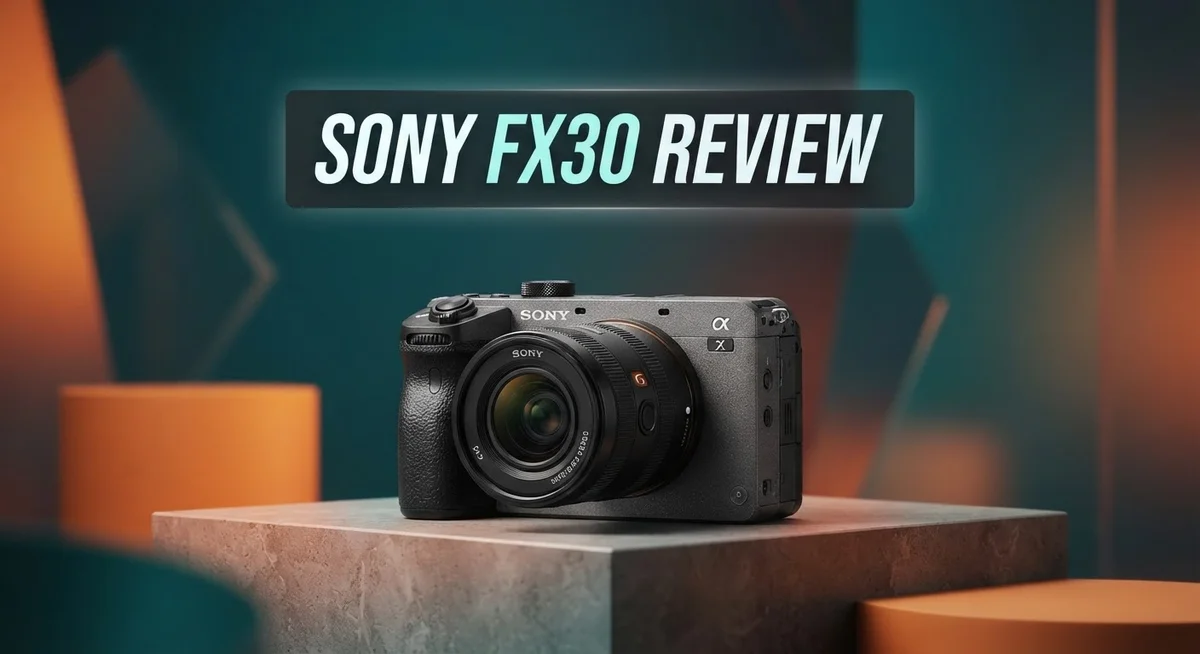
The Sony FX30 feels built for filmmakers who move between locations. Its compact frame makes it easy to carry for long shoots without shoulder fatigue. The camera weighs just enough to feel solid, but light enough that you won’t regret bringing it on all-day productions.
The body uses a magnesium alloy construction. This material resists dents and scratches during typical use. You get a camera that survives real-world handling without feeling fragile. The grip sits naturally in your hands, and the layout keeps essential controls within reach.
Portability stands out as a genuine strength here. Unlike larger cinema cameras, the FX30 fits in standard camera bags alongside your lenses and audio gear. You can move quickly between setups without wrestling with unwieldy equipment. This matters when you’re shooting documentaries, corporate videos, or indie films where mobility matters.
The design includes practical features for run-and-gun work. The built-in microphone input accepts standard XLR cables through an adapter. The SD card slot accepts dual cards, so you can back up footage or extend recording time without stopping. These touches show Sony understood what filmmakers actually need.
Build quality feels professional without being overengineered. The buttons resist accidental presses, and the menu system responds quickly. The LCD screen flips out for creative angles, and the viewfinder displays critical shooting information clearly.
One practical consideration: the camera gets warm during extended 4K 120p recording. This is normal for compact cameras pushing this much data. You won’t experience shutdowns under typical shooting conditions, but awareness helps you plan long sessions.
The FX30’s size makes it ideal for travel productions. Airplanes, cars, and tight studio spaces become less stressful when your camera takes up minimal space. You focus on storytelling rather than managing equipment logistics.
Compared to full-frame alternatives, the FX30 maintains a lighter profile. This doesn’t mean it feels cheap. The construction quality matches cameras costing significantly more, proving that smart engineering beats raw size for professional work.
Top 3 Alternatives
Canon R5C

- Canon USA Authorized. Items Include: Canon EOS R5 C Mirrorless Cinema Camera with 24-105 f/4L Lens...
- 45MP Full Frame Sensor: The Canon EOS R5 C combines still photography and cinema-grade video...
- 8K Cinema RAW and 4K Recording: Record in 8K RAW up to 60p or 4K up to 120p, giving filmmakers...
Last update on 2026-11-08 / Affiliate links / Images from Amazon Product Advertising API
The Canon R5C stands out for full-frame mirrorless performance with excellent 4K video capabilities. This camera delivers sharp images across various lighting conditions. The autofocus system tracks subjects smoothly, making it reliable for video work. You get professional-grade stabilization that reduces shaky footage. The battery life performs well during extended shoots. The ergonomic design feels comfortable in your hands during long sessions.
Panasonic S1H

- V-log/v-gamut – features a wider 14 plus Stops of dynamic range which are compatible with the...
- Rugged Mirrorless camera design – dust/splash/freeze-resistant design withstands heavy field use...
Last update on 2026-11-08 / Affiliate links / Images from Amazon Product Advertising API
The Panasonic S1H offers robust video features that appeal to content creators. This camera captures high-quality footage with impressive color science. The full-frame sensor produces detailed images even in challenging light. You can record for extended periods without overheating concerns. The autofocus system performs accurately during dynamic scenes. The build quality feels solid and reliable for professional use.
Nikon Z9

- Bundle Includes: Nikon Z9 Mirrorless Digital Camera (Body Only) + 120GB G Series XQD Memory Card...
- Experience exceptional image quality with the Nikon Z9's 45.7MP FX-format stacked CMOS sensor paired...
- Capture decisive moments with continuous shooting speeds up to 20 fps in RAW, 30 fps in JPEG, and up...
Last update on 2026-11-08 / Affiliate links / Images from Amazon Product Advertising API
The Nikon Z9 brings cutting-edge technology to the mirrorless market. This camera excels at capturing fast-moving subjects with precision. The autofocus tracks movement with impressive speed and accuracy. You get excellent low-light performance that expands your shooting options. The video stabilization keeps footage smooth without excessive software processing. The weather-sealed body handles demanding environments confidently.
Each option provides distinct advantages for video production. The Canon R5C balances performance and usability effectively. The Panasonic S1H prioritizes video-specific features and reliability. The Nikon Z9 emphasizes speed and advanced tracking capabilities. Your choice depends on which features matter most for your specific projects. Consider your typical shooting scenarios before deciding which camera fits your workflow best.
Audio Capabilities and Monitoring
The Sony FX30 gives you four channels of audio monitoring, which means you can track and control your sound in real time while recording. This setup works great for interviews, multi-mic setups, and complex audio scenarios. You see all your levels on the camera’s display, so you know exactly what’s being captured.
The camera includes a 3.5mm microphone input jack and supports external microphones easily. You can plug in a wireless lavalier, shotgun mic, or handheld recorder without any fuss. The audio inputs accept both balanced and unbalanced signals, giving you flexibility with different mic types.
Headphone monitoring is straightforward on the FX30. You get a dedicated 3.5mm headphone jack where you can listen to your audio mix while you shoot. This is essential for catching problems before they ruin your footage. The headphone output lets you monitor all four channels or specific tracks depending on your needs.
The camera’s audio meters display clearly on the screen. You can see your levels jump in real time as you talk or capture sound. This visual feedback helps you avoid clipping and distortion. The meters respond quickly to changes, so you stay in control of your audio throughout the shoot.
One practical detail: the FX30 handles audio timecode syncing, which matters when you use multiple cameras or external recorders on set. Your audio stays locked to your video timeline without manual correction later.
The built in microphone works as a backup option, though external mics always deliver better results for professional work. The camera doesn’t add unwanted noise to your recordings, so clean audio is achievable even in moderately noisy environments.
For filmmakers and content creators who care about sound quality, the FX30’s audio system removes headaches from the production day. You get professional monitoring tools without complex workarounds. This setup lets you focus on your story while the camera handles the technical audio side reliably.
Autofocus and Lens Compatibility
The Sony FX30 uses a fast and accurate autofocus system that responds quickly to moving subjects. This matters when you’re filming events, interviews, or dynamic scenes where manual focus becomes impractical.
The camera features Sony’s Real-time Tracking technology. This means the autofocus locks onto your subject and follows them across the frame. You get smooth, continuous focus even when your subject moves toward or away from the camera.
Eye autofocus is available too. When you’re filming people, the camera detects and prioritizes their eyes automatically. This feature saves time during interviews and documentary work where focus accuracy is critical.
The autofocus works across the entire frame, not just the center. You can select different focus zones depending on your shot composition. This flexibility helps you maintain creative control while keeping sharpness where it matters most.
One practical advantage: the FX30’s autofocus responds well at various frame rates. Whether you shoot at 24p or 120p, focus tracking remains consistent and reliable. The system doesn’t struggle when you push the camera’s frame rate capabilities.
Regarding lens compatibility, the FX30 uses the E-mount system. This opens up a huge selection of lenses from Sony and third party manufacturers. You can choose from compact primes, versatile zooms, or specialty glass depending on your project needs.
Sony offers native E-mount lenses specifically optimized for APS-C sensors. These lenses deliver excellent sharpness and minimize vignetting on the FX30’s sensor size.
You can also use full frame E-mount lenses on the FX30. They work fine, though they’re larger and heavier than APS-C alternatives. This flexibility means you can grow your lens collection without replacing existing glass.
Third party manufacturers like Sigma, Tamron, and Tokina produce E-mount lenses too. This gives you even more options for different shooting styles and budgets.
The E-mount design is compact and lightweight. This keeps the FX30 portable even when you attach quality glass. The mount feels sturdy and reliable through repeated lens changes.
Autofocus performance remains consistent across different lens brands. The FX30’s tracking system works smoothly whether you use Sony native lenses or third party options.
Pros and Cons
Pros
- Compact and lightweight design makes it easy to move between locations and fits standard camera bags
- 4K/UHD recording up to 120p with 6K oversampling delivers sharp, crisp video with a cinematic look
- Image quality from the 20.1MP APS-C sensor rivals larger full-frame cameras
- Fast and accurate autofocus with Real-time Tracking handles moving subjects smoothly across all frame rates
- Four-channel audio monitoring lets you control sound in real time with clear on-screen meters
Cons
- APS-C sensor is smaller than full-frame alternatives, which some users prefer for low-light work
- Camera body gets warm during extended 4K 120p recording sessions
- Fewer high-end specs compared to professional cinema cameras in its class
Who Should Buy It
The Sony FX30 works best for content creators who need a camera that balances professional features with portability. If you shoot videos regularly and want cinematic output, this camera fits your needs.
Videographers and filmmakers benefit most from the FX30. The 4K 120p capability with 6K oversampling gives you smooth slow motion and sharp details. The S-Cinestone color science helps you achieve that polished, professional look without spending hours in post-production.
You should consider the FX30 if you work solo or with small crews. The compact design means you carry less weight between locations. The camera fits easily in standard bags, which matters when you’re moving fast or traveling for shoots.
The FX30 appeals to hybrid shooters who need both stills and video. The 20.1MP APS-C sensor captures quality photos alongside your video work. You get one tool that handles multiple content types, which saves money and simplifies your workflow.
Content creators on YouTube, TikTok, and streaming platforms find value here. The autofocus tracks moving subjects smoothly, so you can film yourself or follow action without manual focus adjustments. Real time Tracking keeps your subject sharp even during complex movements.
The camera suits documentary filmmakers who need reliability in the field. The four-channel audio monitoring lets you manage multiple sound sources without external mixers. You control audio levels directly on the camera, which streamlines your setup.
Educators and corporate video producers benefit from the straightforward menu system and fast autofocus. You spend less time troubleshooting and more time capturing content. The image quality looks professional in training videos, marketing content, and educational materials.
You should skip the FX30 if you need full-frame sensors for extreme low-light work or if you require advanced cinema features like built-in ND filters. Likewise, if you shoot mostly stills and rarely record video, a dedicated camera makes more sense.
The FX30 shines for anyone who values portability, video quality, and practical audio control in one package.
Final Verdict
The Sony FX30 stands out as a smart choice for creators who want cinema quality without extra bulk. It packs serious video power into a small body. This makes it a strong pick for anyone building a flexible camera setup.
Throughout this review, we saw how the FX30 handles different shooting styles with ease. The sensor delivers clean footage. The autofocus keeps subjects sharp. The audio tools give creators full control over sound.
Compact size remains one of its biggest strengths. You can carry this camera anywhere without extra strain. It fits into tight spaces on set and travels well for remote shoots.
Some users may want a full-frame sensor for specific low-light scenarios. Others may need advanced cinema features found in higher-end models. The FX30 does not try to compete directly with those cameras.
Instead, it focuses on what most creators actually need. Sharp video quality, reliable autofocus, and simple controls make daily use straightforward. You spend less time fighting the camera and more time creating content.
The FX30 competes well against the Sony FX3, A6700, and other APS-C options. Each competitor has its own strengths. But the FX30 balances features and portability in a way that suits solo creators and small teams.
If you shoot video professionally or as a serious hobby, this camera deserves a spot on your shortlist. It handles YouTube content, documentary work, and corporate video projects with equal skill.
Hybrid shooters who need both photos and video will also find this camera useful. The stills quality holds up well alongside the video performance.
In short, the Sony FX30 offers a smart mix of portability, image quality, and ease of use. It fits creators who want professional results without unnecessary complexity. This camera earns its place among the best APS-C options for video focused work today.
Frequently Asked Questions
Can the Sony FX30 shoot in 6K?
The Sony FX30 does not shoot natively in 6K. However, it uses 6K oversampling technology to process 4K footage. This means the camera captures extra detail and downsamples it to 4K, giving you sharper, cleaner video with less noise.
You get the benefits of higher resolution without needing massive storage or processing power. The result is crisp, professional-looking footage at 4K resolution.
What audio features does the FX30 have?
The camera includes 4-channel audio monitoring built in. You can watch levels on screen in real time and adjust sound during recording. This gives you direct control over your audio without external gear.
The on-screen meters show exactly what your microphone is picking up. This feature matters most if you work alone or with small teams where you handle both video and sound.
How does the FX30 compare to the Sony FX3?
Both cameras use the same APS-C sensor and share similar autofocus performance. The main difference is size and weight. The FX30 is more compact and lighter, making it easier to carry for long shoots.
The FX3 offers some extra cinema features, but the FX30 delivers comparable image quality in a smaller package. Choose the FX30 if portability matters more to you.
Does the Sony FX30 work well for documentary work?
Yes. The compact design and reliable autofocus make it ideal for documentary filmmakers. You can move quickly between scenes without heavy equipment slowing you down.
The S-Cinestone color science gives your footage a cinematic look straight out of the camera. Fast autofocus handles unpredictable moments smoothly, which is essential when you cannot stage shots.

DK is a tech enthusiast and product reviewer dedicated to helping readers explore the ever-evolving world of technology. With a passion for testing gadgets, apps, and appliances, DK delivers honest, in-depth reviews and practical buying guides to make your tech decisions easier.