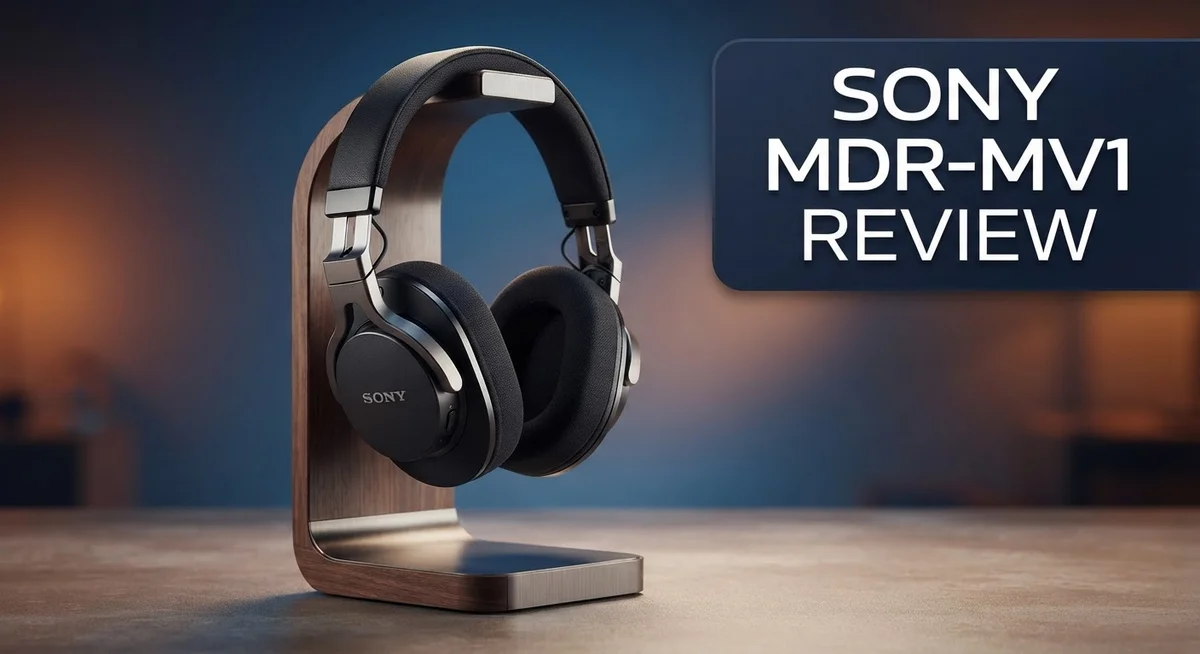
Sony MDR-MV1 Review: Open-Back Studio Monitor Headphones
Are you searching for headphones that sound honest and open? The Sony MDR-MV1 might be your answer. These open-back studio monitors aim to give you clear, natural sound.
Sony built these headphones for creators. Mixing engineers and audio professionals need trustworthy tools. This model wants to earn that trust.
Sub-bass extension stands out right away. You feel low tones without losing clarity. The design stays lightweight, so long sessions feel comfortable.
Sony also focused on consistency. Every unit sounds the same as the next. This matters for anyone who mixes audio for a living.
In this review, we test comfort, sound quality, and real world performance. We compare the MDR-MV1 to top rivals like the Sennheiser HD 650 and Neumann NDH 30.
Let us find out if these headphones truly deliver studio grade sound.
In a Nutshell
Here is a quick snapshot of what the Sony MDR-MV1 brings to your setup.
- Open back design creates a natural, airy soundstage for critical listening.
- Frequency range hits 5 Hz to 80 kHz, so you catch every subtle detail in a mix.
- Lightweight build makes long mixing sessions feel effortless on your head.
- A detachable cable adds flexibility for studio work or use on the go.
- Sound comes through balanced and articulate, with sharp imaging and fast response.
- Bass feels lifted for an open back model, though sub-bass rolls off slightly at the very bottom, and it does not always beat rivals like the Neumann NDH 30 or Sennheiser HD 650.
Design and Build Quality
The Sony MDR-MV1 feels like a studio tool designed with precision in mind. Sony stripped away unnecessary bulk and created headphones that weigh almost nothing on your head. This lightweight construction matters when you’re mixing for hours straight.
The build quality shows real attention to detail. Every unit feels identical to the next one. Sony maintains exceptional manufacturing consistency across their production line. This means you get the same experience whether you buy the first pair or the hundredth pair made.
The open-back design creates a physical structure that sets these headphones apart. Air flows freely through the ear cups, which shapes how sound reaches your ears. This approach delivers a natural, spacious presentation that closed-back models simply cannot match. You hear the music the way it was intended in a studio environment.
The materials feel solid without feeling heavy. Sony chose components that survive daily studio use. The detachable cable system adds practical value here. You can swap cables quickly or replace a worn one without ditching the entire headphone. This modular approach extends the lifespan of your investment.
Comfort during extended sessions is genuinely impressive. The headband distributes pressure evenly across your head. Ear cup padding feels soft but doesn’t compress too much over time. Most users report wearing these for full workdays without fatigue or soreness. Your ears stay cool because air circulates through the open-back design.
The frequency range spans from 5 Hz all the way to 80 kHz. This extreme range means you capture details most headphones miss completely. Sub-bass extension reaches deep into the low end, though it rolls off slightly at the absolute bottom frequencies. For studio work, this lifted bass response on an open-back model actually helps you hear what’s really happening in your mix.
Every choice Sony made here serves a purpose. The lightweight frame, the consistent manufacturing, the open-back structure, and the comfortable fit all work together. These aren’t flashy headphones with unnecessary features. They’re built for people who need honest, reliable performance day after day.
No products found.
Sound Performance and Frequency Response
The Sony MDR-MV1 delivers sound that feels honest and transparent. These headphones reveal what your mix actually contains, without coloring the audio with artificial warmth or harshness. Studio professionals value this kind of accuracy because it helps them make better mixing decisions.
The open-back design plays a huge role in how these headphones perform. Sound waves escape through the back, creating a wider soundstage that feels less confined than closed-back models. This physical structure also reduces listening fatigue during long sessions. Your ears hear music the way it was intended, without the boxed-in sensation that closed designs can create.
Bass response stands out as a strong point. The MDR-MV1 lifts the low end compared to other open-back headphones, giving you more presence in the sub-bass region. This extra bass energy helps you hear kick drums and bass lines with clarity. However, the sub-bass rolls off slightly at the absolute lowest frequencies, so expect a gentle decline rather than a flat response all the way down.
Midrange clarity is exceptional on these headphones. Vocals and instruments sit in a well-defined space within the stereo field. Fast transients mean drums snap into focus, and string instruments sound articulate without sounding harsh. The imaging is sharp, so you can pinpoint exactly where each sound lives in the mix.
The treble extends all the way to 80 kHz, capturing harmonics that most headphones miss. This extended high-frequency response helps you hear subtle details like room reflections, reverb tails, and air around instruments. You get information that cheaper headphones simply cannot reproduce.
Manufacturing consistency is another strength here. Sony maintains tight quality control across every pair they produce. This means your MDR-MV1 will sound the same as another pair from the factory. For studio work, this matters because you can trust what you hear without worrying that your specific headphones have defects or anomalies.
The overall sound character remains balanced and controlled. Nothing feels exaggerated or pushed forward unnaturally. This restraint makes the MDR-MV1 a trustworthy tool for mixing, mastering, and critical listening tasks.
Comfort and Wearability
The Sony MDR-MV1 wraps around your head with a design that prioritizes comfort from the first moment you put them on. The lightweight construction means your ears and head don’t feel fatigued, even during marathon studio sessions that stretch for hours.
The headband sits evenly across the top of your head. It distributes weight uniformly so no single pressure point bothers you. The materials feel soft without sacrificing durability, and the padding adapts to different head shapes naturally.
The ear cups seal comfortably against your ears without clamping too hard. This is crucial because excessive clamping causes discomfort and headaches during long work days. Sony struck the right balance here. The open-back design actually helps with comfort too, since it reduces heat buildup inside the cups that you’d experience with closed-back models.
The headband adjustment works smoothly, and you can find your perfect fit within seconds. The detachable cable doesn’t add bulk or weight, so you won’t feel constrained by your connection to your audio interface or mixing console.
Extended wear sessions reveal why these headphones stand out. Your ears don’t feel sore. Your head doesn’t ache. The padding maintains its support throughout the day without going limp or losing its shape. This matters enormously for professionals who spend 8 to 10 hours mixing, mastering, or recording.
The open-back design contributes to overall wearability in ways that go beyond just comfort. It lets air flow around your ears, preventing the sticky, uncomfortable feeling that closed-back headphones can create during long sessions. Your ears stay cool and fresh.
Portability adds another comfort dimension. The lightweight build means you can move these headphones from your studio desk to another room without strain. The detachable cable packs away easily, making transport simple. Whether you’re working at home or traveling to a client session, these headphones won’t weigh you down.
The combination of thoughtful padding, smart weight distribution, and breathable open-back design creates an experience where comfort never becomes an afterthought. You focus on your work, not on how your headphones feel.
Top 3 Alternatives
Audio-Technica AT-M50x

- Critically acclaimed sonic performance praised by top audio engineers and pro audio reviewers
- Proprietary 45 millimeter large aperture drivers with rare earth magnets and copper clad aluminum...
- Exceptional clarity throughout an extended frequency range, with deep, accurate bass response
Last update on 2026-11-09 / Affiliate links / Images from Amazon Product Advertising API
The Audio-Technica AT-M50x delivers professional sound quality for studio work and casual listening. These headphones feature a closed-back design that isolates sound effectively. The 45mm drivers produce clear highs and punchy bass response.
You get a collapsible design that makes transport easy. The headphones include both straight and coiled cables for flexibility. The ear pads are replaceable, which extends the product’s lifespan significantly. Sound isolation performs well in noisy environments.
Beyerdynamic DT 770 Pro

- 80-ohm all-rounder: sounds best from an audio interface or headphone amp; loud enough from most...
- The tracking standard: closed-back isolation keeps the click and mix out of your mic while you...
- Closed-back isolation: passive shielding for vocal booths, podcast desks, and loud rooms.
Last update on 2026-11-09 / Affiliate links / Images from Amazon Product Advertising API
The Beyerdynamic DT 770 Pro stands out with its powerful bass and dynamic sound signature. These closed-back headphones work well for mixing and monitoring. The 80-ohm impedance version suits most standard audio equipment.
Build quality feels premium with a robust headband and comfortable ear cushions. The cable detaches easily, which prevents damage during storage. Drivers deliver impressive clarity across the frequency spectrum. These headphones excel in isolation, making them ideal for focused listening sessions.
Sennheiser HD 660S

- Audiophile-Grade Open-Back Sound: These Sennheiser over the ear headphones provide a natural...
- Precise Highs & Deep Sub-Bass: Sennheiser open back headphones HD660S2 with ultra-light aluminum...
- Powerful Low-End Performance: These wired over ear head phones let you feel every note from piano...

Last update on 2026-10-01 / Affiliate links / Images from Amazon Product Advertising API
The Sennheiser HD 660S offers open-back design for natural, spacious sound. These headphones create an expansive soundstage that many listeners prefer. The impedance sits at 300 ohms, requiring a capable amplifier.
Sound quality emphasizes accuracy and detail across all frequencies. The open design reduces listening fatigue during long sessions. Replaceable ear pads keep your headphones fresh. These headphones suit critical listening and music appreciation. The cable connects via standard XLR connectors, offering professional-grade connections.
Each option serves different needs. Choose based on your environment and listening preferences.
Manufacturing Consistency and Durability
Sony built the MDR-MV1 with a focus on consistency across every unit that leaves the factory. This matters because studio professionals need to know their headphones will perform the same way from day one through years of use.
The lightweight construction plays a key role here. Sony chose materials that stay stable over time. The plastic components resist warping, and the metal parts don’t corrode easily. This means your headphones sound the same whether you use them today or in six months.
The detachable cable system deserves attention. This design choice reduces stress on the connection points, which are common failure spots in headphones. You can replace the cable if it wears out, and the headphones themselves remain unaffected. The connection stays secure without feeling loose or fragile.
Unit to unit consistency stands out as a real strength. When you compare multiple MDR-MV1 headphones, the sound signature stays remarkably similar. This is rare in the headphone world. Most manufacturers see slight variations between individual units. Sony’s manufacturing process keeps these variations minimal. A studio engineer can confidently use a pair knowing that a replacement set will sound nearly identical.
The open back design actually helps durability in unexpected ways. Dust and moisture can escape through the vents instead of building up inside the drivers. This keeps the internal components cleaner over extended use. The design also means less stress on the driver itself since air moves freely.
The headband hinge points are reinforced without adding weight. Sony reinforced these stress areas where most headphones eventually break. The adjustment mechanism uses a smooth sliding system rather than a clicking one, which means fewer moving parts to wear out.
Long term reliability comes from thoughtful engineering choices throughout. Every connection point, every material selection, and every structural decision reflects a commitment to consistency. Studio professionals appreciate this approach because it means fewer surprises and more dependable performance across sessions and months of regular use.
Studio Use and Audio Accuracy
The Sony MDR-MV1 shines in studio environments where precision matters. These headphones reveal what your mix actually contains. You hear vocals with crystal clarity and instruments in their proper space. The open-back design lets sound breathe naturally, preventing the boxed-in feeling that closed headphones create.
For mixing and mastering work, accuracy is everything. The MDR-MV1 delivers a flat response that doesn’t color your recordings. You make mixing decisions based on what’s really there, not what the headphones add. This honesty means your mixes translate better to other playback systems.
The imaging on these headphones impresses even experienced engineers. Stereo separation feels wide and precise. Panning moves sound smoothly across the soundstage. You can pinpoint exactly where each element sits in your mix. This spatial accuracy helps you create professional depth and dimension.
Bass accuracy stands out as a real advantage for studio work. The lifted bass response on these open-back headphones stays controlled and articulate. You hear sub-bass details without muddiness. Kick drums and bass lines reveal their true character. Low-end mixing becomes easier when you trust what you’re hearing.
The midrange clarity helps you catch vocal problems and instrument issues early. Sibilance, harshness, and frequency buildup become obvious. You can fix problems before they become costly mistakes. This transparency makes the MDR-MV1 a smart choice for critical listening sessions.
Extended wear comfort matters during long studio days. These headphones let you work for hours without fatigue. The lightweight design means your neck doesn’t get tired. Your ears stay comfortable under the cups. This matters because tired ears make poor mixing decisions.
The detachable cable system adds practical value in professional settings. You can swap cables quickly if needed. The connection stays secure during intense work sessions. Consistency across every pair means your monitoring experience stays the same whether you’re using your main pair or a backup set.
Studio professionals appreciate tools that deliver reliable, honest sound. The MDR-MV1 fits that requirement perfectly.
Pros and Cons
Pros
- Open-back design delivers exceptional sub-bass extension that rivals closed-back competitors
- Manufacturing consistency means every unit performs identically out of the box
- Lightweight construction keeps your head fresh during marathon studio sessions
- Balanced, articulate sound with precise imaging helps you catch mixing mistakes early
- Fast transient response captures every detail in vocals and instruments
Cons
- Sub-bass response rolls off slightly in the deepest frequencies below 20 Hz
- Performance gap exists when compared directly against premium studio alternatives
- Open-back design means sound leaks into your recording space during sessions
Who Should Buy It
The Sony MDR-MV1 fits best with studio professionals who need honest, accurate sound for mixing and mastering. If you spend hours tracking vocals or editing instruments, these headphones deliver the precision you need to catch problems early.
Music producers will appreciate the balanced tonality and fast transient response. You get detailed feedback on every element in your mix. The imaging accuracy helps you place sounds exactly where they belong in your stereo field.
Audio engineers working in professional studios benefit most from the manufacturing consistency. Every unit performs identically, so you can trust your mixes across different sessions and rooms. This reliability matters when your reputation depends on consistent results.
Podcast creators and voice actors gain from the midrange clarity. These headphones reveal vocal nuances that other open-backs might miss. You’ll catch mouth clicks, breath sounds, and tonal variations instantly.
The lightweight design appeals to anyone doing extended recording or editing sessions. Your ears and neck stay fresh even after eight hour days. The comfortable padding means you can focus on your work instead of adjusting headphones.
If you prefer open-back headphones over closed designs, the MDR-MV1 offers something special. The sub-bass extension surprises many open-back users. You get low end detail without the isolation that closed-backs provide.
Home studio enthusiasts with acoustic treatment find these headphones especially useful. The open-back design works well in treated rooms where sound reflections are controlled. You get professional monitoring without professional studio prices.
Skip these headphones if you need closed-back isolation for recording vocals or instruments. The sound leaks mean you’ll pick up headphone audio in your microphone. You also won’t get the noise isolation that isolation booths require.
Casual listeners looking for fun, colored sound should look elsewhere. The MDR-MV1 prioritizes accuracy over entertainment. The balanced signature won’t excite you with bass boosts or treble peaks.
The detachable cable system appeals to professionals who move between studios. You can swap cables quickly or replace damaged ones without buying new headphones. This practical feature adds real value to your investment in professional gear.
Final Verdict
The Sony MDR-MV1 earns its place as a serious contender in the studio headphone space. It delivers honest sound without artificial coloring. This makes it a trustworthy companion for critical listening tasks.
Sound quality stands out as the biggest strength here. You get clear detail across the frequency spectrum. Nothing feels muddy or exaggerated.
Compared to rivals like the Neumann NDH 30 or Sennheiser HD 490 Pro, the MDR-MV1 holds its own in most categories. It may not beat every competitor on every metric. But it competes well enough to earn serious consideration.
The Audio Technica ATH R70x and Sennheiser HD 650 offer similar open back experiences. Yet Sony brings its own flavor to the table. The tonal balance feels natural rather than forced.
Comfort deserves another mention here. Long sessions become manageable rather than exhausting. Your ears and head stay comfortable throughout demanding workdays.
Should you buy these headphones? That depends on your specific needs. If honest sound reproduction matters most to you, these headphones deliver exactly that.
Studio work demands trust in your monitoring tools. The MDR-MV1 builds that trust through consistent, reliable performance. You will not second guess what you hear.
Some listeners might want more aggressive bass punch. Others might prefer a completely closed back design for isolation. This headphone will not satisfy those specific preferences.
But for anyone wanting accurate, detailed sound in a comfortable package, this headphone delivers real value. It fits naturally into professional workflows without demanding constant adjustment.
The verdict comes down to purpose. Choose this headphone when accuracy matters more than flashy sound signatures. Your mixes, masters, and recordings will thank you for the honest feedback these headphones provide every single time.
Frequently Asked Questions
Are the Sony MDR-MV1 headphones suitable for recording vocals?
Yes, absolutely. The midrange clarity makes these headphones excellent for vocal recording. You’ll hear every nuance in tone and performance. The balanced sound helps you catch pitch issues and phrasing problems early. The lightweight design means you can wear them for long takes without fatigue.
What makes the MDR-MV1 different from closed-back studio headphones?
Open-back headphones like the MDR-MV1 let sound escape into your room. This gives you a more natural, spacious listening experience. Closed-back models trap sound inside the ear cup. The MDR-MV1’s open design suits studios with good acoustic treatment. It feels less isolating during extended sessions.
Can I use these headphones for mixing and mastering?
Yes, they work well for both tasks. The accurate, detailed sound helps you make confident mixing decisions. The fast transient response captures every detail in your mix. However, the sub-bass response rolls off slightly below 20 Hz. You might want to reference your mix on additional speakers to catch the deepest frequencies.
How do the MDR-MV1 compare to other open-back options?
The Sennheiser HD 650 and Audio Technica ATH R70x offer similar open-back experiences. The MDR-MV1 stands out for its exceptional manufacturing consistency. Every unit sounds virtually identical. This matters if you’re working in a professional studio environment where reliability counts.
Will these headphones work for podcasting?
Definitely. The midrange clarity makes voices sound crisp and natural. The detachable cable gives you flexibility for different recording setups. The comfortable fit handles long recording sessions without discomfort.

DK is a tech enthusiast and product reviewer dedicated to helping readers explore the ever-evolving world of technology. With a passion for testing gadgets, apps, and appliances, DK delivers honest, in-depth reviews and practical buying guides to make your tech decisions easier.