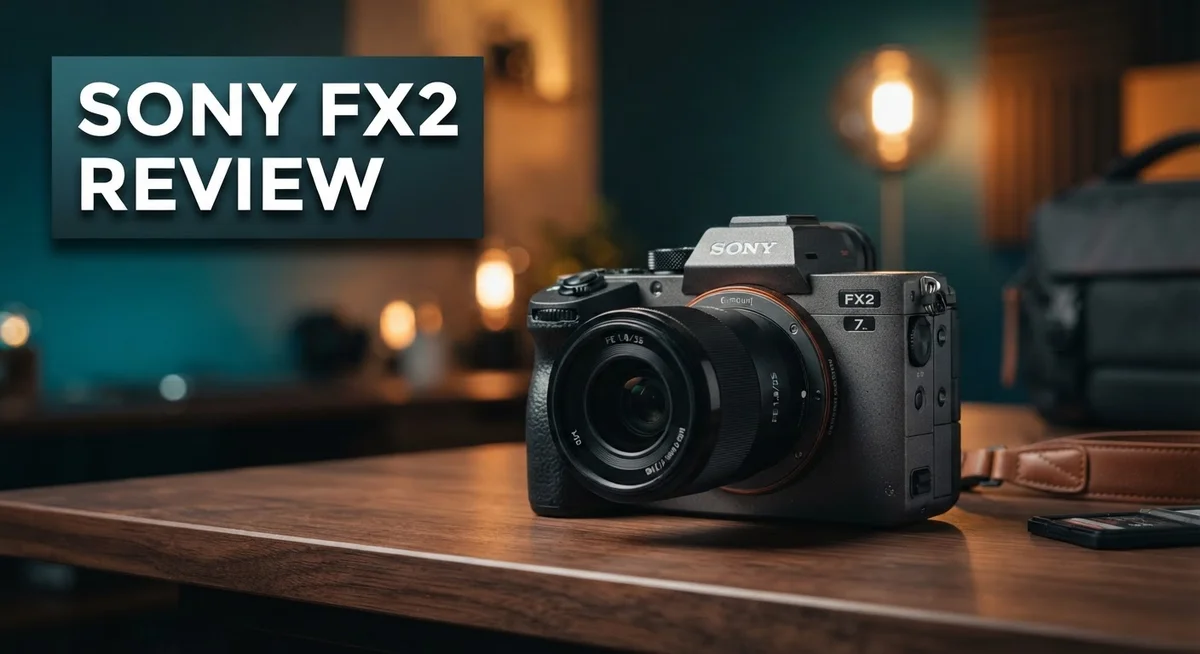
Sony FX2 Review: Full-Frame Cinema Camera for Professional Filmmakers
Are you looking for a camera that shoots stunning video and takes great photos too? The Sony FX2 might be your answer.
This compact full-frame cinema camera packs a 33MP Exmor R CMOS sensor. It delivers crisp images and smooth footage in one body.
The FX2 shines with its AI-powered Real-time Recognition AF. It tracks humans, animals, birds, vehicles, and even insects with ease.
Filmmakers love this camera for good reason. The autofocus feels snappy and flawless. The ergonomics make long shoots comfortable and simple.
You get a tilting EVF for flexible shooting angles. You also get run-and-gun capability for fast-paced projects.
This review breaks down everything you need to know. We cover the pros, the cons, and how the FX2 stacks up against rivals like the Sony FX3 and Sony A7S III. Let’s dive in.
In a Nutshell
Here’s the quick rundown on the Sony FX2 for anyone short on time.
- Video quality stands out. The autofocus stays snappy and accurate, even in tricky scenes.
- Still images look mediocre next to video. Photos are decent, but this camera truly shines when recording clips.
- Handling feels great. The grip, weight, and overall build make long shoots comfortable.
- Exposure tools stay limited. You won’t find advanced controls that some rivals offer.
- Raw video needs external gear. There’s no internal raw option. You’ll need an HDMI recorder for 16-bit raw output.
- No 32-bit float audio. This might matter if you rely on flexible sound editing later.
This camera works best as a filmmaking tool rather than a stills powerhouse. It handles run-and-gun shooting with ease. Filmmakers who prioritize video over photography will enjoy this camera’s strengths.
Compared to options like the Sony FX3 or A7S III, the FX2 carves its own space. It focuses on video excellence while keeping stills as a secondary feature.
Sensor and Image Quality
The Sony FX2 delivers exceptional sensor performance that sets it apart in the compact cinema camera market. Its 33MP full-frame Exmor R CMOS sensor captures detail-rich imagery across a wide range of shooting conditions.
Color accuracy remains rock solid. The sensor handles color temperatures from 2,500K to 9,900K, giving you flexibility in mixed lighting environments. Tungsten, daylight, and fluorescent sources all render naturally without heavy color casting.
AI-powered autofocus makes a real difference in real-world shooting. The Real-time Recognition AF system locks onto humans, animals, birds, vehicles, and insects with impressive speed. You spend less time hunting focus and more time capturing moments. This feature shines during run-and-gun work where manual focus adjustments slow you down.
Still image quality presents an interesting trade-off. Photos come out crisp and clean with minimal noise. However, they don’t match the video performance you get from this camera. If stills are your priority, other full-frame options might serve you better. The FX2 clearly prioritizes video excellence.
Video performance stands as the sensor’s true strength. Flawless autofocus keeps subjects sharp during dynamic scenes. Output remains clean across various ISO settings. The camera handles challenging lighting without excessive noise degradation.
Dynamic range performs well for video work. You capture detail in both highlights and shadows without excessive loss. This gives you flexibility during color grading. The sensor responds predictably to exposure adjustments.
One limitation worth noting: internal raw video isn’t available. You’ll need external recording via HDMI for 16-bit raw footage. Standard video codecs handle most projects, but professionals requiring maximum flexibility should plan accordingly.
The tilting EVF complements sensor performance nicely. You see exactly what the sensor captures, with accurate color preview and exposure feedback. This helps you nail exposure and focus before recording.
Overall, the FX2’s sensor excels at video capture with excellent autofocus reliability. Still images work fine for secondary use, but this camera lives and breathes for filmmaking. The full-frame sensor size gives you shallow depth-of-field control and low-light capability that smaller sensors simply can’t match.

- Full-frame Exmor R CMOS 33MP*1 sensor and BIONZ XR image processor engine
- 15+ stops dynamic range in Log mode with Dual base ISO (800/4000)
- Flexible Log shooting modes — Flexible ISO, Cine EI, and Cine EI Quick

Last update on 2026-11-08 / Affiliate links / Images from Amazon Product Advertising API
Autofocus and AI Recognition
The Sony FX2’s autofocus system represents a major leap forward for compact cinema cameras. Sony packed this model with AI-powered Real-time Recognition AF that tracks humans, animals, birds, vehicles, and insects automatically. This means you spend less time hunting focus and more time capturing the moment.
Real-world performance proves impressive. The autofocus stays responsive even when subjects move unpredictably or lighting shifts suddenly. Filmmakers report the system feels snappy and reliable during run-and-gun shooting. You get smooth focus transitions without the hunting or hunting that plagues older cameras.
The AI recognition engine learns what you’re filming. When you point at a person, the camera locks onto their eyes or face instantly. Switch to a bird in flight, and the system adapts. This intelligence saves enormous amounts of time during editing because you won’t need to fix focus issues in post-production.
One practical advantage: the tilting EVF works beautifully with autofocus performance. You can reposition your shooting angle without losing focus accuracy. The camera maintains subject tracking even when you tilt the viewfinder down or to the side.
The autofocus system shines during video work most of all. Still photographers might notice it feels less specialized than cameras built primarily for stills. But for video creators, the AF performance becomes a genuine productivity tool rather than just a convenience feature.
Compared to competitors, the FX2’s recognition AF stands out. Rival cameras offer autofocus, but few combine this level of AI smarts with such responsive tracking. The system handles multiple subjects reasonably well, though single-subject tracking remains the strongest mode.
One thing to remember: autofocus quality depends partly on your lens choice. Pairing the FX2 with quality glass maximizes AF performance. Cheaper lenses might not communicate focus data as effectively.
The autofocus system transforms how you shoot. You gain creative freedom because focus becomes less of a technical worry. This camera lets you concentrate on composition, lighting, and storytelling instead of constantly adjusting focus rings.
Video Performance and Codec Options
The FX2 handles video codec options with a practical approach that works well for most production workflows. You get H.264 and H.265 encoding across multiple frame rates, which covers standard cinema and broadcast needs without unnecessary complexity.
Recording resolutions span 4K and 6K options depending on your frame rate choice. The camera captures 4K at up to 120fps, giving you smooth slow-motion capability for dynamic scenes. This flexibility matters when you’re switching between real-time dialogue and action sequences in the same shoot.
The codec implementation prioritizes efficiency over maximum file sizes. H.265 compression reduces storage demands compared to H.264, which helps during extended run-and-gun sessions. You’ll notice faster offload times and smaller project folders, making backup and archival simpler.
One important limitation stands out here: no internal raw video recording. The FX2 only captures raw footage externally via HDMI to compatible recorders. This means you need extra gear if you want maximum color grading flexibility. Standard H.264 and H.265 modes still deliver excellent results, but raw shooters will feel the constraint.
The absence of 32-bit float audio also affects your codec workflow. You’re working with standard PCM audio, which means less headroom during post-production sound mixing. This matters if you regularly record unpredictable environments with sudden loud peaks.
Frame rate options remain generous across both resolutions. You can shoot 24fps for cinema, 30fps for broadcast, or push to 120fps for creative slow motion. Each frame rate pairs cleanly with available codecs, so switching between projects feels straightforward.
The codec choices reflect Sony’s focus on practical filmmaking. You won’t find exotic formats or experimental options. Instead, you get reliable, industry-standard compression that works with most editing software. This approach keeps your post-production pipeline moving without codec compatibility headaches.
Color bit depth stays at 8-bit for internal recording, which is adequate for most work. Combined with the solid autofocus and sensor performance, the codec options support the FX2’s strength as an efficient, portable cinema tool rather than a specialized raw capture device.
Top 3 Alternatives
Canon EOS R5

- High Image Quality: Canon EOS R5 8K digital camera features a stacked, back-side illuminated...
- Powerful Image Processor: DIGIC X image processor with an ISO range of 100-51200; expandable to...
- High-Speed Shooting: High-speed continuous shooting of up to 12 fps with mechanical shutter and up...
Last update on 2026-11-08 / Affiliate links / Images from Amazon Product Advertising API
The Canon EOS R5 stands as a powerful alternative for professionals seeking high-resolution video and photography. This camera delivers exceptional 8K video recording at up to 120fps, making it ideal for demanding productions. The full-frame sensor captures stunning detail with 45-megapixel stills.
The autofocus system performs reliably across various shooting scenarios. Built-in image stabilization helps reduce camera shake during handheld work. The ergonomic design feels comfortable during extended shoots.
Panasonic Lumix S1H

- Items Include: Panasonic Lumix S1H Full Frame Digital Mirrorless Video Camera, 64GB SF-G TOUGH...
- Unmatched Image Quality with 24.2MP Full-Frame Sensor: Capture stunning photos and videos with the...
- 6K Video & Advanced 4K Recording for Cinematic Filmmakers: Take your video production to the next...
Last update on 2026-11-08 / Affiliate links / Images from Amazon Product Advertising API
The Panasonic Lumix S1H excels in video-first workflows. This camera offers professional 6K video capabilities with exceptional color science that many colorists prefer. The full-frame sensor provides excellent low-light performance for nighttime productions.
The camera includes built-in cooling systems that prevent overheating during long recording sessions. Dual SD card slots ensure backup recording and faster file management. The weather-sealed body withstands challenging environmental conditions.
Nikon Z9

- 45.7MP Stacked CMOS sensor and EXPEED 7 image processing. Fast powerful AF that can keep up with the...
- Subject detection uses deep learning to automatically detect and track people, cats, dogs, birds...
- Capture 45.7MP stills at 20 or 30 fps; 120 fps stills at 11MP, all with full AF and AE, and no...
Last update on 2026-11-08 / Affiliate links / Images from Amazon Product Advertising API
The Nikon Z9 combines cutting-edge 8K video with rapid autofocus performance. This flagship camera handles both stills and video seamlessly, making it versatile for hybrid shooters. The sensor delivers impressive dynamic range in challenging lighting.
The mechanical and electronic shutter options provide flexibility for different situations. Advanced subject tracking keeps focus locked on moving targets automatically. The robust build quality ensures durability on demanding sets. Battery life extends significantly compared to earlier models, allowing longer shooting sessions without interruption.
Each option brings distinct strengths. Your choice depends on your specific workflow needs, whether you prioritize resolution, color science, or autofocus performance.
Design, Ergonomics, and Portability
The Sony FX2 feels like a camera built for people who move. Its compact, full-frame cinema body weighs significantly less than larger professional rigs, making it ideal for run-and-gun shooting. You can carry it all day without fatigue setting in.
The grip design stands out immediately. Your hand fits naturally around the body, and the controls sit exactly where you expect them. The rubberized surfaces provide confidence even when you’re working in unpredictable conditions. Buttons respond with satisfying tactile feedback.
The tilting EVF adds real practical value here. You can shoot from waist level or overhead without contorting your body. This flexibility matters when you’re capturing fast-moving subjects or working in tight spaces. The viewfinder itself displays information clearly, and you won’t struggle to see focus peaking or exposure warnings.
Weight distribution feels balanced. The camera doesn’t tip forward or back when you’re holding it steadily. Sony clearly thought about how humans actually hold cameras during long shooting sessions. Your arms won’t tire as quickly as they would with heavier alternatives.
The body dimensions keep things manageable. It fits easily into camera bags alongside lenses and accessories without requiring specialized cases. This portability makes the FX2 genuinely travel-friendly. You can move between locations quickly without wrestling with bulky equipment.
Physical buttons cluster logically around the body. Record controls sit within thumb reach. Menu navigation uses a joystick that responds smoothly. You won’t fumble around searching for functions during critical moments. Everything has its place.
The camera also handles various mounting options well. Tripod threads feel solid, and the body accepts standard cinema accessories without adapters. This compatibility keeps your workflow simple.
One thing becomes clear after handling the FX2: Sony prioritized shooter comfort. The ergonomics don’t feel like an afterthought. Every surface, every button, every curve serves a purpose. You spend less energy fighting the camera and more time focusing on your shot. That’s what exceptional ergonomics really means in practice.
Workflow and Filmmaking Capability
The Sony FX2 transforms your shooting experience with intelligent workflow efficiency. The camera anticipates what you need before you ask for it. This means less time fiddling with settings and more time capturing moments that matter.
Real-time recognition AF tracks humans, animals, birds, vehicles, and insects automatically. You point, and the camera locks focus instantly. The system learns your subject as you shoot, adapting to movement patterns and distance changes. This feature alone cuts your mental load during fast-paced production.
Recording options span both 4K and 6K formats depending on your frame rate needs. The codec implementation keeps file sizes reasonable while maintaining quality. You get flexibility without drowning in massive data files that slow down your workflow. The camera records internally at 8-bit color depth, which handles most professional projects smoothly.
One workflow limitation deserves attention: no internal raw video recording. You can capture 16-bit raw externally via HDMI if your project demands it. This setup works for filmmakers who need maximum flexibility, though it adds external recording devices to your kit. The absence of 32-bit float audio also means your sound workflow stays straightforward but conventional.
The tilting EVF becomes your secret weapon during handheld shooting. You compose from different angles without contorting your body. This simple feature dramatically improves your ability to work quickly in tight spaces or unconventional positions.
Button placement follows logic. Your hands find controls naturally without hunting. The grip feels secure whether you’re holding the camera for hours or making quick adjustments between shots.
The FX2 excels at run-and-gun filmmaking. The compact body, balanced weight distribution, and responsive autofocus create a camera that feels like an extension of your creative vision. You spend less time managing the equipment and more time managing your story. For hybrid shooters mixing video and stills, the FX2 delivers video performance that outshines its still-image capabilities, making it ideal for filmmakers who prioritize motion work above all else.
Pros and Cons
Pros
- Flawless autofocus with AI recognition for humans, animals, birds, vehicles, and insects keeps your subject locked in tight
- Superb still and video quality from the 33MP full-frame sensor delivers crisp, clean output across both formats
- Outstanding ergonomics and compact size make this camera a joy to hold and carry for long shooting days
- Run-and-gun capability with tilting EVF gives you flexibility whether you shoot handheld or on a tripod
- Efficient filmmaking tool that handles 4K and 6K recording without slowing your creative workflow
Cons
- Limited exposure tools restrict your manual control options during complex lighting situations
- No internal raw video recording means you must capture raw externally via HDMI, adding workflow complexity
- No 32-bit float audio support limits your post-production flexibility for audio mixing and correction
- Still-image performance lags behind video quality, so this camera prioritizes motion work over photography
Who Should Buy It
The Sony FX2 speaks to a specific group of creators. Professional videographers who need a compact, full-frame cinema camera will find real value here. You get flawless autofocus with AI recognition for humans, animals, birds, vehicles, and insects. The tilting EVF lets you shoot from unusual angles without struggling. This matters when you’re working solo or in tight spaces.
Content creators doing run-and-gun work benefit most from this camera’s design. The balanced weight distribution and logical button placement mean you can shoot all day without fatigue. The 33MP full-frame sensor delivers crisp, clean output. You won’t compromise on image quality while moving fast between locations.
Hybrid shooters who split time between stills and video should know one thing: the FX2 excels at video. Still image quality ranks as mediocre compared to its video performance. If stills matter equally to your work, other Sony models might suit you better. The camera prioritizes motion capture over static frames.
Documentarians and journalists appreciate efficient filmmaking tools. The FX2 handles both 4K and 6K recording without slowing your workflow. Real-time recognition AF tracks your subjects automatically. You focus on framing and storytelling while the camera handles focus tracking.
Corporate video teams and commercial producers should consider this camera seriously. The compact form factor fits into vehicles and tight shooting environments. Outstanding ergonomics mean crew members stay comfortable during long shoots. The camera feels like a joy to hold and carry.
One group should pause before buying: creators needing advanced manual exposure control. Limited exposure tools restrict your options during complex lighting situations. You won’t find extensive manual controls for pushing creative boundaries in post production.
Filmmakers requiring internal raw video recording should look elsewhere. The FX2 only captures 16-bit raw externally via HDMI. No 32-bit float option exists. If your workflow demands native raw files on the camera body, this limitation matters.
The Sony FX2 suits shooters who value speed, portability, and intelligent automation over maximum manual control and raw recording options.
Final Verdict
The Sony FX2 proves itself as a smart tool for modern creators. It blends power with simplicity in a way few cameras manage.
This camera rewards filmmakers who value speed over fuss. It lets you focus on your story instead of fighting your gear.
The 33MP sensor and AI autofocus work together seamlessly. You get clean footage and sharp stills without extra effort behind the camera.
Comfort matters during long shoots. The FX2 fits naturally in your hands, so fatigue never becomes a distraction.
Still, no camera fits every need. The FX2 asks you to trade deep manual control for effortless automation.
If you crave raw internal recording or heavy manual exposure tweaking, this camera may frustrate you. Its strengths lie elsewhere.
For everyone else, the FX2 delivers a refreshingly simple experience. It removes friction from your creative process.
Compared to the FX3 or A7S III, the FX2 feels more approachable. It leans into ease rather than complex customization.
Against the FX30, it offers a bigger sensor and better low light performance. That alone makes it worth serious thought for full frame lovers.
The A7 IV and A7C II serve hybrid shooters well too. But the FX2’s video first design still stands out for cinema style work.
Think about your daily shooting habits. Do you value grab and go simplicity, or do you need total manual command?
If your answer leans toward simplicity and speed, the FX2 fits perfectly. It rewards instinct over overthinking.
Documentary makers, solo creators, and corporate teams will likely feel right at home. This camera keeps up with fast paced work without complaint.
In the end, the Sony FX2 earns its place among today’s best compact cinema cameras. It proves that smart engineering can replace manual complexity.
Choose it if you want a camera that works with you, not against you. Your creative flow will thank you.
Frequently Asked Questions
Does the Sony FX2 record internal raw video?
No. The FX2 does not support internal raw recording. You can only capture 16-bit raw video externally via HDMI output to an external recorder. This limitation matters if you need maximum flexibility in post-production color grading.
Most shooters working with the FX2 find the standard video codecs sufficient. The camera excels at delivering clean, usable footage straight out of the box.
What autofocus subjects does the FX2 recognize?
The FX2 features AI-powered Real-time Recognition AF. It automatically detects and tracks humans, animals, birds, vehicles, and insects. This smart system keeps focus locked on your subject even during fast movement.
Run-and-gun filmmakers love this feature. You can focus on framing and storytelling while the camera handles focus tracking behind the scenes.
Is the Sony FX2 good for still photography?
The 33MP full-frame sensor produces crisp, clean still images. However, the FX2 prioritizes video performance over stills. If you split your time equally between both formats, the Sony A7 IV or Sony A7C II may serve you better.
Think of the FX2 as a video-first camera that handles stills competently, not the other way around.
Can you manually control exposure on the FX2?
The FX2 offers limited exposure tools compared to professional cinema cameras. Manual control exists, but options feel restricted during complex lighting situations. The camera leans toward automation and intelligent scene recognition instead.
If advanced manual exposure control is essential to your workflow, explore alternatives like the Sony A7S III or dedicated cinema cameras.

DK is a tech enthusiast and product reviewer dedicated to helping readers explore the ever-evolving world of technology. With a passion for testing gadgets, apps, and appliances, DK delivers honest, in-depth reviews and practical buying guides to make your tech decisions easier.