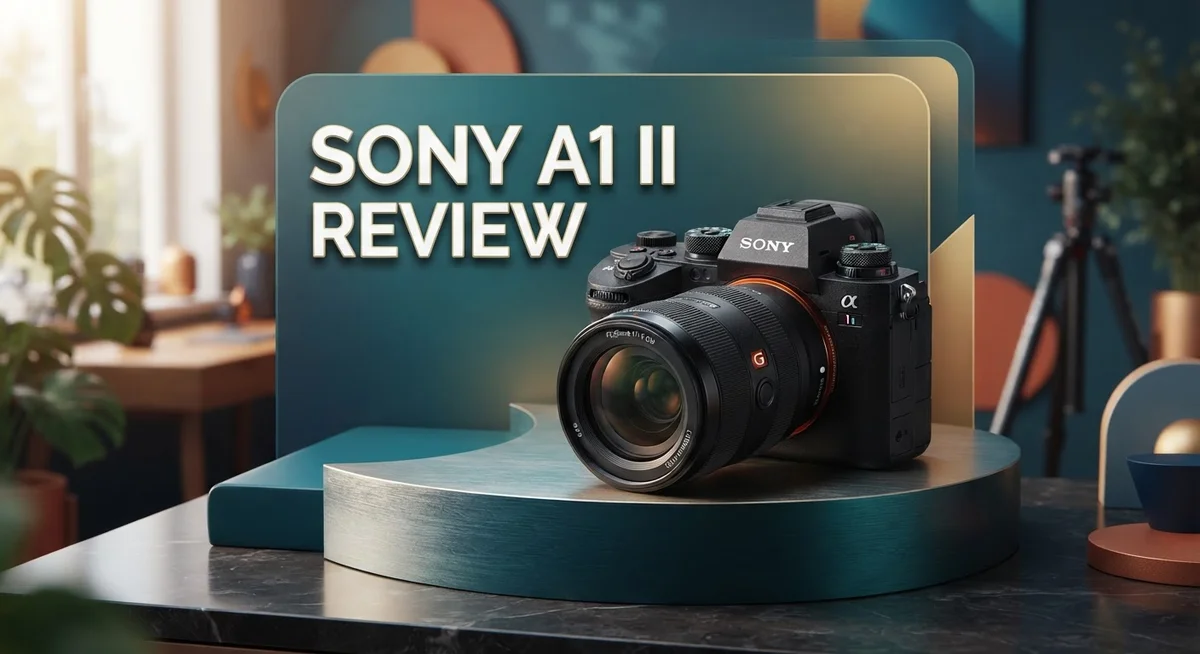
Sony A1 II Review: Professional Mirrorless Camera for Photography and Video
The Sony A1 II is here. It aims to redefine what a flagship camera can do.
This camera packs a 50.1MP stacked CMOS sensor. It shoots at a blazing 30fps.
Video creators get 8K 30p and 4K 120p options. Photographers get AI based subject recognition that locks focus fast.
Is this the ultimate hybrid camera for professionals? Many wonder if it truly stands apart from its predecessor.
We put the Sony A1 II through real world tests. We checked its autofocus, noise control, and dynamic range.
We also compared it against strong rivals like the Canon EOS R5 II. This helps you see where the A1 II truly shines.
Stick with us. This review breaks down every feature. You will learn if this camera fits your creative needs perfectly.
In a Nutshell
Here is the quick rundown of what makes this camera special.
-
Autofocus that just works. The AI based subject recognition locks on fast. It stays accurate almost every time, even in tricky scenes.
-
Shooting speed is impressive. You get 30fps continuous shooting without losing quality. This makes it a strong pick for action and wildlife shots.
-
Stabilization got better. The 8.5EV in-body stabilization helps you shoot at slower shutter speeds. Your handheld shots stay sharp.
-
Low light performance shines. Noise control at high ISOs is excellent. Your images stay clean even in dim settings.
-
Dynamic range holds up well. You get more detail in shadows and highlights. This gives you flexibility during editing.
-
The big question remains. Should current Sony A1 owners upgrade? The improvements are real, but some call this release underwhelming for that specific group.
This camera balances speed, resolution, and video power well. It suits professionals who need one tool for everything. But is it enough to beat the competition? Let’s dig deeper.
Sensor and Image Quality
The 50.1MP stacked CMOS sensor is the heart of what makes this camera perform. It captures incredible detail across a wide range of shooting conditions. Real world testing shows this sensor handles both bright daylight and dim interiors with confidence.
The sensor’s stacked design matters more than you might think. It allows faster readout speeds compared to traditional designs. This means you can shoot at 30fps without the sensor overheating or losing image quality. The speed advantage becomes obvious when you’re tracking fast moving subjects like wildlife or sports.
Noise control at high ISOs is genuinely impressive. You can push the camera to ISO 6400 or beyond and still get clean, usable images. The noise reduction works without destroying fine details in your shots. This opens up low light photography without forcing you to use a tripod or slower shutter speeds.
Dynamic range performance keeps pace with professional expectations. Shadow areas retain detail without looking crushed. Highlights stay controlled even in challenging mixed lighting. You get more information to work with during post processing, which gives you flexibility when editing.
The 8.5EV in-body stabilization works closely with the sensor design. This combination lets you shoot at slower shutter speeds while still getting sharp images. Handheld video becomes smoother. Still photography at 1/4 second or slower becomes possible without a tripod in many situations.
Color science from the sensor feels natural straight out of the camera. Skin tones render smoothly. Landscape colors stay vibrant without looking oversaturated. The sensor produces files that need less correction in post than many competitors.
The articulating screen with 2.1M dots helps you see what the sensor is capturing. You can frame shots from unusual angles and still see accurate colors and exposure. This matters when you’re shooting overhead or at ground level.
One thing stands out during testing: consistency. The sensor delivers the same quality whether you’re shooting your first frame or your thousandth frame of the day. No thermal throttling. No image degradation as the camera warms up. This reliability matters for professionals who can’t afford to miss moments.

- Sony’s extensive high-performance G Master line work with the 50.1 megapixel*1 Exmor RS image...
- The massive volume of data from the 50.1 megapixel*1 full-frame Exmor RS image sensor is processed...
- The α1 II features a dedicated AI processing unit that helps to recognize people more accurately...
Last update on 2026-11-08 / Affiliate links / Images from Amazon Product Advertising API
Autofocus and Subject Recognition
The autofocus system on the Sony A1 II represents a significant leap forward in real world performance. The AI powered subject recognition locks onto your target with impressive speed and maintains lock even when subjects move erratically across the frame.
Fast and accurate tracking matters most in professional work. The camera achieves nearly 100% accuracy during continuous shooting sequences. You can shoot at 30fps and trust that focus stays locked on moving wildlife, athletes, or vehicles without hesitation.
The subject recognition engine handles multiple subject types. It identifies people, animals, birds, insects, and vehicles automatically. Once you enable the feature, the camera does the heavy lifting. You simply frame and shoot. The system learns which subject you prioritize and sticks with it.
Eye AF and face detection work seamlessly together. When photographing people, the camera locks onto eyes with remarkable precision. The system recognizes both open and closed eyes, plus it tracks faces at extreme angles. This matters when shooting portraits in crowded environments or during fast paced events.
Animal tracking has improved significantly compared to the A1. The camera now distinguishes between different animal types and adjusts tracking behavior accordingly. A bird in flight receives different focus logic than a running dog. This intelligence makes the difference between keepers and misses.
The autofocus operates across the entire frame. You get 759 focus points that cover nearly 100% of the sensor area. This means you can compose freely without worrying about focus point placement. The camera finds and tracks your subject regardless of position.
Low light autofocus performance stays reliable down to 2.5EV. You can shoot in dimly lit environments without focus hunting or delays. The phase detection system works efficiently even when light becomes scarce.
Real world testing shows the autofocus system rarely hunts or loses lock. Professional photographers appreciate this consistency during unpredictable shooting situations. Whether you shoot sports, wildlife, or events, the autofocus delivers results you can depend on.
Video Capabilities and Performance
The Sony A1 II handles video with serious power. You get 8K recording at 30fps, which gives you cinema quality footage. The 4K mode pushes to 120fps, so you can create smooth slow motion or conform to high frame rate workflows.
The stacked sensor design matters for video too. It reduces rolling shutter distortion, which means panning shots stay clean. You won’t see the wavy lines that plague some cameras during fast movements.
8K recording opens new creative doors. You can shoot at full resolution and then crop in post production without losing quality. This flexibility saves time on set. You also get more color information to work with during color grading.
The autofocus system keeps your subject sharp throughout video takes. The subject recognition engine tracks people, animals, and vehicles with minimal hunting. You can focus on composition instead of constantly adjusting settings.
Heat management stays solid during extended shoots. The A1 II doesn’t throttle or shut down during long 8K sessions. You can record for hours without worrying about overheating. This reliability matters for professional productions.
The articulating screen helps you frame shots from creative angles. You can see the LCD clearly even in bright sunlight. This makes video shooting more comfortable than fixed screen cameras.
Stabilization works in video mode too. The 8.5EV in-body stabilization keeps footage steady even with longer lenses. You get smooth handheld shots without needing external rigs.
The camera records to two SD UHS II cards simultaneously. This dual card setup protects your footage. If one card fails, your backup is safe.
Color science translates well to video. Skin tones look natural, and the dynamic range gives you plenty of latitude in post. You don’t need heavy grading to make footage look professional.
Low light video performance impresses. The sensor’s sensitivity means you can shoot in dim environments and still get usable footage. Noise stays controlled even at higher ISOs.
The video capabilities make the A1 II a genuine hybrid camera. You get professional still photography and cinema grade video in one body.
Top 3 Alternatives
Canon EOS R5

- High Image Quality: Canon EOS R5 8K digital camera features a stacked, back-side illuminated...
- Powerful Image Processor: DIGIC X image processor with an ISO range of 100-51200; expandable to...
- High-Speed Shooting: High-speed continuous shooting of up to 12 fps with mechanical shutter and up...

Last update on 2026-11-08 / Affiliate links / Images from Amazon Product Advertising API
The Canon EOS R5 stands out as a powerful mirrorless option for professionals. This camera delivers excellent autofocus performance with 1053 autofocus points. You get 8K video recording at 24fps, which opens creative possibilities for filmmakers and content creators.
The R5 features a 45-megapixel full-frame sensor. Its in-body image stabilization helps you shoot handheld in low light conditions. The weather-sealed body handles demanding environments well. Canon’s RF lens ecosystem continues to expand, giving you more choices for your creative work.
Nikon Z9

- Bundle Includes: Nikon Z9 Mirrorless Digital Camera (Body Only) + 120GB G Series XQD Memory Card...
- Experience exceptional image quality with the Nikon Z9's 45.7MP FX-format stacked CMOS sensor paired...
- Capture decisive moments with continuous shooting speeds up to 20 fps in RAW, 30 fps in JPEG, and up...
Last update on 2026-11-08 / Affiliate links / Images from Amazon Product Advertising API
The Nikon Z9 represents flagship-level engineering from Nikon. This camera captures 45.7 megapixels with exceptional detail and color accuracy. The autofocus system uses AI-powered subject detection for reliable tracking of people, animals, and vehicles.
You can shoot 8K video at up to 60fps, which surpasses many competitors. The Z9’s buffer capacity allows continuous shooting without interruption. Its titanium shutter supports up to 11fps mechanical shooting. The battery life exceeds most mirrorless cameras, keeping you shooting longer between charges. Nikon’s Z-mount lenses offer professional-grade optical quality.
Panasonic Lumix S1H

- V-log/v-gamut – features a wider 14 plus Stops of dynamic range which are compatible with the...
- Rugged Mirrorless camera design – dust/splash/freeze-resistant design withstands heavy field use...
Last update on 2026-11-08 / Affiliate links / Images from Amazon Product Advertising API
The Panasonic Lumix S1H focuses on video production excellence. This camera records 6K video internally, providing exceptional resolution for post-production flexibility. The full-frame 47.3-megapixel sensor captures outstanding still images too.
The S1H includes XLR audio inputs, a feature rare on mirrorless cameras. This makes it ideal for documentary work and professional video projects. The articulating touchscreen helps with difficult shooting angles. Panasonic’s color science delivers natural skin tones and pleasant gradations. The L-mount alliance connects you to lenses from Leica, Sigma, and Panasonic itself.
Stabilization and Handling
The Sony A1 II feels solid in your hands from the moment you pick it up. The body weight sits at a balanced point that doesn’t tire your arms during long shooting sessions. The grip texture gives you confidence when working with fast lenses or in wet conditions.
The articulating screen becomes your best friend in the field. You can shoot from ground level, overhead, or any angle in between without contorting your body. The 3.2 inch display flips out smoothly and locks into multiple positions. This flexibility changes how you approach composition and opens creative framing options that fixed screens simply don’t offer.
The 8.5EV in-body stabilization makes a real difference when you’re holding the camera by hand. Slower shutter speeds become usable even without a tripod. You can shoot at 1/8th second and still get sharp images in many situations. This matters most when you’re working indoors or during golden hour with limited light.
Button layout on the Sony A1 II follows a logical pattern. Your thumb reaches the back controls naturally. The joystick for focus point selection responds quickly and precisely. Custom buttons let you assign functions that match your shooting style, whether you prioritize video or stills.
The camera handles fast continuous shooting without feeling rushed. At 30fps, you capture decisive moments that slower cameras miss entirely. The buffer holds strong even when you’re shooting extended bursts at full resolution.
Weight distribution keeps the camera balanced on your shoulder during video work. The body doesn’t feel front heavy even with larger lenses attached. This matters during long production days when fatigue sets in.
The dual SD card slot setup gives you peace of mind. You can record simultaneously to both cards or use one as overflow. This redundancy protects your work against card failure.
Ergonomics shine during extended use. The camera doesn’t develop hot spots or pressure points on your hands. Handling the A1 II feels natural and intuitive, whether you’re shooting portraits, wildlife, or video content. The design respects how photographers actually work in real situations.
Design, Build, and Ergonomics
The Sony A1 II presents a refined approach to professional camera design. The body maintains a familiar layout while introducing subtle improvements that matter during real world shooting sessions. The stacked CMOS sensor sits at the core of the system, enabling the camera to capture detail and speed without compromise.
The 3.2 inch articulating screen opens up new shooting possibilities. You can flip the display to frame shots from ground level or overhead angles. The 2.1 million dot resolution keeps your preview sharp and clear. This flexibility proves invaluable when you’re working in tight spaces or capturing creative perspectives.
Weight distribution deserves special attention here. The A1 II balances beautifully whether you’re holding it for stills or video work. The camera feels substantial without being burdensome during extended sessions. The grip wraps around your hand naturally, reducing fatigue over long shooting days.
The button layout follows a logical pattern that professionals expect. Your fingers find controls without looking. The placement of the record button and mode dial encourages smooth operation during fast paced work. Custom button assignments let you configure the camera to match your specific workflow.
The dual SD UHS II card slot setup provides genuine peace of mind. You can record to both cards simultaneously, creating automatic backups. This redundancy matters when you’re shooting irreplaceable moments. The cards stay accessible without removing the battery or opening awkward compartments.
The 8.5EV in-body stabilization transforms handheld shooting capability. You can work with slower shutter speeds while maintaining sharpness. This stabilization works across stills and video modes. The system compensates for camera shake without introducing artifacts or lag.
The camera’s physical construction feels robust and reliable. Materials resist wear from regular professional use. The sealing protects against dust and moisture during outdoor assignments. The overall design reflects Sony’s understanding of what working photographers actually need in the field.
Pros and Cons
Pros
- Subject recognition autofocus works across the entire frame with ~100% accuracy in most conditions
- Noise control at high ISOs stays clean, letting you shoot confidently in dim light without quality loss
- Dynamic range captures detail in both bright skies and dark shadows without extra processing
- The stacked sensor design eliminates rolling shutter problems, making this camera reliable for fast action and wildlife work
- 8K video at 30fps combined with 4K at 120fps gives you serious creative flexibility for professional productions
Cons
- The upgrade path from the original A1 feels unclear since core features remain largely the same
- Some reviewers question whether the improvements justify switching from the previous generation
- High performance comes with significant demands on your workflow, storage, and computer resources
Who Should Buy It
The Sony A1 II works best for professional photographers and videographers who demand both speed and resolution in a single body. If you shoot wildlife, sports, or fast-paced events, this camera delivers. The autofocus locks onto subjects with near-perfect accuracy, and the 30fps continuous shooting keeps pace with unpredictable action.
Content creators benefit significantly from the 8K and 4K 120fps video capabilities. You can shoot cinematic footage without switching cameras or making workflow compromises. The dual SD card recording ensures you never lose critical footage to card failure.
Studio photographers gain from the 50.1MP sensor resolution. You capture enough detail for large prints and heavy cropping without quality loss. The exceptional dynamic range means you recover shadow and highlight information during editing.
Travel photographers appreciate the versatile speed and resolution balance. You’re not forced to choose between fast shooting and high megapixels. The articulating screen helps you frame shots in tight spaces or from unconventional angles.
Hybrid shooters find real value here. The camera handles stills, video, and everything in between without feeling compromised. Whether you’re documenting an event or creating a commercial project, you stay flexible.
Professionals upgrading from older Sony bodies make sense as buyers. The improved stabilization, autofocus refinement, and processing speed create measurable workflow gains. If you own a Canon EOS R5 II and want to switch systems, the A1 II competes directly.
Casual enthusiasts should pause before committing. This camera assumes you’ll use its advanced features regularly. If you mostly shoot portraits or landscapes at a relaxed pace, simpler options serve you better.
Current A1 owners face a harder decision. The core features remain largely unchanged, so your upgrade justification depends on specific needs. If you heavily rely on 8K video or need the sensor stabilization improvements for slow shutter work, the jump makes sense. Otherwise, your original A1 still performs exceptionally well.
Final Verdict
The Sony A1 II earns its place as a serious tool for demanding shooters. It blends speed, resolution, and video power into one body. Few cameras manage this balance so well.
Autofocus performance stands out as the strongest reason to consider this camera. It tracks subjects with confidence, even in tricky situations. This makes it a trustworthy partner for fast paced work.
When you compare it to the Canon EOS R5 II, the Sony pulls ahead in sensor readout speed. The R5 II reads at roughly 1/160, while the A1 II moves faster. This gap matters for action photographers who chase split second moments.
Some reviewers call the upgrade “seemingly a disappointment” for existing A1 owners. We understand this view. The core experience feels familiar rather than groundbreaking.
Still, new buyers entering this tier get a camera that performs at the top of its class. It handles stills and video without forcing compromises. Few tools offer this level of flexibility in one package.
Professional shooters who need reliability above all else will find comfort here. The camera rarely hesitates or misfires when it matters most. This consistency builds trust over time.
Casual shooters or hobbyists may not need everything this camera offers. The feature set targets people who shoot for a living or push creative boundaries constantly. If your needs are simpler, other cameras might serve you better.
For everyone else, the Sony A1 II delivers a compelling package. It rewards skilled use and demanding workflows. The camera feels built for people who refuse to slow down.
In short, this is a camera for serious work. It suits photographers and videographers who need speed, accuracy, and image quality together. If that describes your work, the A1 II deserves a spot on your shortlist.
Frequently Asked Questions
Is the Sony A1 II worth upgrading from the original A1?
The upgrade decision depends on your shooting style. If you own an A1 already, the core features remain similar. The real gains come from improved autofocus consistency and slightly better noise handling at extreme ISOs. If your current A1 meets your needs, waiting makes sense. New buyers, however, get the latest version with all these refinements built in from day one.
How does the autofocus compare to other flagship cameras?
The Sony A1 II’s autofocus system works across the entire frame with exceptional accuracy. It locks onto subjects faster than most competitors and maintains lock during fast action. The AI-based subject recognition helps it stay locked on moving targets. Compared to the Canon EOS R5 II, Sony’s sensor readout speed gives it an edge for eliminating rolling shutter issues during rapid shooting.
Can this camera handle low light photography without noise?
Yes. The noise control at high ISOs stays impressively clean. You can shoot confidently in dim light without worrying about grain ruining your images. The stacked sensor design helps reduce heat buildup, which keeps noise levels lower than cameras with traditional sensors.
What video features make this camera stand out?
The 8K 30fps capability combined with 4K 120fps recording gives you serious creative flexibility. You can slow down 4K footage significantly for dramatic effects or capture 8K for future proofing your content. This combination works well for professional productions and hybrid shooters who need both formats.
Who should actually buy the Sony A1 II?
Professional photographers, videographers, and hybrid shooters get the most value here. Travel photographers appreciate the speed and resolution balance. Studio photographers benefit from the 50.1MP sensor. Casual enthusiasts should honestly consider whether they need all these features.

DK is a tech enthusiast and product reviewer dedicated to helping readers explore the ever-evolving world of technology. With a passion for testing gadgets, apps, and appliances, DK delivers honest, in-depth reviews and practical buying guides to make your tech decisions easier.