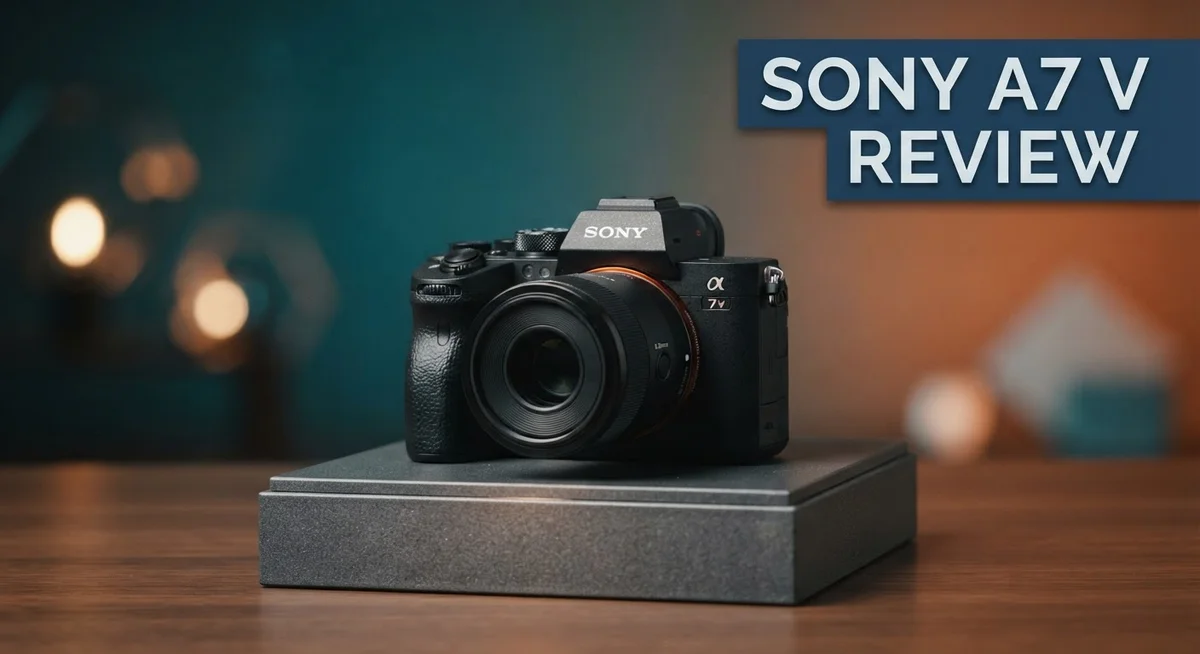
Sony A7 V Review: Full-Frame Mirrorless Camera Performance and Features
The Sony A7 V is here. It brings big upgrades for photographers and video creators alike.
This camera packs a 33MP full-frame sensor. It captures sharp, detailed images every time.
You get blackout-free 30fps shooting. Fast action stays crisp and clear in every frame.
The AI-based autofocus system stands out. It tracks subjects with impressive accuracy and speed.
Image stabilization is also top notch. Shaky hands? This camera handles that for you.
Video shooters will love the upgrades too. The A7 V delivers strong 4K video performance for creators.
Ergonomics got a nice boost as well. The camera feels comfortable and easy to handle.
Is the Sony A7 V worth your attention? This review breaks down everything you need to know. We cover the pros, the cons, and how it stacks up against rivals like the Canon R6 III and Nikon Z6 III.
Let’s dive in and see what makes this camera tick.
In a Nutshell
Here’s the quick rundown before you scroll further:
- Image quality shines with excellent dynamic range that handles tricky lighting well.
- The AF system proves powerful and locks onto subjects fast, even in busy scenes.
- Shooting speed impresses shutterbugs who need to catch quick action without missing a beat.
- Ergonomics feel improved, making the camera comfortable to hold during long sessions.
- Video capabilities get a solid boost, appealing to hybrid shooters who need stills and footage.
But it’s not all perfect. Some third-party lenses show AF hiccups, so check compatibility first. Low light shots also hit limits sooner than some rivals manage.
Compared to the Canon R6 III and Nikon Z6 III, this camera sits in a higher tier among direct rivals. Sony’s own lineup, like the A7 IV and A7C II, offers alternatives too.
8K video still needs polish, so heavy 8K users might want to wait. Overall, this camera suits photographers who prioritize speed and stills quality over video specs.
Sensor and Image Quality
The 33MP Exmor RS CMOS sensor captures incredible detail across a wide range of lighting conditions. Sony’s sensor technology excels at preserving shadow and highlight information simultaneously, which means you recover more usable data in post production.
Dynamic range performance stands out as a genuine strength of this camera. When you shoot in mixed lighting or challenging scenes, the sensor retains texture in both bright skies and dark foregrounds. This flexibility reduces your reliance on heavy editing to rescue blown highlights or crushed shadows.
Color science feels natural and accurate straight from the camera. Skin tones render smoothly without artificial processing. Foliage maintains vibrant greens, and blue skies stay saturated without looking oversaturated. This means less color correction work in your editing software.
Low light performance shows some limitations compared to competitors with larger pixels. The A7 V handles ISO 3200 and 6400 cleanly, but noise becomes visible at higher sensitivities. For indoor events or nighttime work, you may need faster lenses or additional lighting to maintain image quality.
The autofocus system uses AI subject recognition to detect faces, eyes, and bodies with impressive accuracy. This technology locks onto moving subjects faster than traditional contrast detection methods. Even when shooting at 30fps in continuous mode, focus tracking remains reliable across the frame.
Continuous shooting performance delivers blackout free operation at 30fps in Hi+ mode. This means you see your subject in the viewfinder the entire time you’re capturing images. Professional sports and wildlife photographers appreciate this feature for timing critical moments.
Sensor stabilization works in tandem with compatible lenses to deliver up to 7.5 stops of correction in the center. This allows handheld shooting at slower shutter speeds than you’d normally risk. Video footage appears noticeably smoother even without a tripod or gimbal.
Overall, the sensor and image quality package performs at a high professional level. The 33MP resolution provides sufficient detail for large prints and cropping flexibility. Dynamic range handling and color accuracy make this camera suitable for demanding editorial and commercial work.

- Full-frame mirrorless camera delivers outstanding image quality, accurate color, and excellent...
- Advanced autofocus with intelligent subject tracking keeps people, animals, and moving subjects...
- Sony E-Mount compatibility provides access to an extensive lineup of interchangeable lenses for...
Last update on 2026-11-08 / Affiliate links / Images from Amazon Product Advertising API
Autofocus and Performance
The autofocus system on the Sony A7 V represents a significant leap forward for action photographers and videographers alike. Sony’s AI subject recognition technology works across multiple detection modes, identifying faces, eyes, and entire bodies in real time. This means you can focus on composition while the camera handles the technical tracking.
Real world performance shines when you’re shooting in crowded environments. The system locks onto your intended subject and maintains focus even when other people move into the frame. Eye detection proves particularly useful for portrait work, keeping sharp focus exactly where it matters most.
Continuous autofocus during video recording feels smooth and natural. The camera doesn’t hunt for focus or produce jarring shifts between subjects. This stability makes handheld footage look professional without requiring external focus motors or manual intervention.
One important limitation exists with third party lens compatibility. Some older or specialty lenses don’t work seamlessly with the autofocus system. Native Sony E mount lenses perform optimally, so this factor matters if you own a diverse lens collection.
Tracking performance in challenging scenarios shows mixed results. Low light autofocus slows down compared to daylight shooting, which is typical across the industry but worth noting. The system still functions reliably, but acquisition speed decreases noticeably.
The continuous shooting speed of 30fps in Hi+ mode pairs perfectly with the autofocus capabilities. You can capture rapid sequences with consistent focus throughout, ideal for wildlife or sports photography. The blackout free viewfinder lets you monitor action continuously without losing sight of your subject.
Buffer capacity handles extended bursts well before write speeds catch up. You won’t feel restricted when shooting demanding sequences, though card selection matters for optimal performance.
The autofocus system delivers professional grade reliability for most shooting scenarios. It excels at subject tracking, eye detection, and maintaining focus during video work. The main consideration involves lens compatibility and low light performance, which may affect your experience depending on your shooting style and existing equipment collection.
Video and Stabilization Capabilities
The Sony A7 V brings serious video and stabilization features that appeal to creators who blend photography with filmmaking. The camera handles 4K recording with advanced compression and codec options, giving you flexibility in post-production work.
In-body stabilization reaches 7.5 stops of correction when you’re shooting at the center of the frame. This means handheld footage stays steady even when you’re moving through scenes. The peripheral areas get 6.5 stops of support, which still keeps your video smooth during most shooting situations.
When you pair the A7 V with compatible Sony lenses that have optical stabilization, the two systems work together. This combination delivers exceptional steadiness for video work without needing external rigs or gimbals in many cases.
The autofocus system shines during video recording. Continuous focus tracks subjects smoothly as they move across your frame, and the AI subject recognition keeps up with faces, eyes, and bodies. You won’t see the jarring focus pulls that plague some other cameras during video capture.
The camera records 4K footage at various frame rates, giving you options for standard playback or slow motion effects. The codec options let you choose between file sizes and quality levels based on your storage and editing needs.
One thing to note: the stabilization works best when you’re using Sony lenses. Third party lens compatibility sometimes shows limitations, which can affect how well the stabilization performs with non-native glass.
Video autofocus performance stands out as genuinely reliable for hybrid shooters. You can focus on framing and composition instead of fighting with focus hunting or drift. The system responds quickly to scene changes and subject movement.
The tilt and flip screen helps you frame shots from unusual angles. This feature proves especially useful when you’re shooting video solo, as you can see your composition without moving your eye from behind the viewfinder.
For creators who need both stills and video from one camera, the A7 V delivers professional grade capabilities in both areas. The stabilization and autofocus systems work together to make video shooting feel intuitive and reliable.
Top 3 Alternatives
Canon EOS R6

- FULL-FRAME CMOS SENSOR: 24.2 effective megapixels (approx.) lets you capture sharp, detailed images...
- DIGIC X IMAGE PROCESSOR: Enhances digital camera performance and processes, including image...
- HIGH-SPEED CONTINUOUS SHOOTING: Electronic shutter speeds of up to 40 fps at 20MP let you capture...

Last update on 2026-11-08 / Affiliate links / Images from Amazon Product Advertising API
The Canon EOS R6 stands out as a full-frame mirrorless camera that delivers excellent performance for photographers and videographers. This camera features a 20-megapixel sensor that captures sharp, detailed images even in challenging lighting conditions.
The autofocus system works quickly and accurately. You get 1053 autofocus points across the frame. Eye-tracking technology helps you keep subjects in focus automatically, which proves valuable when shooting portraits or fast-moving scenes.
Video capabilities shine here. The R6 records 4K footage at various frame rates. In-body stabilization keeps your footage smooth and steady. You’ll appreciate the professional-grade codecs available for post-production work.
Nikon Z6 III

- VIDEO - 6K/60p Internal N-RAW video recording + oversampled 4K UHD, 4K/120p, Full HD/240p slow...
- BEST IN CLASS EVF - Max brightness of 4000 nits gives a clear, vibrant view even in very bright...
- WIDE ISO RANGE - ISO sensitivity range of 100-64000, with extended range up to Hi 1.7 (equivalent to...
Last update on 2026-11-09 / Affiliate links / Images from Amazon Product Advertising API
The Nikon Z6 III brings impressive computational photography to the full-frame mirrorless space. This camera packs a 24.2-megapixel sensor that excels at capturing vibrant colors and fine details.
The autofocus system includes 135 focus points with advanced subject detection. The camera recognizes faces, eyes, and animals automatically. This intelligence makes capturing the right moment easier and faster.
Video performance stands strong with 8K recording capabilities. You can shoot high-quality 4K footage with full-width sensor use. The compact body makes this camera comfortable to hold and carry during long shooting sessions.
Panasonic Lumix S5

- A LIGHTWEIGHT, POWERFUL HYBRID CAMERA FOR VIBRANT STILL PHOTOGRAPHY AND CINEMATIC VIDEO: Realize...
- DETAILED PHOTO AND VIDEO THAT WILL DELIGHT ENTHUSIASTS AND EXPERTS ALIKE: Capture content in...
- IMPROVED, HIGH-PRECISION AUTOFOCUS AND POWERFUL IMAGE STABILIZATION: Improved autofocus includes...
Last update on 2026-11-08 / Affiliate links / Images from Amazon Product Advertising API
The Panasonic Lumix S5 offers solid full-frame performance at an accessible level. This camera features a 24.2-megapixel sensor that produces clean, reliable images across different ISO settings.
The autofocus system covers a wide area of the frame. You get reliable focus tracking for both stills and video work. The camera’s design emphasizes simplicity, making it straightforward to use without overwhelming menus.
Video recording includes 4K capability with good color science. The in-body stabilization helps reduce camera shake during handheld shooting. This camera works well for content creators seeking straightforward, dependable performance.
Design, Build, and Ergonomics
The Sony A7 V feels solid in your hands from the moment you pick it up. Sony redesigned the grip to sit higher on the body, which means your fingers naturally wrap around it without strain. The textured rubber surface provides reliable grip even when your hands are wet or sweaty.
The camera weighs 723 grams with a battery and memory card inside. This puts it in the middle ground between lightweight travel cameras and heavier professional bodies. You can comfortably carry it all day without excessive fatigue, yet it still feels substantial enough to inspire confidence.
The button layout follows Sony’s familiar pattern, so if you own previous Alpha models, you’ll feel right at home. The rear dial sits exactly where your thumb expects it. The front dial positions itself naturally under your index finger during shooting. All controls feel responsive and click with satisfying precision.
The tilt and flip screen adds genuine versatility to your workflow. You can flip it out for selfies, vlogs, and low-angle compositions without fumbling with external monitors. The screen tilts up and down smoothly, and the hinge mechanism feels durable enough for regular use.
The body construction uses magnesium alloy chassis with weather sealing. This means you can shoot in light rain or dusty environments without worrying about internal damage. The seals around buttons and compartments feel tight and well-engineered.
The top plate houses the shutter button, mode dial, and exposure compensation dial in logical positions. Your thumb reaches everything without repositioning your grip. The ISO button sits on the back left, accessible during shooting without taking your eye from the viewfinder.
The USB-C port and HDMI connector sit on the right side of the body. This placement keeps cables out of your way during handheld shooting. The SD UHS-II card slot accepts fast memory cards, which you’ll appreciate during extended burst shooting sessions.
Overall, the A7 V prioritizes comfort and accessibility for photographers who shoot for hours at a time. The ergonomic improvements over previous models make this camera feel purpose-built for serious image makers.
Lens Compatibility and Ecosystem
The Sony A7 V works with Sony’s extensive E-mount lens library. This ecosystem includes over 50 native lenses ranging from ultra-wide angles to extreme telephoto options. You get professional-grade glass designed specifically for full-frame performance.
Sony’s native lenses deliver exceptional optical performance when paired with the A7 V. The autofocus system communicates seamlessly with these lenses. You’ll experience fast, silent focusing during both stills and video work. The optical stabilization in many Sony lenses combines with the camera’s in-body system for outstanding shake reduction.
Third-party lens compatibility presents a notable consideration. While the A7 V accepts third-party E-mount lenses from brands like Tamron and Sigma, autofocus performance can be inconsistent. Some users report slower or less reliable focusing with certain non-Sony lenses. This limitation matters if you already own third-party glass or plan to expand your collection beyond Sony’s offerings.
The camera supports full compatibility with Sony’s entire lineup of native E-mount lenses. This includes the GM (Gold) series, which represents Sony’s premium offerings. You also get access to more affordable options in Sony’s standard and Zeiss Loxia lines. This range lets you match your lens choice to your specific needs and budget considerations.
Adapters exist for mounting vintage lenses and glass from other systems. Manual focus adapters work well if you enjoy working with older optics. Electronic adapters for other Sony systems provide limited autofocus capability, though results vary depending on the adapter quality.
The native lens ecosystem gives the A7 V a significant advantage. Sony continues releasing new lenses regularly, keeping the system fresh and competitive. You’ll find specialized options for everything from macro photography to cinema-style video work. The consistency between camera and native lenses ensures you’re getting the best possible performance from your investment.
If you primarily use Sony lenses, the A7 V becomes an exceptional choice. The autofocus reliability and optical performance justify the ecosystem commitment. However, if you’re invested in third-party glass, research specific lens compatibility before purchasing this camera body.
Pros and Cons
Pros
- Captures stunning detail with a 33MP sensor and excellent dynamic range for both photography and video work
- Autofocus system uses AI to recognize subjects and tracks them accurately, even during fast action
- Shoots continuously at 30fps without blackouts, letting you catch every decisive moment
- In-body stabilization combined with Sony lens optical stabilization creates powerful image steadiness
- Ergonomic design feels comfortable during long shooting sessions with intuitive button placement
Cons
- Some third-party E-mount lenses experience compatibility issues, so you may need to verify lens support before purchasing
- Low-light autofocus performance falls short compared to some competing models in the same category
- Positioning as the most expensive option among its direct rivals means you pay a premium over similar cameras
- 8K video recording capability needs refinement and doesn’t yet match the quality of 4K output
Who Should Buy It
The Sony A7 V appeals to several distinct photographer groups. Professional photographers benefit from the 33MP sensor and blackout-free 30fps shooting. You get enough resolution for large prints and cropping flexibility. The AI-based autofocus system locks onto moving subjects reliably, making it ideal for events, sports, and wildlife work.
Content creators and videographers will appreciate the advanced 4K video performance. The tilt-and-flip screen lets you frame shots from unusual angles. In-body stabilization keeps footage smooth without extra gear. The fast continuous shooting captures dynamic moments for reels and short-form content.
Sony ecosystem users should seriously consider this model. If you already own Sony E-mount lenses, the A7 V maximizes that investment. Native lens compatibility ensures optimal autofocus performance and optical quality. You avoid the AF issues that sometimes occur with third-party glass.
Travel and adventure photographers gain from the weather-sealed magnesium chassis. Light rain and dust won’t stop your work. The compact full-frame body fits easily into backpacks. Long battery life and dual card slots keep you shooting all day without interruptions.
Enthusiasts upgrading from older models find the ergonomic improvements worthwhile. Button placement feels intuitive. The screen design adds genuine workflow benefits. You’re not paying for unnecessary features you won’t use.
However, budget-conscious shooters should compare alternatives first. The Sony A7 IV delivers similar core performance for different needs. Nikon and Canon users might prefer staying within their native lens ecosystems to avoid adapter complexity.
Casual hobbyists may find the feature set excessive. You won’t need 30fps shooting or professional video tools for personal projects. Simpler models handle everyday photography just fine.
The A7 V excels when you need professional-grade autofocus, fast shooting speeds, and strong video capabilities. This camera rewards active photographers who push their equipment regularly. If your work demands reliability, speed, and image quality, the A7 V delivers on all fronts. Choose it when you’re serious about your craft and want a camera that keeps pace with your ambitions.
Final Verdict
The Sony A7 V stands as a strong choice for photographers who want speed and precision. Its blend of image quality and autofocus performance makes it a serious tool for many genres of work.
This camera shines brightest in demanding situations. Fast action, changing light, and unpredictable subjects become easier to handle with its tracking system.
Video shooters also gain from this camera. The 4K capabilities support projects that need clean footage and smooth motion.
Still, no camera fits every situation perfectly. The A7 V has some rough edges that buyers should know about.
Low light shooting remains a weak point. Noise appears sooner than expected when compared to some rivals in this class.
8K video capture also needs more polish. Users hoping for cutting edge video resolution might feel this area falls short of expectations.
When we place the A7 V against the Canon R6 III or Nikon Z6 III, each camera brings its own strengths. Sony wins on autofocus intelligence and burst speed. Canon and Nikon may appeal to buyers who prioritize different features.
The A7R V and A1 II sit above this model for those who need higher resolution or flagship level performance. The A7 V instead finds its place as a well rounded option built for everyday professional use.
Should you choose this camera? That depends on your priorities. If speed, tracking, and video quality matter most to you, this camera delivers strong results.
If low light performance ranks as your top concern, you may want to explore other models first.
Overall, the Sony A7 V earns its place as a dependable workhorse. It suits photographers and videographers who need a fast, accurate, and comfortable tool for daily shooting.
This camera does not try to be everything for everyone. Instead, it focuses on doing core tasks exceptionally well, which makes it a smart pick for anyone chasing sharp images and quick reflexes in their gear.
Frequently Asked Questions
Is the Sony A7 V good for video content creation?
Yes, absolutely. The A7 V delivers advanced 4K video performance that meets professional standards. You get in-body stabilization combined with Sony lens optical stabilization, which creates smooth footage even during movement. The tilt-and-flip screen helps you frame shots from creative angles. However, 8K capture still needs improvement if that’s your priority.
What autofocus system does the A7 V use?
The camera features AI-based subject recognition autofocus that tracks people, animals, and vehicles with impressive accuracy. This system works even during fast action sequences. The autofocus is one of the camera’s strongest features for both photography and video work.
One note: some third-party E-mount lenses may have compatibility issues with this AF system, so verify lens support before purchasing.
Does the A7 V have image stabilization?
Yes. You get 7.5-step central and 6.5-step peripheral image stabilization built into the camera body. When you pair this with Sony lenses that also have optical stabilization, you create a powerful stabilization system. This combination keeps your images and footage sharp, even in challenging conditions.
How does the A7 V compare to Canon and Nikon alternatives?
Each camera brings different strengths to the table. The Canon R6 III and Nikon Z6 III are direct competitors with their own advantages. The Sony A7 V excels in autofocus speed and shooting performance. If you need higher resolution, the Sony A7R V or A1 II sit above this model. Your choice depends on whether you prioritize speed, resolution, or specific features you need.

DK is a tech enthusiast and product reviewer dedicated to helping readers explore the ever-evolving world of technology. With a passion for testing gadgets, apps, and appliances, DK delivers honest, in-depth reviews and practical buying guides to make your tech decisions easier.